The Japan's new Prime Minister Sanae Takaichi speaks at a podium, set against a roulette wheel background.

Japan’s First Female Prime Minister Signals Renewed Integrated Resort (IR) Casino Push

What It Means for MGM Osaka and the Next Two Licenses?

Published: October 27, 2025

Japan integrated resort casino policy is back on the national agenda under Prime Minister Sanae Takaichi - the Japan's first female Prime Minister as of October 21, 2025. Her administration is signalling support for large-scale Integrated Resort (IR) casino projects as part of an economic growth strategy. This shift could restart licensing for up to two additional IRs beyond the already approved MGM Osaka project, a nearly USD $9B resort targeting a 2030 opening on Yumeshima Island in Osaka.

Political Shift and the Japan Integrated Resort Casino Policy

Sanae Takaichi was elected Prime Minister of Japan on October 21, 2025, after winning 237 out of 465 votes in the House of Representatives, making her the first woman to hold the office in Japan’s history.

Takaichi’s Liberal Democratic Party (LDP) entered into an alliance with the Japan Innovation Party to secure control of government following the resignation of former Prime Minister Shigeru Ishiba. Analysts describe the coalition as politically fragile, given how narrow the majority is and how recently it was formed.

In her first statements as Prime Minister, Takaichi framed her agenda around economic recovery, stability, and growth. She announced plans for a new national “growth strategy” effort and positioned tourism-driven development as part of that recovery narrative.

This matters because the Japan integrated resort casino framework depends on central government momentum.

IR Policy Back on the National Agenda

One of Takaichi’s first reported directives was instructing the new Minister of Land, Infrastructure, Transport, and Tourism to actively “promote the development of IRs.” That ministry oversees tourism policy and the regulatory process around casino-integrated resorts. This is widely read in the market as a signal that the central government intends to restart proactive IR development rather than allow it to stall at the local level.

Integrated Resorts (IRs) in the Japanese context are large-scale, high-end tourism hubs that combine:

  • Casino gaming (with strict entry controls for domestic residents)
  • Luxury hotel capacity
  • Convention, meeting, and exhibition facilities (MICE)
  • Entertainment, retail, and dining

Japan legalized IR casinos in 2018 and authorized up to three licenses nationwide. So far, the national government has only approved one site: Osaka. Major global operators such as Las Vegas Sands, Wynn Resorts, Hard Rock International, and Melco Resorts previously withdrew from contention during earlier bidding rounds, citing regulatory uncertainty, infrastructure questions, and political risk. The expectation under the new administration is that a fresh licensing round could now return to the table.

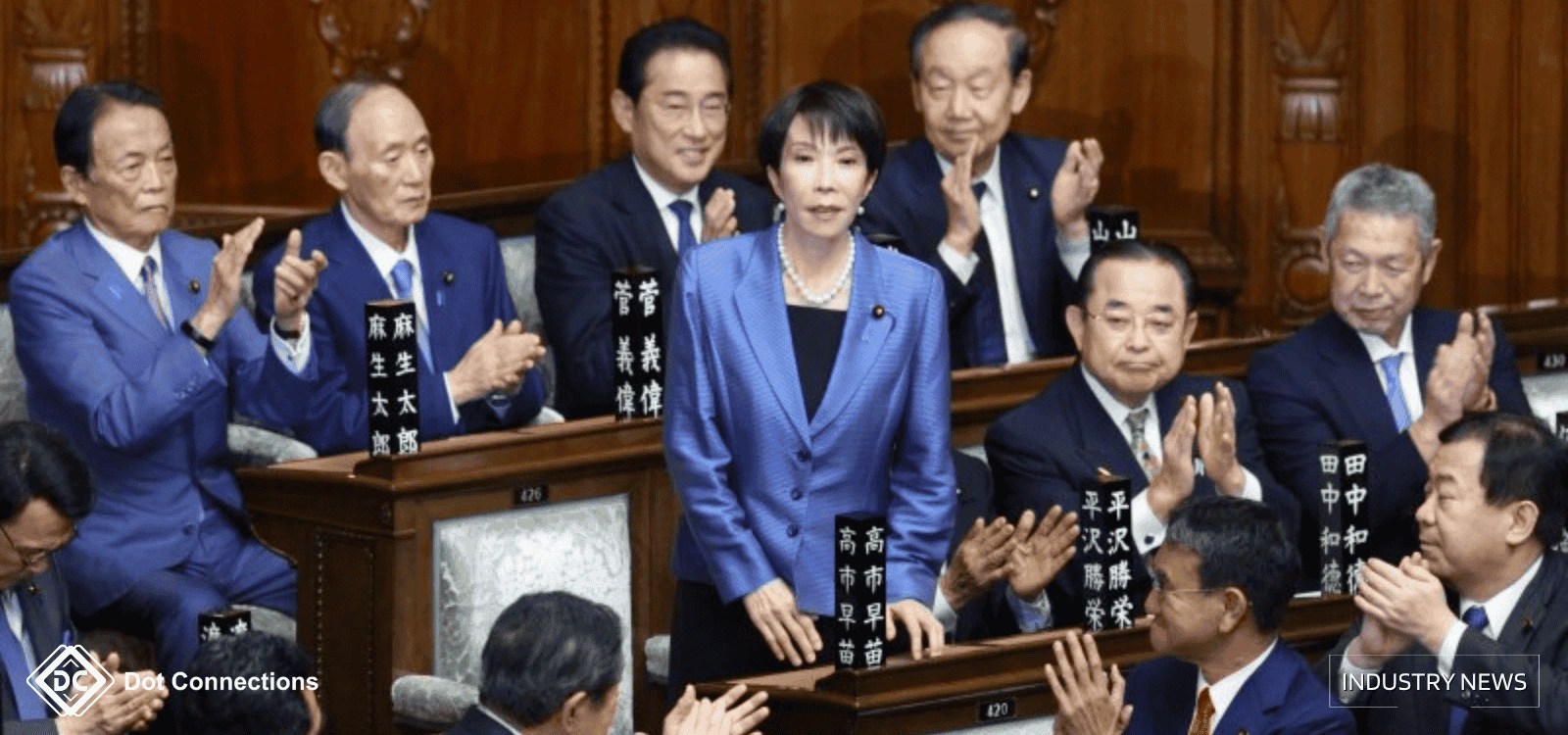
The Japan's new Prime Minister Sanae Takaichi stands in parliament while other lawmakers applaud.

MGM Osaka: Japan’s First Approved IR Casino Resort

MGM Osaka is the flagship project and currently the only fully approved IR in Japan. The resort is being developed by MGM Resorts International and Orix Corporation on Yumeshima Island, an artificial island in Osaka Bay that also serves as the site of Expo 2025. Construction officially began in April 2025.

Project scale and timeline

  • Total investment: Approximately USD $8.9B–$9B (around ¥1.27 trillion). This places MGM Osaka among the most expensive integrated resorts ever built.
  • Opening target: 2030, following full-scale construction through the late 2020s.
  • Location: Yumeshima Island in Osaka, a reclaimed island that Osaka Prefecture plans to redevelop into a long-term tourism, tech, and convention hub beyond Expo 2025.

Integrated Resort features

  • ~2,500 hotel rooms across multiple brands (MGM Osaka, MGM Villas, and MUSUBI Hotel).
  • A theatre with around 3,500 seats for live entertainment.
  • Large-scale MICE facilities: hundreds of thousands of square feet of conference and exhibition space aimed at business tourism and international events.
  • Retail, dining, spa, wellness, and other premium hospitality offerings designed to keep visitors on site and drive high-value spend per guest.
  • A regulated casino floor that is legally capped at no more than 3% of the IR’s total indoor area, in line with Japan’s “limited access” responsible gambling model.

Osaka Prefecture and the project partners have also discussed transport upgrades, including a planned rail link to connect Yumeshima directly to central Osaka, in order to handle year-round convention and tourist traffic.

Visitation and revenue expectations

Forecasts project roughly 20 million visitors per year once MGM Osaka is fully operational. Local and national officials frame the resort as a core tourism engine that can attract both domestic visitors and high-spending international guests, positioning Osaka as a direct competitor to Macau and Singapore in the premium leisure and convention segment.

To limit problem gambling and signal social responsibility, Japanese residents will face a paid entry system to access the casino floor. Entry fees for locals have been proposed in the ¥3,000 range (about USD $20), with higher fees for Osaka residents, and strict visit limits. This mirrors Singapore’s model rather than a Las Vegas–style open access model.

Japan integrated resort casino skyline with with glowing blue “CASINO” signage projected across skyscrapers.

The Next Two Licenses: Who’s in Play?

Japan’s IR framework allows up to three total licenses nationwide. At the moment, Osaka is the only approved site. A new bidding window would redefine the Japan integrated resort casino map beyond Osaka.

Under Prime Minister Takaichi, industry observers expect Tokyo to re-check which prefectures are willing to host an IR, instead of relying on the purely bottom-up, prefecture-led proposals that dominated the first round. Some reporting has already pointed to renewed interest in potential sites such as Kanagawa Prefecture (including Yokosuka, south of Tokyo), which promotes its logistics access and existing infrastructure.

A rebooted bidding process would matter to global operators that stepped away in earlier rounds. During the first wave of interest (2018–2023), major casino groups including Las Vegas Sands, Wynn Resorts, Hard Rock International, and Melco Resorts explored Japan and then paused or withdrew as national approvals dragged and local political resistance intensified. A clearer timetable under a new Prime Minister could bring those players, or new strategic partners, back to the table.

What This Means for the Industry

The policy direction is shifting. Takaichi has publicly tied economic revival and national competitiveness to structural tourism assets, and her administration is signalling that IR casinos are one of those assets. Industry players now treat the Japan integrated resort casino market as an executable timeline, not a hypothesis.

For the casino and gaming sector, for hospitality groups, and for MICE operators, Japan is moving from a long-running “watch and wait” scenario to an executable timeline:

  • Osaka IR construction is underway now, with a defined budget near USD $9B and an opening target of 2030.
  • The central government is expected to actively “promote the development of IRs,” which implies renewed outreach to other prefectures and possible reopening of the remaining two IR licenses.
  • Prefectures seeking long-term inbound tourism, tech investment, and conference traffic will see IR status as an anchor opportunity, especially after Expo 2025 put Yumeshima and Osaka on the global map.

In short, Japan is positioning IRs not just as casinos, but as national-scale economic infrastructure. The first site, MGM Osaka, is already under construction. The fight for sites two and three could define Japan’s land-based gaming and high-end tourism market for the next decade.


At Dot Connections, we track policy shifts and disruptive trends shaping the iGaming and online entertainment landscape worldwide. From compliance challenges to new market entries, our team delivers the intelligence operators and providers need to stay competitive.

🌍 If you’re planning to expand into dynamic markets in Asia, Africa, or Europe, our experts are ready to support your journey.

Follow Dot Connections for regulatory updates, market analysis, and strategic guidance on the future of iGaming.

Macau Casino Market Sees Strong Growth Amid Satellite Casino Closures

Night view of famous casinos in Macau illuminated with neon lights.

Macau Casino Market Sees Strong Growth Amid Satellite Casino Closures

The Macau casino market is defying expectations in 2025, showing strong Macau casino growth despite satellite casino closures. July 31 saw the closure of Grandview Casino, the first in a series of shutdowns ahead of the December 31, 2025 deadline, yet new financial data shows Macau’s gaming industry is stronger than ever.

Key Takeaways

  • July 2025 GGR rose 19% year-on-year, reaching the highest monthly revenue since before COVID-19.
  • Grandview Casino became the first satellite property to close as part of Macau’s structural gaming reforms.
  • Analysts upgraded 2025 GGR growth forecasts — Morgan Stanley from 5% to 10%, Seaport from 7% to 9%.
  • Growth driven by stronger Chinese renminbi, resilient tourism, and an improving Chinese economy.
  • Local businesses in Taipa report over 50% drop in foot traffic since the closure, prompting support measures.

Macau’s Gaming Resilience Amid Change

Macau’s gaming industry is proving its resilience as the market experiences strong financial growth even while undergoing structural reform. Following the July 31 closure of Grandview Casino — the first in a wave of satellite casino shutdowns — new financial data reveals that Macau is on track for its best year since the pandemic.

GGR Hits Post-Pandemic High

According to the latest report, July 2025 saw a 19% year-on-year increase in gross gaming revenue (GGR), marking the highest monthly revenue since COVID-19 restrictions began. This follows an equally strong June, also up 19% year-over-year, making it the sixth consecutive month of annual growth.

Crowd gathered around casino tables in Macau with dealers managing games.

Analysts Raise 2025 Forecasts

Morgan Stanley has revised its full-year GGR growth forecast from 5% to 10%, projecting total revenue at MOP 249 billion (US$30.8 billion). Seaport Research Partners also upgraded its forecast from 7% to 9% growth.

Key Drivers Behind Macau Casino Growth

  • Fewer Chinese and Hong Kong tourists traveling to competing destinations like Thailand and Japan.
  • A stronger Chinese renminbi supporting higher spending in Macau casinos.
  • An improving Chinese economy, especially among the upper middle class — a key demographic for Macau gaming.

Local Economic Impact of Closures

While the revenue figures are encouraging, the structural shift away from the satellite casino model is impacting local economies. Merchants in Taipa and surrounding areas have reported over 50% drops in foot traffic since Grandview’s closure. In response, local authorities are planning promotional events and rental support schemes to revitalize the area.

A Dual Transformation

The developments highlight two simultaneous shifts in Macau’s gaming landscape:

  • Structural reform — transitioning from third-party satellite casinos to concessionaire-owned properties.
  • Financial recovery — sustained GGR growth signaling renewed investor confidence.

As the December 31, 2025 deadline for phasing out satellite casinos approaches, all eyes will be on how Macau balances operational consolidation with economic vibrancy.


At Dot Connections, we closely monitor global regulatory movements and market shifts to help iGaming operators and game providers make informed decisions. If you're exploring opportunities in regulated markets across Asia, Africa, or Europe, we’re here to guide you.

📩 Get in touch to learn how we can support your expansion strategy.

Follow Dot Connections for industry insights and strategic updates on global iGaming trends.

Neon-lit Casino Lisboa and Venetian facades at night — Macau 2025 GGR

Industry update • Macau • Published: January 12, 2026

Macau 2025 GGR $30.9B — Q4 Event Costs Squeeze Margins

Macau closed 2025 with a powerful top-line recovery — roughly $30.9 billion in gross gaming revenue and a record 40.06 million visitor arrivals — and most operators rewarded frontline staff with one-month bonuses. Yet the fourth quarter exposed an important caveat: major event-related spending and portfolio adjustments compressed operating margins even as revenue climbed.

Table of Contents

Key takeaways

  • Top-line rebound: Macau recorded roughly $30.9B in GGR and 40.06M visitor arrivals in 2025.
  • Employee payouts: Most concessionaires issued one-month bonuses to frontline/non-management staff.
  • Q4 margin pressure: Large event spending (NBA China Games, 15th National Games) plus costs from satellite-casino closures reduced operating leverage.
  • Operator dynamics: Analysts flagged Galaxy and MGM China as likely Q4 share gainers; SJM faced integration costs (~4,000 absorbed staff); Sands grew revenue but saw margin pressure.
  • What to watch: Focus on adjusted EBITDA, event ROI and labour-integration costs — not just GGR or visitor counts.

Quick summary

Macau enjoyed its strongest post-pandemic year in 2025: near-$31B GGR and a record number of visitors. Those headline gains enabled operators to award bonuses to many frontline staff and signalled broad demand recovery. However, fourth-quarter results showed that significant event-linked spending and portfolio restructuring can erode margin gains. Analysts caution that headline GGR and visitor figures tell only part of the story — adjusted EBITDA and event ROI will determine which operators truly benefit in 2026.

The numbers at a glance

  • GGR (2025): ≈ $30.9 billion (up ~9% vs. 2024; ~36% vs. 2023).
  • Visitors (2025): 40.06 million (surpassing 2019’s 39.41M).
  • Staff bonuses: Majority of concessionaires announced one-month discretionary bonuses for most non-executive employees.
  • Q4 context: Analysts estimated industry EBITDA growth for Q4, but flagged material margin pressure tied to event and restructuring costs. Sands’ Q4 EBITDA was cited at roughly US$616M with an expected margin decline (~1.9 percentage points) attributable to event spend. SJM’s consolidation of satellite properties led to absorption of ~4,000 staff, raising short-term costs.

Why Q4 looked different: event and restructuring drivers

Large, headline events create visible benefits — tourism spikes, package sales, retail lift and brand exposure — but they also carry substantial incremental expenses.

NBA China Games: promotion costs and hospitality packages

    Promoted by Sands China at The Venetian Arena, the NBA preseason brought sponsorship, production, venue and promotional costs. Sands acted as promoter and rolled out NBA-branded retail and hospitality packages.

15th National Games: venue support and funding commitments

    Multiple concessionaires provided venues and funding commitments for the multi-city event, increasing short-term operating outlays.

Satellite casino closures: SJM consolidation and staff integration

    SJM’s consolidation of satellite properties led to one-off closure costs and higher payroll/operating expenses as satellite staff were integrated into core properties.

These items explain why operating leverage in Q4 did not fully reflect revenue growth: event and restructuring spend reduced adjusted EBITDA margins even while GGR increased.

Crowd photographing the Parisian Macao Eiffel Tower at night — Macau 2025 GGR

Market share and operator positioning going into 2026

Galaxy Entertainment: events & hold benefit

Benefitted from a heavy events and concerts schedule and favourable hold rates, translating into estimated market-share gains.

MGM China: favorable hold at MGM Cotai

Saw a lift from beneficial hold at MGM Cotai, boosting its Q4 performance.

Sands China: share gain vs. margin pressure

Gained share quarter-on-quarter but faced margin pressure from NBA and other event spend.

SJM Holdings: satellite integration impact

Saw share compression amid satellite closures and associated costs.

The NBA’s return to Macau in October 2026 (scheduled preseason games with the Dallas Mavericks and Houston Rockets) signals that events will remain central to operators’ strategies — and to their cost bases.

What stakeholders should watch

Investors: adjusted EBITDA, margins, CAPEX

Focus on adjusted EBITDA, margin trends and management commentary around whether event spend is one-off or part of a recurring strategy. Capex and labour integration costs matter as much as GGR.

Operators: event monetisation & labour integration

Prioritise monetisation of event traffic (premium packages, F&B, retail, hospitality add-ons) and rigorous cost control on event production. Efficient integration of staff and properties following consolidation is critical.

Employees & local economy: bonuses vs. restructuring risk

Bonuses are a positive sign for workers and household income, but restructuring and property closures can cause short-term disruption for affected staff.

Conclusion

Macau’s 2025 recovery is real: record visitors and near-$31B GGR demonstrate restored demand. Yet Q4’s event-driven cost load underscores an essential discipline: strong top-line numbers must be paired with disciplined event ROI and margin management. For 2026, operators that convert headline traffic into sustainable, margin-accretive revenue — while controlling event and integration costs — will be best positioned to outperform.


At Dot Connections, we track policy shifts and disruptive trends shaping the iGaming and online entertainment landscape worldwide. From compliance challenges to new market entries, our team delivers the intelligence operators and providers need to stay competitive.

🌍 If you’re planning to expand into dynamic markets in Asia, Africa, or Europe, our experts are ready to support your journey.

Follow Dot Connections LinkedIn for regulatory updates, market analysis, and strategic guidance on the future of iGaming. Or Contact us here.


Iconic Macau hotel façades and neon signs at dusk with colorful reflections.
Macau's casinos rebounded $30.9B in 2025. A real comeback or a temporary bubble?

Industry update • Macau • Published: January 5, 2026

Macau's casinos rebounded $30.9B in 2025. A real comeback or a temporary bubble?

The Macau 2025 GGR rebound — a return to roughly MOP247–248 billion (US$30.8–30.9B) — marked the strongest post-pandemic performance and sets the stage for corporate and policy shifts that will shape 2026.

Table of Contents


Quick summary

Coming off a surprisingly strong year, the Macau 2025 GGR rebound delivered nearly US$30.9 billion in gaming revenue and signalled a structural recovery as the market pivots from VIP/junket dependence toward premium-mass and integrated-resort demand.

Macau closed 2025 with a surprisingly strong recovery—casino GGR reached post-pandemic highs and several months matched or exceeded pre-COVID peaks. At the same time, structural changes from Beijing and the Macau government (licensing conditions, forced non-gaming investment, junket restrictions) are reshaping the market. Analysts see upside for both GGR and Macau-centric equities if China’s macro policy and visitation trends keep improving, but near-term risks (macro, policy, and fiscal sensitivity) remain.

2025 in review — a comeback that surprised many

Macau finished 2025 with gross gaming revenue (GGR) roughly in the MOP247–248 billion range (about US$30.8–30.9 billion), the highest annual total since 2019 and about ~9% year-over-year growth for the market. Several late-2025 months — including a >$3B month in October and a strong December — helped push the recovery close to pre-pandemic scale. Those results show the SAR’s ability to pivot from a VIP-dominated model toward a more resilient premium-mass and mass market mix. But the recovery hasn’t been just about gaming: the 2022 relicensing process required Macau’s six concessionaires to commit very large non-gaming investments and longer concession horizons, forcing operators to accelerate hotel, retail, MICE (meetings/incentives/conventions/exhibitions) and other leisure projects alongside their casino floors. That structural push toward integrated-resort, family and convention demand is now an explicit part of Macau’s post-pandemic playbook.

What’s changed structurally — licenses, fees, and corporate deals

Two interlocking forces are reshaping operator economics:
  • Concession-era investment commitments and government monitoring. As part of the 2022–2023 relicensing, Macau tied the new 10-year concessions to extensive non-gaming investments and diversification targets. The government has been actively reviewing and pressing concessionaires on those commitments to reduce Macau’s dependence on pure gaming tax receipts. That has shifted capital allocation and long-term strategy across the Big Six.
  • Operator contract re-engineering and brand/licensing changes. A concrete recent example: MGM China renegotiated long-term brand/licensing economics with parent MGM Resorts — doubling the monthly brand fee from 1.75% to 3.5% of adjusted consolidated net monthly revenues under the new terms (with caps and allocation rules). That deal locks the MGM brand in place through the current concession cycle but raises near-term profit-share costs for MGM China and shows that intracompany commercial terms (and their accounting/EBITDA impact) are now material to investors and analysts.
Taken together, these changes mean capital that might once have flowed mainly to gaming operations and player comps is now being redeployed into large-scale resorts, non-gaming amenities and contractual/licensing structures — which changes both cash-flow profiles and investor valuation metrics.
 
Bustling casino interior with many baccarat tables, players and central decorative sculpture.

The macro backdrop and consensus views for 2026

A few macro and market threads underpin the near-term outlook:

  • China’s policy tilt toward proactive fiscal/consumption support. Beijing has signaled more proactive macro policy for 2026 to shore up consumption and investment — a dynamic that historically flows through to outbound travel and discretionary spending, both important for Macau demand. If these policies meaningfully lift Chinese domestic consumption and travel, Macau could benefit materially.
  • Analyst house views — cautious optimism. Some sell-side analysts expect modest but positive GGR growth in 2026 (consensus in the mid-single digits), while a handful (e.g., Stifel coverage cited in market notes) argue consensus may be conservative and project upside scenarios of ~4–8% GGR growth if visitation and premium-mass spending remain strong. At the same time, investor sentiment toward Macau equities remains mixed: the group trades at discounts to long-run historical multiples, which some see as a buying opportunity if macro risks fade.

The policy tailwinds and more normalized travel could lift 2026 GGR beyond conservative forecasts, but that outcome is conditional on China’s domestic recovery sustaining and on Macau’s ability to convert infrastructure investments into repeat visitation.

Risks and near-term frictions to watch

  • Policy and fiscal sensitivity. Macau’s fiscal balance is highly correlated with gaming revenues; local officials have warned of budget strain if revenues fall sharply. That makes the SAR vulnerable to downside macro shocks.
  • Operator margin pressure from contractual fees and capex. Brand fees (like MGM’s new terms) or large non-gaming capex programs can compress near-term EBITDA margins even while building long-term value. Analysts have already cut near-term EBITDA forecasts for some operators after the MGM brand fee change.
  • VIP cohort uncertainty. The junket-led VIP channel has been structurally altered by regulatory action; while premium and mass players have filled some gaps, a sustained return of high-value VIPs would materially boost upside — and the timing/scale of any VIP recovery is uncertain.
Night skyline of Macau’s Cotai Strip with illuminated integrated-resort towers reflected on the water.

What to watch in 2026 — 6 concrete datapoints and catalysts

  • Monthly GGR momentum (particularly seasonal high months such as Lunar New Year and October): continued above-trend growth would validate upside scenarios.
  • Mainland China policy announcements with clear consumption/travel stimulus (e.g., travel subsidies, visa/travel facilitation, or stimulus checks).
  • Operator quarterly guidance and capex updates (how quickly nongaming projects open and ramp).
  • Concession compliance reports / government reviews of pledged investments — these will determine whether Macau keeps pushing hard on diversification or tolerates slower rollouts.
  • VIP segmentation data(table counts, high-roller volumes) — any sign of a VIP re-emergence would be a market catalyst.
  • Earnings and licensing/legal headlines around intracompany deals (brand fees, revenue-sharing) that affect operator margin profiles (the MGM example is already instructive).

Investment and strategic implications (quick takeaways)

For investors:

Macau equities may be underpriced relative to a recovering GGR baseline, but company-specific lease/licensing terms and capex commitments are now first-order risk drivers. Value seekers should weigh macro upside against near-term margin headwinds (brand fees, heavy non-gaming investment).

For operators and policymakers:

The strategic priority is converting capital into compelling non-gaming offerings that broaden Macau’s appeal (families, MICE, leisure) while preserving casino profitability. Close coordination with Beijing’s travel and consumption levers would magnify positive outcomes.

Final appraisal — an evolving opportunity with conditional upside

Macau finished 2025 with a strong recovery headline number and a clearer roadmap to an integrated-resort future. That creates a plausible bull case for 2026: China’s macro support, improving travel, and continued premium-mass strength could lift GGR and create meaningful upside for operators and their equities. But the transition is being managed under new economic, fiscal and contractual constraints — meaning the upside is real, yet conditional. Watch GGR monthly prints, China macro measures, concession compliance, and operator margin moves closely; those datapoints will determine whether 2026 becomes the year Macau returns to its full pre-pandemic momentum or merely consolidates the gains of 2025.


At Dot Connections, we track policy shifts and disruptive trends shaping the iGaming and online entertainment landscape worldwide. From compliance challenges to new market entries, our team delivers the intelligence operators and providers need to stay competitive.

🌍 If you’re planning to expand into dynamic markets in Asia, Africa, or Europe, our experts are ready to support your journey.

Follow Dot Connections LinkedIn for regulatory updates, market analysis, and strategic guidance on the future of iGaming. Or Contact us here.
Masterplan aerial rendering of the US$2B Van Don resort city.
India Online Gaming Regulation 2026: The Supreme Court & The Future of RMG

Industry update • Vietnam • Published: December 29, 2025

Sun Group Breaks Ground on US$2B Resort in Vietnam — What Online Game Operators Should Watch

A US$2 billion integrated “resort city” including a casino component has started construction in Vietnam. Following the project's groundbreaking on 19 December 2025, the development’s regulatory and commercial effects create immediate digital opportunities — and obligations — for online-only game operators across Southeast Asia.

Table of Contents

Quick summary

Sun Group has commenced construction on a major integrated resort in Vietnam with a casino component targeted to open in 2028 and full project completion expected across multiple phases by 2034. The development aims to boost inbound and domestic tourism and is being pursued under Vietnam’s pilot framework that may allow Vietnamese nationals to play at selected casinos. For online game operators, the primary implications are regulatory change, travel-driven acquisition windows and a need to harden payments, KYC and fraud controls.

Why online-only operators should care

Even if your business is 100% web-based, a large onshore gaming project in Vietnam changes market dynamics that affect acquisition, retention, compliance and revenue. Key impacts to monitor and act on include:

  • Larger addressable market (potential) — extensions or clarifications of Vietnam’s pilot rules could increase domestic player eligibility and lifetime value for Vietnam-focused cohorts.
  • Travel windows become digital acquisition windows — new flight routes and tourism marketing tied to the resort create predictable peaks you can exploit with geo- and time-targeted paid acquisition and reactivation campaigns.
  • Content & promo hooks — resort milestones (groundbreaking, soft opening, grand opening) create marketing moments: Van Don / Vietnam-themed tournaments, limited-time drops and milestone leaderboards drive activation and reactivation.
  • Payments, KYC & compliance readiness — increased local-play activity typically brings more scrutiny on payment rails, identity verification and transaction monitoring. Integrating compliant eKYC and local payment methods early reduces onboarding friction.
  • Cross-vertical affiliate opportunities — travel and tourism campaigns open new affiliate pathways (travel bloggers, regional publishers and SEA ad partners) for cost-effective user acquisition.
Rendering of the casino precinct inside the US$2B Van Don resort.

Recommended online-only operator actions (90-day & 12-month playbook)

Immediate (0–90 days)

  • Regulatory monitoring: assign legal/compliance to track draft decrees and policy changes affecting local-player access (deposit rules, entry fees, financial-capacity requirements).
  • Payments & eKYC audit: audit current payment rails and eKYC flows; add local payment options where feasible and test onboarding for low friction while retaining AML controls.
  • Ad creative bank: prepare geo-localized creatives for NE-Asia and target domestic cities with travel origins (short headlines and milestone hooks).

Next (3–12 months)

  • Geo/time-target acquisition campaigns: plan campaigns that align with travel peak windows (route launches, holidays). Use short bursts with elevated CPA bids in origin markets.
  • Event calendar: schedule Van Don-themed tournaments, limited drops and leaderboards to coincide with publicized resort milestones to maximize PR-driven interest.
  • Affiliate partnerships: brief travel/tourism affiliates and regional publishers on campaign mechanics and tracking. Offer short-term elevated CPA for travel-window traffic.
  • Product prototypes for local players: design prepaid, capped-play and low-ticket bundles that can be toggled in region-specific deployments to comply with potential restrictions.
  • Risk & fraud tuning: prepare dynamic risk thresholds for deposit velocity, cross-border payment flows and suspicious account behaviour ahead of acquisition spikes.

Three digital campaign ideas (ready to run)

  1. Milestone Tournaments: 7–14 day Van Don-themed tournaments (low buy-ins, leaderboard prizes and digital goods) timed to construction/opening milestones. Promote across paid social, email and affiliates.
  2. Geo-Flight Pushes: run targeted acquisition windows in feeder origin cities whenever new routes or charters are announced, with tailored creative and limited-time registration bonuses.
  3. Travel Affiliate Bundle: partner with travel content creators to embed promo codes and track registrations; measure incremental revenue via UTM and adjust CPA offers.

Technical & compliance checklist

  • Payment integrations: add locally preferred payment methods and ensure seamless reconciliation across currencies and rails.
  • eKYC: implement fast identity verification with fallback manual review workflows to maintain conversion while meeting AML/KYC requirements.
  • Transaction monitoring: instrument real-time alerts for velocity, chargeback patterns and unusual cross-border flows.
  • Data localisation & privacy: confirm how local-player data will need to be stored and processed under Vietnamese rules or partner jurisdiction requirements.
  • Legal readiness: prepare templated T&Cs and localized user disclosures for Vietnam-specific offerings and deposit caps.

Risks & caveats

  • Regulatory uncertainty: draft decrees and final policy decisions could change the economics and eligibility for local players (age limits, financial proof, entry fees or caps).
  • Market timing: integrated resorts are long-lead assets — meaningful onshore spillover to online channels may materialize only once openings and transport links are fully active.
  • Reputational & compliance exposure: increased local activity means greater public scrutiny. Operators must balance growth with robust compliance and responsible gaming safeguards.
  • Environmental & community sentiment: large coastal developments often attract environmental and local community attention; this can affect PR windows and market sentiment.

KPIs to track

  • Geo-specific CAC & ROI: monitor cost-per-acquisition by origin market and by travel-window cohort.
  • New-registration LTV: compare cohort LTV for users from targeted travel-origin geos vs baseline markets.
  • Onboarding conversion rate: track eKYC pass rates and time-to-first-deposit for local-player cohorts.
  • Affiliate performance: measure incremental revenue and retention from travel/tourism affiliate traffic vs baseline affiliates.
  • Risk metrics: chargeback rate, suspicious-account rate and deposit velocity during campaign spikes.

Conclusion

Sun Group’s US$2 billion development in Vietnam is primarily a physical resort project, but its commercial and regulatory ripple effects create an early-mover window for online-only game operators. Potential local-player access, travel-driven acquisition spikes and new affiliate pathways mean operators who prepare now — focusing on regulatory monitoring, payments/eKYC readiness and geo-targeted acquisition — will be best positioned to capture high-value cohorts as they emerge.


At Dot Connections, we track policy shifts and disruptive trends shaping the iGaming and online entertainment landscape worldwide. From compliance challenges to new market entries, our team delivers the intelligence operators and providers need to stay competitive.

🌍 If you’re planning to expand into dynamic markets in Asia, Africa, or Europe, our experts are ready to support your journey.

Follow Dot Connections LinkedIn for regulatory updates, market analysis, and strategic guidance on the future of iGaming. Or Contact us here.

India iGaming legal regulation: Gavel and scales of justice against Indian flag, symbolizing Supreme Court ruling on PROGA Act and 40% GST tax.
India Online Gaming Regulation 2026: The Supreme Court & The Future of RMG

India iGaming at a Crossroads: Supreme Court Consolidation Defines the Path for 2026

Published: December 15, 2025

The Indian iGaming sector is bracing for a definitive ruling as the Supreme Court takes centralized control of all legal challenges against the highly restrictive PROGA Act, 2025. This move, combined with the crippling 40% GST, forces operators to urgently reassess their content strategies. Dot Connections provides the essential content resilience and compliance tools needed to navigate this volatile market where agility is mandatory for survival.

Key Takeaways for Operators

  • The Supreme Court has become the single point of judgment, consolidating all high court petitions against the PROGA Act.
  • The market faces a dual threat: near-total prohibition on 'Chance-Based Games' and an economically unsustainable 40% GST on GGR.
  • The core challenge is differentiating between legally permissible 'Skill-Based Games' and high-risk 'Chance-Based Games'.
  • Actionable Solution: Operators must leverage smart content aggregators (like Dot Connections) to enable rapid filtering and a strategic pivot to compliant content streams.

The Regulatory Storm: Prohibition Meets Punitive Taxation

The India iGaming Regulation sector has entered a period of unprecedented regulatory paralysis as the calendar turns towards 2026. The Supreme Court of India has seized control of the entire legal battle surrounding the contentious Promotion and Regulation of Online Gaming Act, 2025 (PROGA), postponing the critical hearing until the new year.

This pivotal move, which consolidates all existing high court challenges (from Madhya Pradesh, Karnataka, and Delhi), establishes the Supreme Court as the **sole arbiter** of the industry’s future, setting the stage for a truly definitive and historic ruling.

The Dual Legislative Threat

The market instability is fueled by a dual challenge that has fundamentally altered operational viability:

  • The PROGA Ban: Passed in August 2025, the PROGA Act aims for a near-total prohibition of **all forms of real-money online gaming**, including crucial segments like poker, rummy, fantasy sports, and traditional casino offerings. The industry argues this ban is overly broad and stifles a nascent, multi-billion dollar economy.
  • The 40% GST Tax: Compounding the legal threat is the effective tax rate of **40% GST** on the face value of bets (Gross Gaming Revenue), a levy that has proven economically unsustainable for many operators.

Industry associations warn that this combined pressure will not eliminate gambling, but rather **force millions of users onto unregulated, illegal betting platforms**, thereby increasing social harm and forfeiting billions in potential tax revenue.

India iGaming legal regulation: Gavel and scales of justice against Indian flag, symbolizing Supreme Court ruling on PROGA Act and 40% GST tax.

Strategic Response to India Regulation 2026: Content Resilience in a Volatile Market

For operators navigating this treacherous environment, the traditional strategy of "wait and see" is insufficient. As a leading Casino Game Aggregator, **Dot Connections** offers immediate, actionable solutions focused on content resilience and jurisdictional compliance.

Our core strength lies in helping operators differentiate between content that may be legally viable ('Skill-Based Games') and content facing outright prohibition ('Chance-Based Games').

Mitigating Risk: Three Pillars of Content Security

Our approach mitigates risk for our partners by ensuring rapid content deployment and withdrawal based on evolving legal precedents:

  1. Intelligent Content Filtering and De-risking: We enable operators to quickly audit and filter their content portfolio, prioritizing demonstrable "skill-based" games and content that are less likely to face legal challenge. Our system allows for the seamless delisting of high-risk, chance-based titles (traditional slots, roulette) from the Indian jurisdiction instantly.
  2. Data-Driven Reallocation: Our aggregation platform provides real-time performance analytics. Partners can identify precisely which content segments are rendered unprofitable by the 40% GST and use this data to execute a quick, data-backed strategic pivot toward safer, regulated jurisdictions across Asia and LATAM.
  3. Guaranteed Compliance Gateway: By aggregating only certified content and maintaining robust AML/KYC standards, Dot Connections acts as a compliance shield, ensuring that any content remaining active adheres to the strictest technical and legal specifications mandated by the Indian government (should a regulated framework eventually emerge).

Conclusion: Agility is Mandatory

The Supreme Court’s decision to consolidate the legal challenge signifies that the Indian iGaming market is at a critical juncture. For operators, success in 2026 will hinge on **flexibility, rapid decision-making, and leveraging a content aggregator that provides true operational agility.** Partnering with Dot Connections ensures your content strategy is resilient, compliant, and ready for any outcome.


At Dot Connections, we track policy shifts and disruptive trends shaping the iGaming and online entertainment landscape worldwide. From compliance challenges to new market entries, our team delivers the intelligence operators and providers need to stay competitive.

🌍 If you’re planning to expand into dynamic markets in Asia, Africa, or Europe, our experts are ready to support your journey.

Follow Dot Connections for regulatory updates, market analysis, and strategic guidance on the future of iGaming.

Macau skyline at night reflected on the water with illuminated resort towers

Macau 2025: Strong November GGR. Regulatory Shake-Up Redefining the Market

December 8th, 2025

In November 2025 Macau reported MOP 21.09 billion (~US$2.63 billion) in gross gaming revenue (GGR), a 14.4% year-on-year increase that extended a ten-month streak of YoY gains. The unexpectedly strong top-line result lifted Macau-exposed casino stocks, but it comes amid a swift regulatory restructuring that is accelerating the closure of small satellite casinos. Contributing to Macau Nov 2025 GGR, these developments mark a market that is both bullish on near-term demand and structurally in transition.

Key takeaways

  • November GGR: MOP 21.09B (~US$2.63B), +14.4% YoY.
  • 11-month total (2025): approximately MOP 226.5B (~US$28.26B) — close to the government’s year forecast.
  • Recovery drivers: robust mass-market play and growing nongaming activity (entertainment, events, FnB).
  • Macau shows strong near-term demand (GGR) and investor optimism, while regulatory-driven consolidation is forcing the industry to shift toward integrated resorts and nongaming experiences.
  • The medium-term winners will be operators that convert cash flow into high-quality nongaming assets and manage workforce and capacity transitions smoothly.
  • Monitor China’s consumer policy and GGR segmentation for signs of sustainability.

November numbers and 2025 context

November’s GGR was notable because it arrived in a month that normally follows the Golden Week spike in October. The result — roughly 92% of November 2019 GGR — is the strongest recovery level Macau has seen since the pandemic. After 11 months, cumulative 2025 GGR stands only marginally below the SAR government’s full-year projection, signaling a broad-based recovery that appears to be powered not just by VIPs but increasingly by mass and premium-mass segments.

Market reaction: equities and sentiment

The better-than-expected GGR triggered immediate gains in shares of operators with heavy Macau exposure (Sands, Wynn, MGM, Melco, Galaxy, etc.). Analysts note that government forecasts for 2026 tend to be conservative; if GGR continues to outpace official estimates, there remains upside for Macau-centric equities. That said, markets remain sensitive to macro and policy signals — momentum can be strong, but it is not immune to abrupt shifts.

Regulatory shift: satellite closures and industry reconfiguration

Simultaneously, Macau is undergoing a regulatory and structural realignment. After a multi-year transition following the 20-year licensing cycle renewal, the government is tightening sublicensing rules. The result has been a wave of closures among smaller satellite casinos (budget/no-frills venues operating under sublicenses). Examples in December include several satellite shutdowns and the announced closure of Casino Fortuna on 9 December 2025. Roughly ten of eleven sublicensed satellite venues are slated to exit this year; some properties have been acquired by main concessionaires.

The regulatory intent is explicit: reduce reliance on small, gaming-centric venues and promote integrated resorts that prioritize nongaming assets — concerts, retail, hotels and family-oriented tourism. Authorities are coordinating with operators and labor agencies to manage staff reallocation and worker protections during the transition.

Rio Casino facade lit by neon signs on a Macau street at dusk

How the supply and demand trends interact

These developments should be read together, not in isolation.

Positive interaction

  • Consolidation could concentrate spending at integrated resorts that generate higher ancillary (nongaming) revenue per visitor.
  • Strong mass-market demand provides a healthier revenue base that is less volatile than VIP dependence.
  • If operators redeploy cash flow into nongaming investments, Macau’s tourism offer could become more resilient and attractive to repeat visitors.

Friction and short-term risk

  • Closing satellites reduces immediate capacity outside the big resorts, potentially displacing some gaming demand until larger resorts absorb it.
  • Workforce reallocation and operational consolidation create execution risk and near-term cost variability.
  • Long-run success hinges on China’s macro environment and domestic consumption policies — stimulus, travel normalization, and discretionary spending remain critical.

Implications by stakeholder group

  • Investors: Monitor GGR segmentation (mass vs VIP), concessionaires’ capital allocation into nongaming assets, and near-term margin impacts from consolidation. Conservative government forecasts may hide upside, but regulatory execution is a key risk.
  • Operators: Prioritize high-quality nongaming experiences, seamless guest migration from satellite closures, and clear workforce transition plans. Scale benefits exist but require disciplined execution.
  • Policymakers & tourism planners: The shift is deliberate — from a gambling-centric model to a diversified tourism hub. Success will depend on enabling continued event programming, connectivity, and visitor services that make Macau attractive beyond gaming.

Conclusion

Macau’s November 2025 GGR underscores a robust recovery and renewed investor optimism. At the same time, an accelerated regulatory push to remove satellite casinos is reshaping how the market is structured. If concessionaires convert stronger GGR into compelling nongaming investments and China’s consumption backdrop remains supportive, Macau could evolve into a more diversified, resilient tourism destination. The transition, however, carries short-term disruption and execution risks that market participants should monitor closely.

Trending Slot of the Week: Rotten by Hacksaw Gaming​

Trending Slot of the Week: Rotten by Hacksaw Gaming

If you're looking for a slot that delivers thrills, volatility, and a hauntingly immersive theme, look no further than Rotten by Hacksaw Gaming — our Trending Slot of the Week. This gritty, post-apocalyptic zombie slot is turning heads and dominating play sessions across Asia and beyond.

What Makes Rotten So Addictive?

From its dark, cinematic visuals to a highly volatile math model, Rotten combines immersive storytelling with powerful game mechanics that deliver non-stop suspense. Set across eerie locations like haunted houses, dark forests, and abandoned carnivals, every spin feels like you're surviving the apocalypse.

  • 6 reels x 5 rows with 35 paylines
  • Max win of 10,000x your stake
  • Multiple RTP versions (up to 96.27%)

Signature Features That Drive Retention

SwitchSpins
Triggers 1–10 respins where selected symbols are replaced with the highest-paying symbol or wilds — creating thrilling unpredictability.

Mad Scientist Free Spins
Triggered by landing 3 Mad Scientist symbols. You get 10 free spins with increased Switch symbol frequency for added chaos.

Total Takeover Free Spins
A high-volatility round where replacement symbols are locked progressively — offering potential for full-screen zombie/wild wins.

Bonus Buy Options
For players who want direct action, Rotten offers four bonus buy modes:

  • Bonus Hunt Spins (3x)
  • SwitchSpins Only (20x)
  • Mad Scientist Bonus (110x)
  • Total Takeover Bonus (250x)

Why Operators Are Loving Rotten

Rotten isn’t just popular with players — operators across Asia are seeing strong engagement and retention metrics.

  • Strong retention rates thanks to feature depth
  • High volatility appeal attracts thrill-seeking players
  • Performs well across multiple Asian markets
  • Bonus Buy mechanics increase bet values and session time

Expand Into the Asian Market with Viral Hits Like Rotten

At Dot Connections, we help global game providers expand into the Asian market through a single API integration, localized expertise, and full-service marketing support.

Want to add Rotten and other trending titles to your platform? Let’s connect and grow your presence in Asia’s booming iGaming scene.


Tags: Rotten, Hacksaw Gaming, Slot of the Week, Bonus Buy, SwitchSpins, Total Takeover, iGaming Asia, Casino Operators, Trending Games, Expand Into Asian Market

Neon-lit Casino Lisboa and Venetian facades at night — Macau 2025 GGR

Industry update • Macau • Published: January 12, 2026

Macau 2025 GGR $30.9B — Q4 Event Costs Squeeze Margins

Macau closed 2025 with a powerful top-line recovery — roughly $30.9 billion in gross gaming revenue and a record 40.06 million visitor arrivals — and most operators rewarded frontline staff with one-month bonuses. Yet the fourth quarter exposed an important caveat: major event-related spending and portfolio adjustments compressed operating margins even as revenue climbed.

Table of Contents

Key takeaways

  • Top-line rebound: Macau recorded roughly $30.9B in GGR and 40.06M visitor arrivals in 2025.
  • Employee payouts: Most concessionaires issued one-month bonuses to frontline/non-management staff.
  • Q4 margin pressure: Large event spending (NBA China Games, 15th National Games) plus costs from satellite-casino closures reduced operating leverage.
  • Operator dynamics: Analysts flagged Galaxy and MGM China as likely Q4 share gainers; SJM faced integration costs (~4,000 absorbed staff); Sands grew revenue but saw margin pressure.
  • What to watch: Focus on adjusted EBITDA, event ROI and labour-integration costs — not just GGR or visitor counts.

Quick summary

Macau enjoyed its strongest post-pandemic year in 2025: near-$31B GGR and a record number of visitors. Those headline gains enabled operators to award bonuses to many frontline staff and signalled broad demand recovery. However, fourth-quarter results showed that significant event-linked spending and portfolio restructuring can erode margin gains. Analysts caution that headline GGR and visitor figures tell only part of the story — adjusted EBITDA and event ROI will determine which operators truly benefit in 2026.

The numbers at a glance

  • GGR (2025): ≈ $30.9 billion (up ~9% vs. 2024; ~36% vs. 2023).
  • Visitors (2025): 40.06 million (surpassing 2019’s 39.41M).
  • Staff bonuses: Majority of concessionaires announced one-month discretionary bonuses for most non-executive employees.
  • Q4 context: Analysts estimated industry EBITDA growth for Q4, but flagged material margin pressure tied to event and restructuring costs. Sands’ Q4 EBITDA was cited at roughly US$616M with an expected margin decline (~1.9 percentage points) attributable to event spend. SJM’s consolidation of satellite properties led to absorption of ~4,000 staff, raising short-term costs.

Why Q4 looked different: event and restructuring drivers

Large, headline events create visible benefits — tourism spikes, package sales, retail lift and brand exposure — but they also carry substantial incremental expenses.

NBA China Games: promotion costs and hospitality packages

    Promoted by Sands China at The Venetian Arena, the NBA preseason brought sponsorship, production, venue and promotional costs. Sands acted as promoter and rolled out NBA-branded retail and hospitality packages.

15th National Games: venue support and funding commitments

    Multiple concessionaires provided venues and funding commitments for the multi-city event, increasing short-term operating outlays.

Satellite casino closures: SJM consolidation and staff integration

    SJM’s consolidation of satellite properties led to one-off closure costs and higher payroll/operating expenses as satellite staff were integrated into core properties.

These items explain why operating leverage in Q4 did not fully reflect revenue growth: event and restructuring spend reduced adjusted EBITDA margins even while GGR increased.

Crowd photographing the Parisian Macao Eiffel Tower at night — Macau 2025 GGR

Market share and operator positioning going into 2026

Galaxy Entertainment: events & hold benefit

Benefitted from a heavy events and concerts schedule and favourable hold rates, translating into estimated market-share gains.

MGM China: favorable hold at MGM Cotai

Saw a lift from beneficial hold at MGM Cotai, boosting its Q4 performance.

Sands China: share gain vs. margin pressure

Gained share quarter-on-quarter but faced margin pressure from NBA and other event spend.

SJM Holdings: satellite integration impact

Saw share compression amid satellite closures and associated costs.

The NBA’s return to Macau in October 2026 (scheduled preseason games with the Dallas Mavericks and Houston Rockets) signals that events will remain central to operators’ strategies — and to their cost bases.

What stakeholders should watch

Investors: adjusted EBITDA, margins, CAPEX

Focus on adjusted EBITDA, margin trends and management commentary around whether event spend is one-off or part of a recurring strategy. Capex and labour integration costs matter as much as GGR.

Operators: event monetisation & labour integration

Prioritise monetisation of event traffic (premium packages, F&B, retail, hospitality add-ons) and rigorous cost control on event production. Efficient integration of staff and properties following consolidation is critical.

Employees & local economy: bonuses vs. restructuring risk

Bonuses are a positive sign for workers and household income, but restructuring and property closures can cause short-term disruption for affected staff.

Conclusion

Macau’s 2025 recovery is real: record visitors and near-$31B GGR demonstrate restored demand. Yet Q4’s event-driven cost load underscores an essential discipline: strong top-line numbers must be paired with disciplined event ROI and margin management. For 2026, operators that convert headline traffic into sustainable, margin-accretive revenue — while controlling event and integration costs — will be best positioned to outperform.


At Dot Connections, we track policy shifts and disruptive trends shaping the iGaming and online entertainment landscape worldwide. From compliance challenges to new market entries, our team delivers the intelligence operators and providers need to stay competitive.

🌍 If you’re planning to expand into dynamic markets in Asia, Africa, or Europe, our experts are ready to support your journey.

Follow Dot Connections LinkedIn for regulatory updates, market analysis, and strategic guidance on the future of iGaming. Or Contact us here.

Iconic Macau hotel façades and neon signs at dusk with colorful reflections.
Macau's casinos rebounded $30.9B in 2025. A real comeback or a temporary bubble?

Industry update • Macau • Published: January 5, 2026

Macau's casinos rebounded $30.9B in 2025. A real comeback or a temporary bubble?

The Macau 2025 GGR rebound — a return to roughly MOP247–248 billion (US$30.8–30.9B) — marked the strongest post-pandemic performance and sets the stage for corporate and policy shifts that will shape 2026.

Table of Contents


Quick summary

Coming off a surprisingly strong year, the Macau 2025 GGR rebound delivered nearly US$30.9 billion in gaming revenue and signalled a structural recovery as the market pivots from VIP/junket dependence toward premium-mass and integrated-resort demand.

Macau closed 2025 with a surprisingly strong recovery—casino GGR reached post-pandemic highs and several months matched or exceeded pre-COVID peaks. At the same time, structural changes from Beijing and the Macau government (licensing conditions, forced non-gaming investment, junket restrictions) are reshaping the market. Analysts see upside for both GGR and Macau-centric equities if China’s macro policy and visitation trends keep improving, but near-term risks (macro, policy, and fiscal sensitivity) remain.

2025 in review — a comeback that surprised many

Macau finished 2025 with gross gaming revenue (GGR) roughly in the MOP247–248 billion range (about US$30.8–30.9 billion), the highest annual total since 2019 and about ~9% year-over-year growth for the market. Several late-2025 months — including a >$3B month in October and a strong December — helped push the recovery close to pre-pandemic scale. Those results show the SAR’s ability to pivot from a VIP-dominated model toward a more resilient premium-mass and mass market mix. But the recovery hasn’t been just about gaming: the 2022 relicensing process required Macau’s six concessionaires to commit very large non-gaming investments and longer concession horizons, forcing operators to accelerate hotel, retail, MICE (meetings/incentives/conventions/exhibitions) and other leisure projects alongside their casino floors. That structural push toward integrated-resort, family and convention demand is now an explicit part of Macau’s post-pandemic playbook.

What’s changed structurally — licenses, fees, and corporate deals

Two interlocking forces are reshaping operator economics:
  • Concession-era investment commitments and government monitoring. As part of the 2022–2023 relicensing, Macau tied the new 10-year concessions to extensive non-gaming investments and diversification targets. The government has been actively reviewing and pressing concessionaires on those commitments to reduce Macau’s dependence on pure gaming tax receipts. That has shifted capital allocation and long-term strategy across the Big Six.
  • Operator contract re-engineering and brand/licensing changes. A concrete recent example: MGM China renegotiated long-term brand/licensing economics with parent MGM Resorts — doubling the monthly brand fee from 1.75% to 3.5% of adjusted consolidated net monthly revenues under the new terms (with caps and allocation rules). That deal locks the MGM brand in place through the current concession cycle but raises near-term profit-share costs for MGM China and shows that intracompany commercial terms (and their accounting/EBITDA impact) are now material to investors and analysts.
Taken together, these changes mean capital that might once have flowed mainly to gaming operations and player comps is now being redeployed into large-scale resorts, non-gaming amenities and contractual/licensing structures — which changes both cash-flow profiles and investor valuation metrics.
 
Bustling casino interior with many baccarat tables, players and central decorative sculpture.

The macro backdrop and consensus views for 2026

A few macro and market threads underpin the near-term outlook:

  • China’s policy tilt toward proactive fiscal/consumption support. Beijing has signaled more proactive macro policy for 2026 to shore up consumption and investment — a dynamic that historically flows through to outbound travel and discretionary spending, both important for Macau demand. If these policies meaningfully lift Chinese domestic consumption and travel, Macau could benefit materially.
  • Analyst house views — cautious optimism. Some sell-side analysts expect modest but positive GGR growth in 2026 (consensus in the mid-single digits), while a handful (e.g., Stifel coverage cited in market notes) argue consensus may be conservative and project upside scenarios of ~4–8% GGR growth if visitation and premium-mass spending remain strong. At the same time, investor sentiment toward Macau equities remains mixed: the group trades at discounts to long-run historical multiples, which some see as a buying opportunity if macro risks fade.

The policy tailwinds and more normalized travel could lift 2026 GGR beyond conservative forecasts, but that outcome is conditional on China’s domestic recovery sustaining and on Macau’s ability to convert infrastructure investments into repeat visitation.

Risks and near-term frictions to watch

  • Policy and fiscal sensitivity. Macau’s fiscal balance is highly correlated with gaming revenues; local officials have warned of budget strain if revenues fall sharply. That makes the SAR vulnerable to downside macro shocks.
  • Operator margin pressure from contractual fees and capex. Brand fees (like MGM’s new terms) or large non-gaming capex programs can compress near-term EBITDA margins even while building long-term value. Analysts have already cut near-term EBITDA forecasts for some operators after the MGM brand fee change.
  • VIP cohort uncertainty. The junket-led VIP channel has been structurally altered by regulatory action; while premium and mass players have filled some gaps, a sustained return of high-value VIPs would materially boost upside — and the timing/scale of any VIP recovery is uncertain.
Night skyline of Macau’s Cotai Strip with illuminated integrated-resort towers reflected on the water.

What to watch in 2026 — 6 concrete datapoints and catalysts

  • Monthly GGR momentum (particularly seasonal high months such as Lunar New Year and October): continued above-trend growth would validate upside scenarios.
  • Mainland China policy announcements with clear consumption/travel stimulus (e.g., travel subsidies, visa/travel facilitation, or stimulus checks).
  • Operator quarterly guidance and capex updates (how quickly nongaming projects open and ramp).
  • Concession compliance reports / government reviews of pledged investments — these will determine whether Macau keeps pushing hard on diversification or tolerates slower rollouts.
  • VIP segmentation data(table counts, high-roller volumes) — any sign of a VIP re-emergence would be a market catalyst.
  • Earnings and licensing/legal headlines around intracompany deals (brand fees, revenue-sharing) that affect operator margin profiles (the MGM example is already instructive).

Investment and strategic implications (quick takeaways)

For investors:

Macau equities may be underpriced relative to a recovering GGR baseline, but company-specific lease/licensing terms and capex commitments are now first-order risk drivers. Value seekers should weigh macro upside against near-term margin headwinds (brand fees, heavy non-gaming investment).

For operators and policymakers:

The strategic priority is converting capital into compelling non-gaming offerings that broaden Macau’s appeal (families, MICE, leisure) while preserving casino profitability. Close coordination with Beijing’s travel and consumption levers would magnify positive outcomes.

Final appraisal — an evolving opportunity with conditional upside

Macau finished 2025 with a strong recovery headline number and a clearer roadmap to an integrated-resort future. That creates a plausible bull case for 2026: China’s macro support, improving travel, and continued premium-mass strength could lift GGR and create meaningful upside for operators and their equities. But the transition is being managed under new economic, fiscal and contractual constraints — meaning the upside is real, yet conditional. Watch GGR monthly prints, China macro measures, concession compliance, and operator margin moves closely; those datapoints will determine whether 2026 becomes the year Macau returns to its full pre-pandemic momentum or merely consolidates the gains of 2025.


At Dot Connections, we track policy shifts and disruptive trends shaping the iGaming and online entertainment landscape worldwide. From compliance challenges to new market entries, our team delivers the intelligence operators and providers need to stay competitive.

🌍 If you’re planning to expand into dynamic markets in Asia, Africa, or Europe, our experts are ready to support your journey.

Follow Dot Connections LinkedIn for regulatory updates, market analysis, and strategic guidance on the future of iGaming. Or Contact us here.

Masterplan aerial rendering of the US$2B Van Don resort city.
India Online Gaming Regulation 2026: The Supreme Court & The Future of RMG

Industry update • Vietnam • Published: December 29, 2025

Sun Group Breaks Ground on US$2B Resort in Vietnam — What Online Game Operators Should Watch

A US$2 billion integrated “resort city” including a casino component has started construction in Vietnam. Following the project's groundbreaking on 19 December 2025, the development’s regulatory and commercial effects create immediate digital opportunities — and obligations — for online-only game operators across Southeast Asia.

Table of Contents

Quick summary

Sun Group has commenced construction on a major integrated resort in Vietnam with a casino component targeted to open in 2028 and full project completion expected across multiple phases by 2034. The development aims to boost inbound and domestic tourism and is being pursued under Vietnam’s pilot framework that may allow Vietnamese nationals to play at selected casinos. For online game operators, the primary implications are regulatory change, travel-driven acquisition windows and a need to harden payments, KYC and fraud controls.

Why online-only operators should care

Even if your business is 100% web-based, a large onshore gaming project in Vietnam changes market dynamics that affect acquisition, retention, compliance and revenue. Key impacts to monitor and act on include:

  • Larger addressable market (potential) — extensions or clarifications of Vietnam’s pilot rules could increase domestic player eligibility and lifetime value for Vietnam-focused cohorts.
  • Travel windows become digital acquisition windows — new flight routes and tourism marketing tied to the resort create predictable peaks you can exploit with geo- and time-targeted paid acquisition and reactivation campaigns.
  • Content & promo hooks — resort milestones (groundbreaking, soft opening, grand opening) create marketing moments: Van Don / Vietnam-themed tournaments, limited-time drops and milestone leaderboards drive activation and reactivation.
  • Payments, KYC & compliance readiness — increased local-play activity typically brings more scrutiny on payment rails, identity verification and transaction monitoring. Integrating compliant eKYC and local payment methods early reduces onboarding friction.
  • Cross-vertical affiliate opportunities — travel and tourism campaigns open new affiliate pathways (travel bloggers, regional publishers and SEA ad partners) for cost-effective user acquisition.
Rendering of the casino precinct inside the US$2B Van Don resort.

Recommended online-only operator actions (90-day & 12-month playbook)

Immediate (0–90 days)

  • Regulatory monitoring: assign legal/compliance to track draft decrees and policy changes affecting local-player access (deposit rules, entry fees, financial-capacity requirements).
  • Payments & eKYC audit: audit current payment rails and eKYC flows; add local payment options where feasible and test onboarding for low friction while retaining AML controls.
  • Ad creative bank: prepare geo-localized creatives for NE-Asia and target domestic cities with travel origins (short headlines and milestone hooks).

Next (3–12 months)

  • Geo/time-target acquisition campaigns: plan campaigns that align with travel peak windows (route launches, holidays). Use short bursts with elevated CPA bids in origin markets.
  • Event calendar: schedule Van Don-themed tournaments, limited drops and leaderboards to coincide with publicized resort milestones to maximize PR-driven interest.
  • Affiliate partnerships: brief travel/tourism affiliates and regional publishers on campaign mechanics and tracking. Offer short-term elevated CPA for travel-window traffic.
  • Product prototypes for local players: design prepaid, capped-play and low-ticket bundles that can be toggled in region-specific deployments to comply with potential restrictions.
  • Risk & fraud tuning: prepare dynamic risk thresholds for deposit velocity, cross-border payment flows and suspicious account behaviour ahead of acquisition spikes.

Three digital campaign ideas (ready to run)

  1. Milestone Tournaments: 7–14 day Van Don-themed tournaments (low buy-ins, leaderboard prizes and digital goods) timed to construction/opening milestones. Promote across paid social, email and affiliates.
  2. Geo-Flight Pushes: run targeted acquisition windows in feeder origin cities whenever new routes or charters are announced, with tailored creative and limited-time registration bonuses.
  3. Travel Affiliate Bundle: partner with travel content creators to embed promo codes and track registrations; measure incremental revenue via UTM and adjust CPA offers.

Technical & compliance checklist

  • Payment integrations: add locally preferred payment methods and ensure seamless reconciliation across currencies and rails.
  • eKYC: implement fast identity verification with fallback manual review workflows to maintain conversion while meeting AML/KYC requirements.
  • Transaction monitoring: instrument real-time alerts for velocity, chargeback patterns and unusual cross-border flows.
  • Data localisation & privacy: confirm how local-player data will need to be stored and processed under Vietnamese rules or partner jurisdiction requirements.
  • Legal readiness: prepare templated T&Cs and localized user disclosures for Vietnam-specific offerings and deposit caps.

Risks & caveats

  • Regulatory uncertainty: draft decrees and final policy decisions could change the economics and eligibility for local players (age limits, financial proof, entry fees or caps).
  • Market timing: integrated resorts are long-lead assets — meaningful onshore spillover to online channels may materialize only once openings and transport links are fully active.
  • Reputational & compliance exposure: increased local activity means greater public scrutiny. Operators must balance growth with robust compliance and responsible gaming safeguards.
  • Environmental & community sentiment: large coastal developments often attract environmental and local community attention; this can affect PR windows and market sentiment.

KPIs to track

  • Geo-specific CAC & ROI: monitor cost-per-acquisition by origin market and by travel-window cohort.
  • New-registration LTV: compare cohort LTV for users from targeted travel-origin geos vs baseline markets.
  • Onboarding conversion rate: track eKYC pass rates and time-to-first-deposit for local-player cohorts.
  • Affiliate performance: measure incremental revenue and retention from travel/tourism affiliate traffic vs baseline affiliates.
  • Risk metrics: chargeback rate, suspicious-account rate and deposit velocity during campaign spikes.

Conclusion

Sun Group’s US$2 billion development in Vietnam is primarily a physical resort project, but its commercial and regulatory ripple effects create an early-mover window for online-only game operators. Potential local-player access, travel-driven acquisition spikes and new affiliate pathways mean operators who prepare now — focusing on regulatory monitoring, payments/eKYC readiness and geo-targeted acquisition — will be best positioned to capture high-value cohorts as they emerge.


At Dot Connections, we track policy shifts and disruptive trends shaping the iGaming and online entertainment landscape worldwide. From compliance challenges to new market entries, our team delivers the intelligence operators and providers need to stay competitive.

🌍 If you’re planning to expand into dynamic markets in Asia, Africa, or Europe, our experts are ready to support your journey.

Follow Dot Connections LinkedIn for regulatory updates, market analysis, and strategic guidance on the future of iGaming. Or Contact us here.

India iGaming legal regulation: Gavel and scales of justice against Indian flag, symbolizing Supreme Court ruling on PROGA Act and 40% GST tax.
India Online Gaming Regulation 2026: The Supreme Court & The Future of RMG

India iGaming at a Crossroads: Supreme Court Consolidation Defines the Path for 2026

Published: December 15, 2025

The Indian iGaming sector is bracing for a definitive ruling as the Supreme Court takes centralized control of all legal challenges against the highly restrictive PROGA Act, 2025. This move, combined with the crippling 40% GST, forces operators to urgently reassess their content strategies. Dot Connections provides the essential content resilience and compliance tools needed to navigate this volatile market where agility is mandatory for survival.

Key Takeaways for Operators

  • The Supreme Court has become the single point of judgment, consolidating all high court petitions against the PROGA Act.
  • The market faces a dual threat: near-total prohibition on 'Chance-Based Games' and an economically unsustainable 40% GST on GGR.
  • The core challenge is differentiating between legally permissible 'Skill-Based Games' and high-risk 'Chance-Based Games'.
  • Actionable Solution: Operators must leverage smart content aggregators (like Dot Connections) to enable rapid filtering and a strategic pivot to compliant content streams.

The Regulatory Storm: Prohibition Meets Punitive Taxation

The India iGaming Regulation sector has entered a period of unprecedented regulatory paralysis as the calendar turns towards 2026. The Supreme Court of India has seized control of the entire legal battle surrounding the contentious Promotion and Regulation of Online Gaming Act, 2025 (PROGA), postponing the critical hearing until the new year.

This pivotal move, which consolidates all existing high court challenges (from Madhya Pradesh, Karnataka, and Delhi), establishes the Supreme Court as the **sole arbiter** of the industry’s future, setting the stage for a truly definitive and historic ruling.

The Dual Legislative Threat

The market instability is fueled by a dual challenge that has fundamentally altered operational viability:

  • The PROGA Ban: Passed in August 2025, the PROGA Act aims for a near-total prohibition of **all forms of real-money online gaming**, including crucial segments like poker, rummy, fantasy sports, and traditional casino offerings. The industry argues this ban is overly broad and stifles a nascent, multi-billion dollar economy.
  • The 40% GST Tax: Compounding the legal threat is the effective tax rate of **40% GST** on the face value of bets (Gross Gaming Revenue), a levy that has proven economically unsustainable for many operators.

Industry associations warn that this combined pressure will not eliminate gambling, but rather **force millions of users onto unregulated, illegal betting platforms**, thereby increasing social harm and forfeiting billions in potential tax revenue.

India iGaming legal regulation: Gavel and scales of justice against Indian flag, symbolizing Supreme Court ruling on PROGA Act and 40% GST tax.

Strategic Response to India Regulation 2026: Content Resilience in a Volatile Market

For operators navigating this treacherous environment, the traditional strategy of "wait and see" is insufficient. As a leading Casino Game Aggregator, **Dot Connections** offers immediate, actionable solutions focused on content resilience and jurisdictional compliance.

Our core strength lies in helping operators differentiate between content that may be legally viable ('Skill-Based Games') and content facing outright prohibition ('Chance-Based Games').

Mitigating Risk: Three Pillars of Content Security

Our approach mitigates risk for our partners by ensuring rapid content deployment and withdrawal based on evolving legal precedents:

  1. Intelligent Content Filtering and De-risking: We enable operators to quickly audit and filter their content portfolio, prioritizing demonstrable "skill-based" games and content that are less likely to face legal challenge. Our system allows for the seamless delisting of high-risk, chance-based titles (traditional slots, roulette) from the Indian jurisdiction instantly.
  2. Data-Driven Reallocation: Our aggregation platform provides real-time performance analytics. Partners can identify precisely which content segments are rendered unprofitable by the 40% GST and use this data to execute a quick, data-backed strategic pivot toward safer, regulated jurisdictions across Asia and LATAM.
  3. Guaranteed Compliance Gateway: By aggregating only certified content and maintaining robust AML/KYC standards, Dot Connections acts as a compliance shield, ensuring that any content remaining active adheres to the strictest technical and legal specifications mandated by the Indian government (should a regulated framework eventually emerge).

Conclusion: Agility is Mandatory

The Supreme Court’s decision to consolidate the legal challenge signifies that the Indian iGaming market is at a critical juncture. For operators, success in 2026 will hinge on **flexibility, rapid decision-making, and leveraging a content aggregator that provides true operational agility.** Partnering with Dot Connections ensures your content strategy is resilient, compliant, and ready for any outcome.


At Dot Connections, we track policy shifts and disruptive trends shaping the iGaming and online entertainment landscape worldwide. From compliance challenges to new market entries, our team delivers the intelligence operators and providers need to stay competitive.

🌍 If you’re planning to expand into dynamic markets in Asia, Africa, or Europe, our experts are ready to support your journey.

Follow Dot Connections for regulatory updates, market analysis, and strategic guidance on the future of iGaming.

Macau skyline at night reflected on the water with illuminated resort towers

Macau 2025: Strong November GGR. Regulatory Shake-Up Redefining the Market

December 8th, 2025

In November 2025 Macau reported MOP 21.09 billion (~US$2.63 billion) in gross gaming revenue (GGR), a 14.4% year-on-year increase that extended a ten-month streak of YoY gains. The unexpectedly strong top-line result lifted Macau-exposed casino stocks, but it comes amid a swift regulatory restructuring that is accelerating the closure of small satellite casinos. Contributing to Macau Nov 2025 GGR, these developments mark a market that is both bullish on near-term demand and structurally in transition.

Key takeaways

  • November GGR: MOP 21.09B (~US$2.63B), +14.4% YoY.
  • 11-month total (2025): approximately MOP 226.5B (~US$28.26B) — close to the government’s year forecast.
  • Recovery drivers: robust mass-market play and growing nongaming activity (entertainment, events, FnB).
  • Macau shows strong near-term demand (GGR) and investor optimism, while regulatory-driven consolidation is forcing the industry to shift toward integrated resorts and nongaming experiences.
  • The medium-term winners will be operators that convert cash flow into high-quality nongaming assets and manage workforce and capacity transitions smoothly.
  • Monitor China’s consumer policy and GGR segmentation for signs of sustainability.

November numbers and 2025 context

November’s GGR was notable because it arrived in a month that normally follows the Golden Week spike in October. The result — roughly 92% of November 2019 GGR — is the strongest recovery level Macau has seen since the pandemic. After 11 months, cumulative 2025 GGR stands only marginally below the SAR government’s full-year projection, signaling a broad-based recovery that appears to be powered not just by VIPs but increasingly by mass and premium-mass segments.

Market reaction: equities and sentiment

The better-than-expected GGR triggered immediate gains in shares of operators with heavy Macau exposure (Sands, Wynn, MGM, Melco, Galaxy, etc.). Analysts note that government forecasts for 2026 tend to be conservative; if GGR continues to outpace official estimates, there remains upside for Macau-centric equities. That said, markets remain sensitive to macro and policy signals — momentum can be strong, but it is not immune to abrupt shifts.

Regulatory shift: satellite closures and industry reconfiguration

Simultaneously, Macau is undergoing a regulatory and structural realignment. After a multi-year transition following the 20-year licensing cycle renewal, the government is tightening sublicensing rules. The result has been a wave of closures among smaller satellite casinos (budget/no-frills venues operating under sublicenses). Examples in December include several satellite shutdowns and the announced closure of Casino Fortuna on 9 December 2025. Roughly ten of eleven sublicensed satellite venues are slated to exit this year; some properties have been acquired by main concessionaires.

The regulatory intent is explicit: reduce reliance on small, gaming-centric venues and promote integrated resorts that prioritize nongaming assets — concerts, retail, hotels and family-oriented tourism. Authorities are coordinating with operators and labor agencies to manage staff reallocation and worker protections during the transition.

Rio Casino facade lit by neon signs on a Macau street at dusk

How the supply and demand trends interact

These developments should be read together, not in isolation.

Positive interaction

  • Consolidation could concentrate spending at integrated resorts that generate higher ancillary (nongaming) revenue per visitor.
  • Strong mass-market demand provides a healthier revenue base that is less volatile than VIP dependence.
  • If operators redeploy cash flow into nongaming investments, Macau’s tourism offer could become more resilient and attractive to repeat visitors.

Friction and short-term risk

  • Closing satellites reduces immediate capacity outside the big resorts, potentially displacing some gaming demand until larger resorts absorb it.
  • Workforce reallocation and operational consolidation create execution risk and near-term cost variability.
  • Long-run success hinges on China’s macro environment and domestic consumption policies — stimulus, travel normalization, and discretionary spending remain critical.

Implications by stakeholder group

  • Investors: Monitor GGR segmentation (mass vs VIP), concessionaires’ capital allocation into nongaming assets, and near-term margin impacts from consolidation. Conservative government forecasts may hide upside, but regulatory execution is a key risk.
  • Operators: Prioritize high-quality nongaming experiences, seamless guest migration from satellite closures, and clear workforce transition plans. Scale benefits exist but require disciplined execution.
  • Policymakers & tourism planners: The shift is deliberate — from a gambling-centric model to a diversified tourism hub. Success will depend on enabling continued event programming, connectivity, and visitor services that make Macau attractive beyond gaming.

Conclusion

Macau’s November 2025 GGR underscores a robust recovery and renewed investor optimism. At the same time, an accelerated regulatory push to remove satellite casinos is reshaping how the market is structured. If concessionaires convert stronger GGR into compelling nongaming investments and China’s consumption backdrop remains supportive, Macau could evolve into a more diversified, resilient tourism destination. The transition, however, carries short-term disruption and execution risks that market participants should monitor closely.

Illustration showing Grandview Casino marked as closed and triggering a domino effect on other casinos

Macau Satellite Casino Shutdown Begins with Grandview Closure – What’s Next for the Industry?

Macau Satellite Casino Shutdown Begins with Grandview Closure – What’s Next for the Industry?

As Macau satellite casinos face an unprecedented regulatory shift, the Grandview Casino closure on July 31, 2025 marks a turning point in the city's gaming landscape. This high-profile Macau Satellite Casino Shutdown reflects new policies enforcing full ownership by concessionaires, signaling the beginning of a broader Macau gaming reform—one aimed at creating a more stable, transparent, and sustainable gaming environment.

Key Takeaways

  • Grandview Casino officially closed on July 31, 2025, marking the first in a series of satellite casino closures in Macau.
  • The shutdown aligns with SJM’s plan to reduce satellite operations ahead of the 2026 regulatory deadline.
  • Regulatory bodies emphasized a smooth, legal, and coordinated process with employee support and customer protection.
  • This marks a major shift in Macau’s gaming model from third-party satellite casinos to centralized, concessionaire-owned operations.
  • The move reflects Macau’s broader economic diversification efforts and a push toward sustainable, regulated gaming practices.

The End of an Era for Macau’s Satellite Casinos

Macau’s gaming landscape is undergoing a pivotal transformation. On July 31, 2025, Grandview Casino in the Taipa district officially ceased operations, becoming the first satellite casino to shut down under new regulatory reforms. The move signals a deliberate shift away from the satellite casino system—once a hallmark of Macau’s gaming success—in favor of more streamlined, concessionaire-controlled models.

As the city edges closer to the 2026 deadline for phasing out third-party satellite casinos, all eyes are on how operators, employees, and regulators will adapt to the new framework.

Exterior view of Grandview Hotel and Casino in Macau before its closure.

Grandview Casino Closure: A Smooth and Strategic Exit

The closure of Grandview Casino was executed just before midnight, under the supervision of the Gaming Inspection and Coordination Bureau (DICJ), alongside law enforcement and labor authorities. The orderly deactivation of gaming operations, evacuation of staff and players, and public security presence underscore the government’s intention to manage the transition with minimal disruption.

In a statement, the DICJ emphasized that the process followed legal procedures and coordination protocols, ensuring transparency and stakeholder safety.

Support Measures for Customers and Employees

To minimize the fallout, Sociedade de Jogos de Macau (SJM)—the concessionaire behind Grandview—announced robust support measures:

  • Players with unredeemed chips, rebates, or deposits can redeem them at Casino Casa Real from July 31 onward.
  • Local employees not directly hired by SJM will be prioritized for job opportunities within the group.
  • The Labour Affairs Bureau also activated a dedicated hotline and deployed staff to provide immediate guidance to affected workers.

Such measures highlight a commitment to workforce stability and customer trust, crucial during industry-wide transitions.

SJM’s Strategic Exit from the Satellite Model

SJM’s decision to shut down Grandview is part of a larger strategic exit from the satellite casino business. In June, the operator confirmed it would close seven of its nine satellite properties, retaining only Ponte 16 and L’Arc Macau, which are expected to continue under direct SJM management.

Under Macau’s current reforms, concessionaires must fully own or integrate all gaming venues they operate. Those that cannot meet this requirement by December 31, 2025, must shut down.

Other satellite casinos operating under Melco Resorts & Entertainment and Galaxy Entertainment Group are also expected to follow suit by year’s end, though these properties will not be absorbed into core operations.

Macau casino update headline overlaid on a bustling gaming floor at Grandview Casino.

What’s Next: Toward a Regulated and Diversified Macau

The DICJ reaffirmed its vision to strengthen oversight, support economic diversification, and build a more sustainable gaming sector. According to officials, the aim is to ensure a “healthy and orderly development” of the industry post-2025.

While Grandview’s closure marks the end of an era, it also signals a fresh chapter in Macau’s evolution—where casino operations are tightly regulated, streamlined under fewer hands, and more aligned with government priorities for long-term stability.

A Critical Turning Point for Macau’s Casino Sector

The closure of Grandview Casino marks more than just the end of one property—it symbolizes a deeper shift in Macau’s regulatory direction and operational philosophy. As the city moves away from satellite models toward concessionaire-owned operations, the coming months will be crucial in shaping the future of gaming in the region. Operators will need to pivot strategically, regulators will refine oversight mechanisms, and stakeholders across the board must navigate a landscape defined by compliance, consolidation, and long-term vision. For Macau, this is not just a regulatory reset—it’s a moment to redefine the sustainability and competitiveness of Asia’s gaming capital.


At Dot Connections, we closely monitor global regulatory movements and market shifts to help iGaming operators and game providers make informed decisions. If you're exploring opportunities in regulated markets across Asia, Africa, or Europe, we’re here to guide you.

📩 Get in touch to learn how we can support your expansion strategy.

Follow Dot Connections for industry insights and strategic updates on global iGaming trends.

Neon-lit Casino Lisboa and Venetian facades at night — Macau 2025 GGR

Industry update • Macau • Published: January 12, 2026

Macau 2025 GGR $30.9B — Q4 Event Costs Squeeze Margins

Macau closed 2025 with a powerful top-line recovery — roughly $30.9 billion in gross gaming revenue and a record 40.06 million visitor arrivals — and most operators rewarded frontline staff with one-month bonuses. Yet the fourth quarter exposed an important caveat: major event-related spending and portfolio adjustments compressed operating margins even as revenue climbed.

Table of Contents

Key takeaways

  • Top-line rebound: Macau recorded roughly $30.9B in GGR and 40.06M visitor arrivals in 2025.
  • Employee payouts: Most concessionaires issued one-month bonuses to frontline/non-management staff.
  • Q4 margin pressure: Large event spending (NBA China Games, 15th National Games) plus costs from satellite-casino closures reduced operating leverage.
  • Operator dynamics: Analysts flagged Galaxy and MGM China as likely Q4 share gainers; SJM faced integration costs (~4,000 absorbed staff); Sands grew revenue but saw margin pressure.
  • What to watch: Focus on adjusted EBITDA, event ROI and labour-integration costs — not just GGR or visitor counts.

Quick summary

Macau enjoyed its strongest post-pandemic year in 2025: near-$31B GGR and a record number of visitors. Those headline gains enabled operators to award bonuses to many frontline staff and signalled broad demand recovery. However, fourth-quarter results showed that significant event-linked spending and portfolio restructuring can erode margin gains. Analysts caution that headline GGR and visitor figures tell only part of the story — adjusted EBITDA and event ROI will determine which operators truly benefit in 2026.

The numbers at a glance

  • GGR (2025): ≈ $30.9 billion (up ~9% vs. 2024; ~36% vs. 2023).
  • Visitors (2025): 40.06 million (surpassing 2019’s 39.41M).
  • Staff bonuses: Majority of concessionaires announced one-month discretionary bonuses for most non-executive employees.
  • Q4 context: Analysts estimated industry EBITDA growth for Q4, but flagged material margin pressure tied to event and restructuring costs. Sands’ Q4 EBITDA was cited at roughly US$616M with an expected margin decline (~1.9 percentage points) attributable to event spend. SJM’s consolidation of satellite properties led to absorption of ~4,000 staff, raising short-term costs.

Why Q4 looked different: event and restructuring drivers

Large, headline events create visible benefits — tourism spikes, package sales, retail lift and brand exposure — but they also carry substantial incremental expenses.

NBA China Games: promotion costs and hospitality packages

    Promoted by Sands China at The Venetian Arena, the NBA preseason brought sponsorship, production, venue and promotional costs. Sands acted as promoter and rolled out NBA-branded retail and hospitality packages.

15th National Games: venue support and funding commitments

    Multiple concessionaires provided venues and funding commitments for the multi-city event, increasing short-term operating outlays.

Satellite casino closures: SJM consolidation and staff integration

    SJM’s consolidation of satellite properties led to one-off closure costs and higher payroll/operating expenses as satellite staff were integrated into core properties.

These items explain why operating leverage in Q4 did not fully reflect revenue growth: event and restructuring spend reduced adjusted EBITDA margins even while GGR increased.

Crowd photographing the Parisian Macao Eiffel Tower at night — Macau 2025 GGR

Market share and operator positioning going into 2026

Galaxy Entertainment: events & hold benefit

Benefitted from a heavy events and concerts schedule and favourable hold rates, translating into estimated market-share gains.

MGM China: favorable hold at MGM Cotai

Saw a lift from beneficial hold at MGM Cotai, boosting its Q4 performance.

Sands China: share gain vs. margin pressure

Gained share quarter-on-quarter but faced margin pressure from NBA and other event spend.

SJM Holdings: satellite integration impact

Saw share compression amid satellite closures and associated costs.

The NBA’s return to Macau in October 2026 (scheduled preseason games with the Dallas Mavericks and Houston Rockets) signals that events will remain central to operators’ strategies — and to their cost bases.

What stakeholders should watch

Investors: adjusted EBITDA, margins, CAPEX

Focus on adjusted EBITDA, margin trends and management commentary around whether event spend is one-off or part of a recurring strategy. Capex and labour integration costs matter as much as GGR.

Operators: event monetisation & labour integration

Prioritise monetisation of event traffic (premium packages, F&B, retail, hospitality add-ons) and rigorous cost control on event production. Efficient integration of staff and properties following consolidation is critical.

Employees & local economy: bonuses vs. restructuring risk

Bonuses are a positive sign for workers and household income, but restructuring and property closures can cause short-term disruption for affected staff.

Conclusion

Macau’s 2025 recovery is real: record visitors and near-$31B GGR demonstrate restored demand. Yet Q4’s event-driven cost load underscores an essential discipline: strong top-line numbers must be paired with disciplined event ROI and margin management. For 2026, operators that convert headline traffic into sustainable, margin-accretive revenue — while controlling event and integration costs — will be best positioned to outperform.


At Dot Connections, we track policy shifts and disruptive trends shaping the iGaming and online entertainment landscape worldwide. From compliance challenges to new market entries, our team delivers the intelligence operators and providers need to stay competitive.

🌍 If you’re planning to expand into dynamic markets in Asia, Africa, or Europe, our experts are ready to support your journey.

Follow Dot Connections LinkedIn for regulatory updates, market analysis, and strategic guidance on the future of iGaming. Or Contact us here.

Iconic Macau hotel façades and neon signs at dusk with colorful reflections.
Macau's casinos rebounded $30.9B in 2025. A real comeback or a temporary bubble?

Industry update • Macau • Published: January 5, 2026

Macau's casinos rebounded $30.9B in 2025. A real comeback or a temporary bubble?

The Macau 2025 GGR rebound — a return to roughly MOP247–248 billion (US$30.8–30.9B) — marked the strongest post-pandemic performance and sets the stage for corporate and policy shifts that will shape 2026.

Table of Contents


Quick summary

Coming off a surprisingly strong year, the Macau 2025 GGR rebound delivered nearly US$30.9 billion in gaming revenue and signalled a structural recovery as the market pivots from VIP/junket dependence toward premium-mass and integrated-resort demand.

Macau closed 2025 with a surprisingly strong recovery—casino GGR reached post-pandemic highs and several months matched or exceeded pre-COVID peaks. At the same time, structural changes from Beijing and the Macau government (licensing conditions, forced non-gaming investment, junket restrictions) are reshaping the market. Analysts see upside for both GGR and Macau-centric equities if China’s macro policy and visitation trends keep improving, but near-term risks (macro, policy, and fiscal sensitivity) remain.

2025 in review — a comeback that surprised many

Macau finished 2025 with gross gaming revenue (GGR) roughly in the MOP247–248 billion range (about US$30.8–30.9 billion), the highest annual total since 2019 and about ~9% year-over-year growth for the market. Several late-2025 months — including a >$3B month in October and a strong December — helped push the recovery close to pre-pandemic scale. Those results show the SAR’s ability to pivot from a VIP-dominated model toward a more resilient premium-mass and mass market mix. But the recovery hasn’t been just about gaming: the 2022 relicensing process required Macau’s six concessionaires to commit very large non-gaming investments and longer concession horizons, forcing operators to accelerate hotel, retail, MICE (meetings/incentives/conventions/exhibitions) and other leisure projects alongside their casino floors. That structural push toward integrated-resort, family and convention demand is now an explicit part of Macau’s post-pandemic playbook.

What’s changed structurally — licenses, fees, and corporate deals

Two interlocking forces are reshaping operator economics:
  • Concession-era investment commitments and government monitoring. As part of the 2022–2023 relicensing, Macau tied the new 10-year concessions to extensive non-gaming investments and diversification targets. The government has been actively reviewing and pressing concessionaires on those commitments to reduce Macau’s dependence on pure gaming tax receipts. That has shifted capital allocation and long-term strategy across the Big Six.
  • Operator contract re-engineering and brand/licensing changes. A concrete recent example: MGM China renegotiated long-term brand/licensing economics with parent MGM Resorts — doubling the monthly brand fee from 1.75% to 3.5% of adjusted consolidated net monthly revenues under the new terms (with caps and allocation rules). That deal locks the MGM brand in place through the current concession cycle but raises near-term profit-share costs for MGM China and shows that intracompany commercial terms (and their accounting/EBITDA impact) are now material to investors and analysts.
Taken together, these changes mean capital that might once have flowed mainly to gaming operations and player comps is now being redeployed into large-scale resorts, non-gaming amenities and contractual/licensing structures — which changes both cash-flow profiles and investor valuation metrics.
 
Bustling casino interior with many baccarat tables, players and central decorative sculpture.

The macro backdrop and consensus views for 2026

A few macro and market threads underpin the near-term outlook:

  • China’s policy tilt toward proactive fiscal/consumption support. Beijing has signaled more proactive macro policy for 2026 to shore up consumption and investment — a dynamic that historically flows through to outbound travel and discretionary spending, both important for Macau demand. If these policies meaningfully lift Chinese domestic consumption and travel, Macau could benefit materially.
  • Analyst house views — cautious optimism. Some sell-side analysts expect modest but positive GGR growth in 2026 (consensus in the mid-single digits), while a handful (e.g., Stifel coverage cited in market notes) argue consensus may be conservative and project upside scenarios of ~4–8% GGR growth if visitation and premium-mass spending remain strong. At the same time, investor sentiment toward Macau equities remains mixed: the group trades at discounts to long-run historical multiples, which some see as a buying opportunity if macro risks fade.

The policy tailwinds and more normalized travel could lift 2026 GGR beyond conservative forecasts, but that outcome is conditional on China’s domestic recovery sustaining and on Macau’s ability to convert infrastructure investments into repeat visitation.

Risks and near-term frictions to watch

  • Policy and fiscal sensitivity. Macau’s fiscal balance is highly correlated with gaming revenues; local officials have warned of budget strain if revenues fall sharply. That makes the SAR vulnerable to downside macro shocks.
  • Operator margin pressure from contractual fees and capex. Brand fees (like MGM’s new terms) or large non-gaming capex programs can compress near-term EBITDA margins even while building long-term value. Analysts have already cut near-term EBITDA forecasts for some operators after the MGM brand fee change.
  • VIP cohort uncertainty. The junket-led VIP channel has been structurally altered by regulatory action; while premium and mass players have filled some gaps, a sustained return of high-value VIPs would materially boost upside — and the timing/scale of any VIP recovery is uncertain.
Night skyline of Macau’s Cotai Strip with illuminated integrated-resort towers reflected on the water.

What to watch in 2026 — 6 concrete datapoints and catalysts

  • Monthly GGR momentum (particularly seasonal high months such as Lunar New Year and October): continued above-trend growth would validate upside scenarios.
  • Mainland China policy announcements with clear consumption/travel stimulus (e.g., travel subsidies, visa/travel facilitation, or stimulus checks).
  • Operator quarterly guidance and capex updates (how quickly nongaming projects open and ramp).
  • Concession compliance reports / government reviews of pledged investments — these will determine whether Macau keeps pushing hard on diversification or tolerates slower rollouts.
  • VIP segmentation data(table counts, high-roller volumes) — any sign of a VIP re-emergence would be a market catalyst.
  • Earnings and licensing/legal headlines around intracompany deals (brand fees, revenue-sharing) that affect operator margin profiles (the MGM example is already instructive).

Investment and strategic implications (quick takeaways)

For investors:

Macau equities may be underpriced relative to a recovering GGR baseline, but company-specific lease/licensing terms and capex commitments are now first-order risk drivers. Value seekers should weigh macro upside against near-term margin headwinds (brand fees, heavy non-gaming investment).

For operators and policymakers:

The strategic priority is converting capital into compelling non-gaming offerings that broaden Macau’s appeal (families, MICE, leisure) while preserving casino profitability. Close coordination with Beijing’s travel and consumption levers would magnify positive outcomes.

Final appraisal — an evolving opportunity with conditional upside

Macau finished 2025 with a strong recovery headline number and a clearer roadmap to an integrated-resort future. That creates a plausible bull case for 2026: China’s macro support, improving travel, and continued premium-mass strength could lift GGR and create meaningful upside for operators and their equities. But the transition is being managed under new economic, fiscal and contractual constraints — meaning the upside is real, yet conditional. Watch GGR monthly prints, China macro measures, concession compliance, and operator margin moves closely; those datapoints will determine whether 2026 becomes the year Macau returns to its full pre-pandemic momentum or merely consolidates the gains of 2025.


At Dot Connections, we track policy shifts and disruptive trends shaping the iGaming and online entertainment landscape worldwide. From compliance challenges to new market entries, our team delivers the intelligence operators and providers need to stay competitive.

🌍 If you’re planning to expand into dynamic markets in Asia, Africa, or Europe, our experts are ready to support your journey.

Follow Dot Connections LinkedIn for regulatory updates, market analysis, and strategic guidance on the future of iGaming. Or Contact us here.

Masterplan aerial rendering of the US$2B Van Don resort city.
India Online Gaming Regulation 2026: The Supreme Court & The Future of RMG

Industry update • Vietnam • Published: December 29, 2025

Sun Group Breaks Ground on US$2B Resort in Vietnam — What Online Game Operators Should Watch

A US$2 billion integrated “resort city” including a casino component has started construction in Vietnam. Following the project's groundbreaking on 19 December 2025, the development’s regulatory and commercial effects create immediate digital opportunities — and obligations — for online-only game operators across Southeast Asia.

Table of Contents

Quick summary

Sun Group has commenced construction on a major integrated resort in Vietnam with a casino component targeted to open in 2028 and full project completion expected across multiple phases by 2034. The development aims to boost inbound and domestic tourism and is being pursued under Vietnam’s pilot framework that may allow Vietnamese nationals to play at selected casinos. For online game operators, the primary implications are regulatory change, travel-driven acquisition windows and a need to harden payments, KYC and fraud controls.

Why online-only operators should care

Even if your business is 100% web-based, a large onshore gaming project in Vietnam changes market dynamics that affect acquisition, retention, compliance and revenue. Key impacts to monitor and act on include:

  • Larger addressable market (potential) — extensions or clarifications of Vietnam’s pilot rules could increase domestic player eligibility and lifetime value for Vietnam-focused cohorts.
  • Travel windows become digital acquisition windows — new flight routes and tourism marketing tied to the resort create predictable peaks you can exploit with geo- and time-targeted paid acquisition and reactivation campaigns.
  • Content & promo hooks — resort milestones (groundbreaking, soft opening, grand opening) create marketing moments: Van Don / Vietnam-themed tournaments, limited-time drops and milestone leaderboards drive activation and reactivation.
  • Payments, KYC & compliance readiness — increased local-play activity typically brings more scrutiny on payment rails, identity verification and transaction monitoring. Integrating compliant eKYC and local payment methods early reduces onboarding friction.
  • Cross-vertical affiliate opportunities — travel and tourism campaigns open new affiliate pathways (travel bloggers, regional publishers and SEA ad partners) for cost-effective user acquisition.
Rendering of the casino precinct inside the US$2B Van Don resort.

Recommended online-only operator actions (90-day & 12-month playbook)

Immediate (0–90 days)

  • Regulatory monitoring: assign legal/compliance to track draft decrees and policy changes affecting local-player access (deposit rules, entry fees, financial-capacity requirements).
  • Payments & eKYC audit: audit current payment rails and eKYC flows; add local payment options where feasible and test onboarding for low friction while retaining AML controls.
  • Ad creative bank: prepare geo-localized creatives for NE-Asia and target domestic cities with travel origins (short headlines and milestone hooks).

Next (3–12 months)

  • Geo/time-target acquisition campaigns: plan campaigns that align with travel peak windows (route launches, holidays). Use short bursts with elevated CPA bids in origin markets.
  • Event calendar: schedule Van Don-themed tournaments, limited drops and leaderboards to coincide with publicized resort milestones to maximize PR-driven interest.
  • Affiliate partnerships: brief travel/tourism affiliates and regional publishers on campaign mechanics and tracking. Offer short-term elevated CPA for travel-window traffic.
  • Product prototypes for local players: design prepaid, capped-play and low-ticket bundles that can be toggled in region-specific deployments to comply with potential restrictions.
  • Risk & fraud tuning: prepare dynamic risk thresholds for deposit velocity, cross-border payment flows and suspicious account behaviour ahead of acquisition spikes.

Three digital campaign ideas (ready to run)

  1. Milestone Tournaments: 7–14 day Van Don-themed tournaments (low buy-ins, leaderboard prizes and digital goods) timed to construction/opening milestones. Promote across paid social, email and affiliates.
  2. Geo-Flight Pushes: run targeted acquisition windows in feeder origin cities whenever new routes or charters are announced, with tailored creative and limited-time registration bonuses.
  3. Travel Affiliate Bundle: partner with travel content creators to embed promo codes and track registrations; measure incremental revenue via UTM and adjust CPA offers.

Technical & compliance checklist

  • Payment integrations: add locally preferred payment methods and ensure seamless reconciliation across currencies and rails.
  • eKYC: implement fast identity verification with fallback manual review workflows to maintain conversion while meeting AML/KYC requirements.
  • Transaction monitoring: instrument real-time alerts for velocity, chargeback patterns and unusual cross-border flows.
  • Data localisation & privacy: confirm how local-player data will need to be stored and processed under Vietnamese rules or partner jurisdiction requirements.
  • Legal readiness: prepare templated T&Cs and localized user disclosures for Vietnam-specific offerings and deposit caps.

Risks & caveats

  • Regulatory uncertainty: draft decrees and final policy decisions could change the economics and eligibility for local players (age limits, financial proof, entry fees or caps).
  • Market timing: integrated resorts are long-lead assets — meaningful onshore spillover to online channels may materialize only once openings and transport links are fully active.
  • Reputational & compliance exposure: increased local activity means greater public scrutiny. Operators must balance growth with robust compliance and responsible gaming safeguards.
  • Environmental & community sentiment: large coastal developments often attract environmental and local community attention; this can affect PR windows and market sentiment.

KPIs to track

  • Geo-specific CAC & ROI: monitor cost-per-acquisition by origin market and by travel-window cohort.
  • New-registration LTV: compare cohort LTV for users from targeted travel-origin geos vs baseline markets.
  • Onboarding conversion rate: track eKYC pass rates and time-to-first-deposit for local-player cohorts.
  • Affiliate performance: measure incremental revenue and retention from travel/tourism affiliate traffic vs baseline affiliates.
  • Risk metrics: chargeback rate, suspicious-account rate and deposit velocity during campaign spikes.

Conclusion

Sun Group’s US$2 billion development in Vietnam is primarily a physical resort project, but its commercial and regulatory ripple effects create an early-mover window for online-only game operators. Potential local-player access, travel-driven acquisition spikes and new affiliate pathways mean operators who prepare now — focusing on regulatory monitoring, payments/eKYC readiness and geo-targeted acquisition — will be best positioned to capture high-value cohorts as they emerge.


At Dot Connections, we track policy shifts and disruptive trends shaping the iGaming and online entertainment landscape worldwide. From compliance challenges to new market entries, our team delivers the intelligence operators and providers need to stay competitive.

🌍 If you’re planning to expand into dynamic markets in Asia, Africa, or Europe, our experts are ready to support your journey.

Follow Dot Connections LinkedIn for regulatory updates, market analysis, and strategic guidance on the future of iGaming. Or Contact us here.

India iGaming legal regulation: Gavel and scales of justice against Indian flag, symbolizing Supreme Court ruling on PROGA Act and 40% GST tax.
India Online Gaming Regulation 2026: The Supreme Court & The Future of RMG

India iGaming at a Crossroads: Supreme Court Consolidation Defines the Path for 2026

Published: December 15, 2025

The Indian iGaming sector is bracing for a definitive ruling as the Supreme Court takes centralized control of all legal challenges against the highly restrictive PROGA Act, 2025. This move, combined with the crippling 40% GST, forces operators to urgently reassess their content strategies. Dot Connections provides the essential content resilience and compliance tools needed to navigate this volatile market where agility is mandatory for survival.

Key Takeaways for Operators

  • The Supreme Court has become the single point of judgment, consolidating all high court petitions against the PROGA Act.
  • The market faces a dual threat: near-total prohibition on 'Chance-Based Games' and an economically unsustainable 40% GST on GGR.
  • The core challenge is differentiating between legally permissible 'Skill-Based Games' and high-risk 'Chance-Based Games'.
  • Actionable Solution: Operators must leverage smart content aggregators (like Dot Connections) to enable rapid filtering and a strategic pivot to compliant content streams.

The Regulatory Storm: Prohibition Meets Punitive Taxation

The India iGaming Regulation sector has entered a period of unprecedented regulatory paralysis as the calendar turns towards 2026. The Supreme Court of India has seized control of the entire legal battle surrounding the contentious Promotion and Regulation of Online Gaming Act, 2025 (PROGA), postponing the critical hearing until the new year.

This pivotal move, which consolidates all existing high court challenges (from Madhya Pradesh, Karnataka, and Delhi), establishes the Supreme Court as the **sole arbiter** of the industry’s future, setting the stage for a truly definitive and historic ruling.

The Dual Legislative Threat

The market instability is fueled by a dual challenge that has fundamentally altered operational viability:

  • The PROGA Ban: Passed in August 2025, the PROGA Act aims for a near-total prohibition of **all forms of real-money online gaming**, including crucial segments like poker, rummy, fantasy sports, and traditional casino offerings. The industry argues this ban is overly broad and stifles a nascent, multi-billion dollar economy.
  • The 40% GST Tax: Compounding the legal threat is the effective tax rate of **40% GST** on the face value of bets (Gross Gaming Revenue), a levy that has proven economically unsustainable for many operators.

Industry associations warn that this combined pressure will not eliminate gambling, but rather **force millions of users onto unregulated, illegal betting platforms**, thereby increasing social harm and forfeiting billions in potential tax revenue.

India iGaming legal regulation: Gavel and scales of justice against Indian flag, symbolizing Supreme Court ruling on PROGA Act and 40% GST tax.

Strategic Response to India Regulation 2026: Content Resilience in a Volatile Market

For operators navigating this treacherous environment, the traditional strategy of "wait and see" is insufficient. As a leading Casino Game Aggregator, **Dot Connections** offers immediate, actionable solutions focused on content resilience and jurisdictional compliance.

Our core strength lies in helping operators differentiate between content that may be legally viable ('Skill-Based Games') and content facing outright prohibition ('Chance-Based Games').

Mitigating Risk: Three Pillars of Content Security

Our approach mitigates risk for our partners by ensuring rapid content deployment and withdrawal based on evolving legal precedents:

  1. Intelligent Content Filtering and De-risking: We enable operators to quickly audit and filter their content portfolio, prioritizing demonstrable "skill-based" games and content that are less likely to face legal challenge. Our system allows for the seamless delisting of high-risk, chance-based titles (traditional slots, roulette) from the Indian jurisdiction instantly.
  2. Data-Driven Reallocation: Our aggregation platform provides real-time performance analytics. Partners can identify precisely which content segments are rendered unprofitable by the 40% GST and use this data to execute a quick, data-backed strategic pivot toward safer, regulated jurisdictions across Asia and LATAM.
  3. Guaranteed Compliance Gateway: By aggregating only certified content and maintaining robust AML/KYC standards, Dot Connections acts as a compliance shield, ensuring that any content remaining active adheres to the strictest technical and legal specifications mandated by the Indian government (should a regulated framework eventually emerge).

Conclusion: Agility is Mandatory

The Supreme Court’s decision to consolidate the legal challenge signifies that the Indian iGaming market is at a critical juncture. For operators, success in 2026 will hinge on **flexibility, rapid decision-making, and leveraging a content aggregator that provides true operational agility.** Partnering with Dot Connections ensures your content strategy is resilient, compliant, and ready for any outcome.


At Dot Connections, we track policy shifts and disruptive trends shaping the iGaming and online entertainment landscape worldwide. From compliance challenges to new market entries, our team delivers the intelligence operators and providers need to stay competitive.

🌍 If you’re planning to expand into dynamic markets in Asia, Africa, or Europe, our experts are ready to support your journey.

Follow Dot Connections for regulatory updates, market analysis, and strategic guidance on the future of iGaming.

Macau skyline at night reflected on the water with illuminated resort towers

Macau 2025: Strong November GGR. Regulatory Shake-Up Redefining the Market

December 8th, 2025

In November 2025 Macau reported MOP 21.09 billion (~US$2.63 billion) in gross gaming revenue (GGR), a 14.4% year-on-year increase that extended a ten-month streak of YoY gains. The unexpectedly strong top-line result lifted Macau-exposed casino stocks, but it comes amid a swift regulatory restructuring that is accelerating the closure of small satellite casinos. Contributing to Macau Nov 2025 GGR, these developments mark a market that is both bullish on near-term demand and structurally in transition.

Key takeaways

  • November GGR: MOP 21.09B (~US$2.63B), +14.4% YoY.
  • 11-month total (2025): approximately MOP 226.5B (~US$28.26B) — close to the government’s year forecast.
  • Recovery drivers: robust mass-market play and growing nongaming activity (entertainment, events, FnB).
  • Macau shows strong near-term demand (GGR) and investor optimism, while regulatory-driven consolidation is forcing the industry to shift toward integrated resorts and nongaming experiences.
  • The medium-term winners will be operators that convert cash flow into high-quality nongaming assets and manage workforce and capacity transitions smoothly.
  • Monitor China’s consumer policy and GGR segmentation for signs of sustainability.

November numbers and 2025 context

November’s GGR was notable because it arrived in a month that normally follows the Golden Week spike in October. The result — roughly 92% of November 2019 GGR — is the strongest recovery level Macau has seen since the pandemic. After 11 months, cumulative 2025 GGR stands only marginally below the SAR government’s full-year projection, signaling a broad-based recovery that appears to be powered not just by VIPs but increasingly by mass and premium-mass segments.

Market reaction: equities and sentiment

The better-than-expected GGR triggered immediate gains in shares of operators with heavy Macau exposure (Sands, Wynn, MGM, Melco, Galaxy, etc.). Analysts note that government forecasts for 2026 tend to be conservative; if GGR continues to outpace official estimates, there remains upside for Macau-centric equities. That said, markets remain sensitive to macro and policy signals — momentum can be strong, but it is not immune to abrupt shifts.

Regulatory shift: satellite closures and industry reconfiguration

Simultaneously, Macau is undergoing a regulatory and structural realignment. After a multi-year transition following the 20-year licensing cycle renewal, the government is tightening sublicensing rules. The result has been a wave of closures among smaller satellite casinos (budget/no-frills venues operating under sublicenses). Examples in December include several satellite shutdowns and the announced closure of Casino Fortuna on 9 December 2025. Roughly ten of eleven sublicensed satellite venues are slated to exit this year; some properties have been acquired by main concessionaires.

The regulatory intent is explicit: reduce reliance on small, gaming-centric venues and promote integrated resorts that prioritize nongaming assets — concerts, retail, hotels and family-oriented tourism. Authorities are coordinating with operators and labor agencies to manage staff reallocation and worker protections during the transition.

Rio Casino facade lit by neon signs on a Macau street at dusk

How the supply and demand trends interact

These developments should be read together, not in isolation.

Positive interaction

  • Consolidation could concentrate spending at integrated resorts that generate higher ancillary (nongaming) revenue per visitor.
  • Strong mass-market demand provides a healthier revenue base that is less volatile than VIP dependence.
  • If operators redeploy cash flow into nongaming investments, Macau’s tourism offer could become more resilient and attractive to repeat visitors.

Friction and short-term risk

  • Closing satellites reduces immediate capacity outside the big resorts, potentially displacing some gaming demand until larger resorts absorb it.
  • Workforce reallocation and operational consolidation create execution risk and near-term cost variability.
  • Long-run success hinges on China’s macro environment and domestic consumption policies — stimulus, travel normalization, and discretionary spending remain critical.

Implications by stakeholder group

  • Investors: Monitor GGR segmentation (mass vs VIP), concessionaires’ capital allocation into nongaming assets, and near-term margin impacts from consolidation. Conservative government forecasts may hide upside, but regulatory execution is a key risk.
  • Operators: Prioritize high-quality nongaming experiences, seamless guest migration from satellite closures, and clear workforce transition plans. Scale benefits exist but require disciplined execution.
  • Policymakers & tourism planners: The shift is deliberate — from a gambling-centric model to a diversified tourism hub. Success will depend on enabling continued event programming, connectivity, and visitor services that make Macau attractive beyond gaming.

Conclusion

Macau’s November 2025 GGR underscores a robust recovery and renewed investor optimism. At the same time, an accelerated regulatory push to remove satellite casinos is reshaping how the market is structured. If concessionaires convert stronger GGR into compelling nongaming investments and China’s consumption backdrop remains supportive, Macau could evolve into a more diversified, resilient tourism destination. The transition, however, carries short-term disruption and execution risks that market participants should monitor closely.

Thai flags waving under a clear sky, symbolizing Thailand’s rising casino market potential.

Thailand to Overtake Singapore? Casino Market Outlook, Locations & Legislation

Thailand casino market outlook is gaining global attention as analysts project it could generate up to $9.1 billion in annual gaming revenue. With favorable tax policies and international operator interest, Thailand may soon surpass Singapore as a top Asian casino hub.

According to analysts from Citi, once the country’s casino industry reaches full maturity, it could generate annual gross gaming revenue (GGR) of up to $9.1 billion, surpassing Singapore’s $5.1 billion in 2023 and making Thailand the third-largest gaming jurisdiction globally, behind only Macau and Las Vegas.

Key Takeaways

  • Thailand’s casino market could generate up to $9.1 billion in annual GGR, surpassing Singapore.
  • At least five integrated resort (IR) licenses are expected: Bangkok (2), Phuket, Pattaya, and Chiang Mai.
  • EBITDA margins in Thailand could reach 40%–50%, thanks to lower costs and 17% tax policy.
  • Las Vegas Sands, MGM, and Wynn have expressed interest, pending clearer regulation.
  • The Entertainment Complex Bill has been delayed due to political instability but not canceled.
  • Casino resorts are expected to drive tourism growth, employment, and tax revenue.
  • Thailand could become Asia’s third-largest gaming market, after Macau and Las Vegas.

A Market with Massive Potential

Citi’s forecast assumes the Thai government will approve at least five integrated resort (IR) licenses — two in Bangkok and one each in Phuket, Pattaya, and Chiang Mai. These gaming venues are expected to be part of larger entertainment complexes, aimed at boosting tourism, creating jobs, and attracting foreign investment.

With Thailand’s status as a leading tourism destination in Southeast Asia, combined with proposed favorable tax policies (17%) and lower operational costs compared to Singapore, the country presents an attractive opportunity for global operators. EBITDA margins in Thailand could reach 40%–50%, translating to $4.1 billion in annual industry EBITDA.

Industry Interest – But With Conditions

Executives like Las Vegas Sands COO Patrick Dumont have expressed enthusiasm about the Thai market’s potential. Dumont emphasized that Thailand has the right ingredients — culture, location, and hospitality — but needs regulatory clarity and a long-term vision to truly capitalize on its position.

“Trying to build an integrated resort without a casino is like building a hotel without Wi-Fi,” Dumont told The Nation, underlining that the casino component is vital to the ecosystem of MICE (Meetings, Incentives, Conventions, Exhibitions) tourism and broader resort success.

Top global casino operators such as Sands, MGM Resorts, and Wynn Resorts have signaled interest in the Thai market, though they remain cautious due to political instability and unclear regulatory structures.

Patrick Dumont speaking about Thailand’s casino potential, with Thai landmarks and flag in the background

Legislative Roadblocks

Thailand’s Entertainment Complex Bill, which would legalize and regulate casino resorts, was set to be reintroduced in late 2024. However, a combination of political turmoil, including the suspension of PM Paetongtarn Shinawatra, and strong public opposition, has led to the postponement of the bill.

Despite the delay, government officials maintain that the plan is not abandoned. The Pheu Thai party, which backs the bill, believes the extra time will allow for more public engagement and education on the long-term economic benefits of casino resorts.

Why It Matters

  • Tourism boost: Projected 20% increase in foreign arrivals
  • Higher spending: 22,000 baht ($675) increase in per-trip tourist spend
  • Job creation: Thousands of direct and indirect employment opportunities
  • Tax revenue: Significant contributions through gaming and resort-related taxes

Outlook

While the political climate remains uncertain, the fundamentals of Thailand’s casino proposal remain solid. If executed with proper regulation and transparency, Thailand has the potential to redefine Asia’s casino landscape, becoming a major competitor to Macau, Singapore, and the Philippines in the integrated resort space.

With global operators watching closely and domestic policymakers weighing long-term impacts, Thailand stands at a pivotal moment. The path forward will depend on balancing opportunity with oversight — but if successful, the Kingdom could emerge not just as a gaming hub, but as a model for integrated resort development in Southeast Asia.


At Dot Connections, we closely monitor global regulatory movements and market shifts to help iGaming operators and game providers make informed decisions. If you're exploring opportunities in regulated markets across Asia, Africa, or Europe, we’re here to guide you.

📩 Get in touch to learn how we can support your expansion strategy.

Follow Dot Connections for industry insights and strategic updates on global iGaming trends.

Neon-lit Casino Lisboa and Venetian facades at night — Macau 2025 GGR

Industry update • Macau • Published: January 12, 2026

Macau 2025 GGR $30.9B — Q4 Event Costs Squeeze Margins

Macau closed 2025 with a powerful top-line recovery — roughly $30.9 billion in gross gaming revenue and a record 40.06 million visitor arrivals — and most operators rewarded frontline staff with one-month bonuses. Yet the fourth quarter exposed an important caveat: major event-related spending and portfolio adjustments compressed operating margins even as revenue climbed.

Table of Contents

Key takeaways

  • Top-line rebound: Macau recorded roughly $30.9B in GGR and 40.06M visitor arrivals in 2025.
  • Employee payouts: Most concessionaires issued one-month bonuses to frontline/non-management staff.
  • Q4 margin pressure: Large event spending (NBA China Games, 15th National Games) plus costs from satellite-casino closures reduced operating leverage.
  • Operator dynamics: Analysts flagged Galaxy and MGM China as likely Q4 share gainers; SJM faced integration costs (~4,000 absorbed staff); Sands grew revenue but saw margin pressure.
  • What to watch: Focus on adjusted EBITDA, event ROI and labour-integration costs — not just GGR or visitor counts.

Quick summary

Macau enjoyed its strongest post-pandemic year in 2025: near-$31B GGR and a record number of visitors. Those headline gains enabled operators to award bonuses to many frontline staff and signalled broad demand recovery. However, fourth-quarter results showed that significant event-linked spending and portfolio restructuring can erode margin gains. Analysts caution that headline GGR and visitor figures tell only part of the story — adjusted EBITDA and event ROI will determine which operators truly benefit in 2026.

The numbers at a glance

  • GGR (2025): ≈ $30.9 billion (up ~9% vs. 2024; ~36% vs. 2023).
  • Visitors (2025): 40.06 million (surpassing 2019’s 39.41M).
  • Staff bonuses: Majority of concessionaires announced one-month discretionary bonuses for most non-executive employees.
  • Q4 context: Analysts estimated industry EBITDA growth for Q4, but flagged material margin pressure tied to event and restructuring costs. Sands’ Q4 EBITDA was cited at roughly US$616M with an expected margin decline (~1.9 percentage points) attributable to event spend. SJM’s consolidation of satellite properties led to absorption of ~4,000 staff, raising short-term costs.

Why Q4 looked different: event and restructuring drivers

Large, headline events create visible benefits — tourism spikes, package sales, retail lift and brand exposure — but they also carry substantial incremental expenses.

NBA China Games: promotion costs and hospitality packages

    Promoted by Sands China at The Venetian Arena, the NBA preseason brought sponsorship, production, venue and promotional costs. Sands acted as promoter and rolled out NBA-branded retail and hospitality packages.

15th National Games: venue support and funding commitments

    Multiple concessionaires provided venues and funding commitments for the multi-city event, increasing short-term operating outlays.

Satellite casino closures: SJM consolidation and staff integration

    SJM’s consolidation of satellite properties led to one-off closure costs and higher payroll/operating expenses as satellite staff were integrated into core properties.

These items explain why operating leverage in Q4 did not fully reflect revenue growth: event and restructuring spend reduced adjusted EBITDA margins even while GGR increased.

Crowd photographing the Parisian Macao Eiffel Tower at night — Macau 2025 GGR

Market share and operator positioning going into 2026

Galaxy Entertainment: events & hold benefit

Benefitted from a heavy events and concerts schedule and favourable hold rates, translating into estimated market-share gains.

MGM China: favorable hold at MGM Cotai

Saw a lift from beneficial hold at MGM Cotai, boosting its Q4 performance.

Sands China: share gain vs. margin pressure

Gained share quarter-on-quarter but faced margin pressure from NBA and other event spend.

SJM Holdings: satellite integration impact

Saw share compression amid satellite closures and associated costs.

The NBA’s return to Macau in October 2026 (scheduled preseason games with the Dallas Mavericks and Houston Rockets) signals that events will remain central to operators’ strategies — and to their cost bases.

What stakeholders should watch

Investors: adjusted EBITDA, margins, CAPEX

Focus on adjusted EBITDA, margin trends and management commentary around whether event spend is one-off or part of a recurring strategy. Capex and labour integration costs matter as much as GGR.

Operators: event monetisation & labour integration

Prioritise monetisation of event traffic (premium packages, F&B, retail, hospitality add-ons) and rigorous cost control on event production. Efficient integration of staff and properties following consolidation is critical.

Employees & local economy: bonuses vs. restructuring risk

Bonuses are a positive sign for workers and household income, but restructuring and property closures can cause short-term disruption for affected staff.

Conclusion

Macau’s 2025 recovery is real: record visitors and near-$31B GGR demonstrate restored demand. Yet Q4’s event-driven cost load underscores an essential discipline: strong top-line numbers must be paired with disciplined event ROI and margin management. For 2026, operators that convert headline traffic into sustainable, margin-accretive revenue — while controlling event and integration costs — will be best positioned to outperform.


At Dot Connections, we track policy shifts and disruptive trends shaping the iGaming and online entertainment landscape worldwide. From compliance challenges to new market entries, our team delivers the intelligence operators and providers need to stay competitive.

🌍 If you’re planning to expand into dynamic markets in Asia, Africa, or Europe, our experts are ready to support your journey.

Follow Dot Connections LinkedIn for regulatory updates, market analysis, and strategic guidance on the future of iGaming. Or Contact us here.

Iconic Macau hotel façades and neon signs at dusk with colorful reflections.
Macau's casinos rebounded $30.9B in 2025. A real comeback or a temporary bubble?

Industry update • Macau • Published: January 5, 2026

Macau's casinos rebounded $30.9B in 2025. A real comeback or a temporary bubble?

The Macau 2025 GGR rebound — a return to roughly MOP247–248 billion (US$30.8–30.9B) — marked the strongest post-pandemic performance and sets the stage for corporate and policy shifts that will shape 2026.

Table of Contents


Quick summary

Coming off a surprisingly strong year, the Macau 2025 GGR rebound delivered nearly US$30.9 billion in gaming revenue and signalled a structural recovery as the market pivots from VIP/junket dependence toward premium-mass and integrated-resort demand.

Macau closed 2025 with a surprisingly strong recovery—casino GGR reached post-pandemic highs and several months matched or exceeded pre-COVID peaks. At the same time, structural changes from Beijing and the Macau government (licensing conditions, forced non-gaming investment, junket restrictions) are reshaping the market. Analysts see upside for both GGR and Macau-centric equities if China’s macro policy and visitation trends keep improving, but near-term risks (macro, policy, and fiscal sensitivity) remain.

2025 in review — a comeback that surprised many

Macau finished 2025 with gross gaming revenue (GGR) roughly in the MOP247–248 billion range (about US$30.8–30.9 billion), the highest annual total since 2019 and about ~9% year-over-year growth for the market. Several late-2025 months — including a >$3B month in October and a strong December — helped push the recovery close to pre-pandemic scale. Those results show the SAR’s ability to pivot from a VIP-dominated model toward a more resilient premium-mass and mass market mix. But the recovery hasn’t been just about gaming: the 2022 relicensing process required Macau’s six concessionaires to commit very large non-gaming investments and longer concession horizons, forcing operators to accelerate hotel, retail, MICE (meetings/incentives/conventions/exhibitions) and other leisure projects alongside their casino floors. That structural push toward integrated-resort, family and convention demand is now an explicit part of Macau’s post-pandemic playbook.

What’s changed structurally — licenses, fees, and corporate deals

Two interlocking forces are reshaping operator economics:
  • Concession-era investment commitments and government monitoring. As part of the 2022–2023 relicensing, Macau tied the new 10-year concessions to extensive non-gaming investments and diversification targets. The government has been actively reviewing and pressing concessionaires on those commitments to reduce Macau’s dependence on pure gaming tax receipts. That has shifted capital allocation and long-term strategy across the Big Six.
  • Operator contract re-engineering and brand/licensing changes. A concrete recent example: MGM China renegotiated long-term brand/licensing economics with parent MGM Resorts — doubling the monthly brand fee from 1.75% to 3.5% of adjusted consolidated net monthly revenues under the new terms (with caps and allocation rules). That deal locks the MGM brand in place through the current concession cycle but raises near-term profit-share costs for MGM China and shows that intracompany commercial terms (and their accounting/EBITDA impact) are now material to investors and analysts.
Taken together, these changes mean capital that might once have flowed mainly to gaming operations and player comps is now being redeployed into large-scale resorts, non-gaming amenities and contractual/licensing structures — which changes both cash-flow profiles and investor valuation metrics.
 
Bustling casino interior with many baccarat tables, players and central decorative sculpture.

The macro backdrop and consensus views for 2026

A few macro and market threads underpin the near-term outlook:

  • China’s policy tilt toward proactive fiscal/consumption support. Beijing has signaled more proactive macro policy for 2026 to shore up consumption and investment — a dynamic that historically flows through to outbound travel and discretionary spending, both important for Macau demand. If these policies meaningfully lift Chinese domestic consumption and travel, Macau could benefit materially.
  • Analyst house views — cautious optimism. Some sell-side analysts expect modest but positive GGR growth in 2026 (consensus in the mid-single digits), while a handful (e.g., Stifel coverage cited in market notes) argue consensus may be conservative and project upside scenarios of ~4–8% GGR growth if visitation and premium-mass spending remain strong. At the same time, investor sentiment toward Macau equities remains mixed: the group trades at discounts to long-run historical multiples, which some see as a buying opportunity if macro risks fade.

The policy tailwinds and more normalized travel could lift 2026 GGR beyond conservative forecasts, but that outcome is conditional on China’s domestic recovery sustaining and on Macau’s ability to convert infrastructure investments into repeat visitation.

Risks and near-term frictions to watch

  • Policy and fiscal sensitivity. Macau’s fiscal balance is highly correlated with gaming revenues; local officials have warned of budget strain if revenues fall sharply. That makes the SAR vulnerable to downside macro shocks.
  • Operator margin pressure from contractual fees and capex. Brand fees (like MGM’s new terms) or large non-gaming capex programs can compress near-term EBITDA margins even while building long-term value. Analysts have already cut near-term EBITDA forecasts for some operators after the MGM brand fee change.
  • VIP cohort uncertainty. The junket-led VIP channel has been structurally altered by regulatory action; while premium and mass players have filled some gaps, a sustained return of high-value VIPs would materially boost upside — and the timing/scale of any VIP recovery is uncertain.
Night skyline of Macau’s Cotai Strip with illuminated integrated-resort towers reflected on the water.

What to watch in 2026 — 6 concrete datapoints and catalysts

  • Monthly GGR momentum (particularly seasonal high months such as Lunar New Year and October): continued above-trend growth would validate upside scenarios.
  • Mainland China policy announcements with clear consumption/travel stimulus (e.g., travel subsidies, visa/travel facilitation, or stimulus checks).
  • Operator quarterly guidance and capex updates (how quickly nongaming projects open and ramp).
  • Concession compliance reports / government reviews of pledged investments — these will determine whether Macau keeps pushing hard on diversification or tolerates slower rollouts.
  • VIP segmentation data(table counts, high-roller volumes) — any sign of a VIP re-emergence would be a market catalyst.
  • Earnings and licensing/legal headlines around intracompany deals (brand fees, revenue-sharing) that affect operator margin profiles (the MGM example is already instructive).

Investment and strategic implications (quick takeaways)

For investors:

Macau equities may be underpriced relative to a recovering GGR baseline, but company-specific lease/licensing terms and capex commitments are now first-order risk drivers. Value seekers should weigh macro upside against near-term margin headwinds (brand fees, heavy non-gaming investment).

For operators and policymakers:

The strategic priority is converting capital into compelling non-gaming offerings that broaden Macau’s appeal (families, MICE, leisure) while preserving casino profitability. Close coordination with Beijing’s travel and consumption levers would magnify positive outcomes.

Final appraisal — an evolving opportunity with conditional upside

Macau finished 2025 with a strong recovery headline number and a clearer roadmap to an integrated-resort future. That creates a plausible bull case for 2026: China’s macro support, improving travel, and continued premium-mass strength could lift GGR and create meaningful upside for operators and their equities. But the transition is being managed under new economic, fiscal and contractual constraints — meaning the upside is real, yet conditional. Watch GGR monthly prints, China macro measures, concession compliance, and operator margin moves closely; those datapoints will determine whether 2026 becomes the year Macau returns to its full pre-pandemic momentum or merely consolidates the gains of 2025.


At Dot Connections, we track policy shifts and disruptive trends shaping the iGaming and online entertainment landscape worldwide. From compliance challenges to new market entries, our team delivers the intelligence operators and providers need to stay competitive.

🌍 If you’re planning to expand into dynamic markets in Asia, Africa, or Europe, our experts are ready to support your journey.

Follow Dot Connections LinkedIn for regulatory updates, market analysis, and strategic guidance on the future of iGaming. Or Contact us here.

Masterplan aerial rendering of the US$2B Van Don resort city.
India Online Gaming Regulation 2026: The Supreme Court & The Future of RMG

Industry update • Vietnam • Published: December 29, 2025

Sun Group Breaks Ground on US$2B Resort in Vietnam — What Online Game Operators Should Watch

A US$2 billion integrated “resort city” including a casino component has started construction in Vietnam. Following the project's groundbreaking on 19 December 2025, the development’s regulatory and commercial effects create immediate digital opportunities — and obligations — for online-only game operators across Southeast Asia.

Table of Contents

Quick summary

Sun Group has commenced construction on a major integrated resort in Vietnam with a casino component targeted to open in 2028 and full project completion expected across multiple phases by 2034. The development aims to boost inbound and domestic tourism and is being pursued under Vietnam’s pilot framework that may allow Vietnamese nationals to play at selected casinos. For online game operators, the primary implications are regulatory change, travel-driven acquisition windows and a need to harden payments, KYC and fraud controls.

Why online-only operators should care

Even if your business is 100% web-based, a large onshore gaming project in Vietnam changes market dynamics that affect acquisition, retention, compliance and revenue. Key impacts to monitor and act on include:

  • Larger addressable market (potential) — extensions or clarifications of Vietnam’s pilot rules could increase domestic player eligibility and lifetime value for Vietnam-focused cohorts.
  • Travel windows become digital acquisition windows — new flight routes and tourism marketing tied to the resort create predictable peaks you can exploit with geo- and time-targeted paid acquisition and reactivation campaigns.
  • Content & promo hooks — resort milestones (groundbreaking, soft opening, grand opening) create marketing moments: Van Don / Vietnam-themed tournaments, limited-time drops and milestone leaderboards drive activation and reactivation.
  • Payments, KYC & compliance readiness — increased local-play activity typically brings more scrutiny on payment rails, identity verification and transaction monitoring. Integrating compliant eKYC and local payment methods early reduces onboarding friction.
  • Cross-vertical affiliate opportunities — travel and tourism campaigns open new affiliate pathways (travel bloggers, regional publishers and SEA ad partners) for cost-effective user acquisition.
Rendering of the casino precinct inside the US$2B Van Don resort.

Recommended online-only operator actions (90-day & 12-month playbook)

Immediate (0–90 days)

  • Regulatory monitoring: assign legal/compliance to track draft decrees and policy changes affecting local-player access (deposit rules, entry fees, financial-capacity requirements).
  • Payments & eKYC audit: audit current payment rails and eKYC flows; add local payment options where feasible and test onboarding for low friction while retaining AML controls.
  • Ad creative bank: prepare geo-localized creatives for NE-Asia and target domestic cities with travel origins (short headlines and milestone hooks).

Next (3–12 months)

  • Geo/time-target acquisition campaigns: plan campaigns that align with travel peak windows (route launches, holidays). Use short bursts with elevated CPA bids in origin markets.
  • Event calendar: schedule Van Don-themed tournaments, limited drops and leaderboards to coincide with publicized resort milestones to maximize PR-driven interest.
  • Affiliate partnerships: brief travel/tourism affiliates and regional publishers on campaign mechanics and tracking. Offer short-term elevated CPA for travel-window traffic.
  • Product prototypes for local players: design prepaid, capped-play and low-ticket bundles that can be toggled in region-specific deployments to comply with potential restrictions.
  • Risk & fraud tuning: prepare dynamic risk thresholds for deposit velocity, cross-border payment flows and suspicious account behaviour ahead of acquisition spikes.

Three digital campaign ideas (ready to run)

  1. Milestone Tournaments: 7–14 day Van Don-themed tournaments (low buy-ins, leaderboard prizes and digital goods) timed to construction/opening milestones. Promote across paid social, email and affiliates.
  2. Geo-Flight Pushes: run targeted acquisition windows in feeder origin cities whenever new routes or charters are announced, with tailored creative and limited-time registration bonuses.
  3. Travel Affiliate Bundle: partner with travel content creators to embed promo codes and track registrations; measure incremental revenue via UTM and adjust CPA offers.

Technical & compliance checklist

  • Payment integrations: add locally preferred payment methods and ensure seamless reconciliation across currencies and rails.
  • eKYC: implement fast identity verification with fallback manual review workflows to maintain conversion while meeting AML/KYC requirements.
  • Transaction monitoring: instrument real-time alerts for velocity, chargeback patterns and unusual cross-border flows.
  • Data localisation & privacy: confirm how local-player data will need to be stored and processed under Vietnamese rules or partner jurisdiction requirements.
  • Legal readiness: prepare templated T&Cs and localized user disclosures for Vietnam-specific offerings and deposit caps.

Risks & caveats

  • Regulatory uncertainty: draft decrees and final policy decisions could change the economics and eligibility for local players (age limits, financial proof, entry fees or caps).
  • Market timing: integrated resorts are long-lead assets — meaningful onshore spillover to online channels may materialize only once openings and transport links are fully active.
  • Reputational & compliance exposure: increased local activity means greater public scrutiny. Operators must balance growth with robust compliance and responsible gaming safeguards.
  • Environmental & community sentiment: large coastal developments often attract environmental and local community attention; this can affect PR windows and market sentiment.

KPIs to track

  • Geo-specific CAC & ROI: monitor cost-per-acquisition by origin market and by travel-window cohort.
  • New-registration LTV: compare cohort LTV for users from targeted travel-origin geos vs baseline markets.
  • Onboarding conversion rate: track eKYC pass rates and time-to-first-deposit for local-player cohorts.
  • Affiliate performance: measure incremental revenue and retention from travel/tourism affiliate traffic vs baseline affiliates.
  • Risk metrics: chargeback rate, suspicious-account rate and deposit velocity during campaign spikes.

Conclusion

Sun Group’s US$2 billion development in Vietnam is primarily a physical resort project, but its commercial and regulatory ripple effects create an early-mover window for online-only game operators. Potential local-player access, travel-driven acquisition spikes and new affiliate pathways mean operators who prepare now — focusing on regulatory monitoring, payments/eKYC readiness and geo-targeted acquisition — will be best positioned to capture high-value cohorts as they emerge.


At Dot Connections, we track policy shifts and disruptive trends shaping the iGaming and online entertainment landscape worldwide. From compliance challenges to new market entries, our team delivers the intelligence operators and providers need to stay competitive.

🌍 If you’re planning to expand into dynamic markets in Asia, Africa, or Europe, our experts are ready to support your journey.

Follow Dot Connections LinkedIn for regulatory updates, market analysis, and strategic guidance on the future of iGaming. Or Contact us here.

India iGaming legal regulation: Gavel and scales of justice against Indian flag, symbolizing Supreme Court ruling on PROGA Act and 40% GST tax.
India Online Gaming Regulation 2026: The Supreme Court & The Future of RMG

India iGaming at a Crossroads: Supreme Court Consolidation Defines the Path for 2026

Published: December 15, 2025

The Indian iGaming sector is bracing for a definitive ruling as the Supreme Court takes centralized control of all legal challenges against the highly restrictive PROGA Act, 2025. This move, combined with the crippling 40% GST, forces operators to urgently reassess their content strategies. Dot Connections provides the essential content resilience and compliance tools needed to navigate this volatile market where agility is mandatory for survival.

Key Takeaways for Operators

  • The Supreme Court has become the single point of judgment, consolidating all high court petitions against the PROGA Act.
  • The market faces a dual threat: near-total prohibition on 'Chance-Based Games' and an economically unsustainable 40% GST on GGR.
  • The core challenge is differentiating between legally permissible 'Skill-Based Games' and high-risk 'Chance-Based Games'.
  • Actionable Solution: Operators must leverage smart content aggregators (like Dot Connections) to enable rapid filtering and a strategic pivot to compliant content streams.

The Regulatory Storm: Prohibition Meets Punitive Taxation

The India iGaming Regulation sector has entered a period of unprecedented regulatory paralysis as the calendar turns towards 2026. The Supreme Court of India has seized control of the entire legal battle surrounding the contentious Promotion and Regulation of Online Gaming Act, 2025 (PROGA), postponing the critical hearing until the new year.

This pivotal move, which consolidates all existing high court challenges (from Madhya Pradesh, Karnataka, and Delhi), establishes the Supreme Court as the **sole arbiter** of the industry’s future, setting the stage for a truly definitive and historic ruling.

The Dual Legislative Threat

The market instability is fueled by a dual challenge that has fundamentally altered operational viability:

  • The PROGA Ban: Passed in August 2025, the PROGA Act aims for a near-total prohibition of **all forms of real-money online gaming**, including crucial segments like poker, rummy, fantasy sports, and traditional casino offerings. The industry argues this ban is overly broad and stifles a nascent, multi-billion dollar economy.
  • The 40% GST Tax: Compounding the legal threat is the effective tax rate of **40% GST** on the face value of bets (Gross Gaming Revenue), a levy that has proven economically unsustainable for many operators.

Industry associations warn that this combined pressure will not eliminate gambling, but rather **force millions of users onto unregulated, illegal betting platforms**, thereby increasing social harm and forfeiting billions in potential tax revenue.

India iGaming legal regulation: Gavel and scales of justice against Indian flag, symbolizing Supreme Court ruling on PROGA Act and 40% GST tax.

Strategic Response to India Regulation 2026: Content Resilience in a Volatile Market

For operators navigating this treacherous environment, the traditional strategy of "wait and see" is insufficient. As a leading Casino Game Aggregator, **Dot Connections** offers immediate, actionable solutions focused on content resilience and jurisdictional compliance.

Our core strength lies in helping operators differentiate between content that may be legally viable ('Skill-Based Games') and content facing outright prohibition ('Chance-Based Games').

Mitigating Risk: Three Pillars of Content Security

Our approach mitigates risk for our partners by ensuring rapid content deployment and withdrawal based on evolving legal precedents:

  1. Intelligent Content Filtering and De-risking: We enable operators to quickly audit and filter their content portfolio, prioritizing demonstrable "skill-based" games and content that are less likely to face legal challenge. Our system allows for the seamless delisting of high-risk, chance-based titles (traditional slots, roulette) from the Indian jurisdiction instantly.
  2. Data-Driven Reallocation: Our aggregation platform provides real-time performance analytics. Partners can identify precisely which content segments are rendered unprofitable by the 40% GST and use this data to execute a quick, data-backed strategic pivot toward safer, regulated jurisdictions across Asia and LATAM.
  3. Guaranteed Compliance Gateway: By aggregating only certified content and maintaining robust AML/KYC standards, Dot Connections acts as a compliance shield, ensuring that any content remaining active adheres to the strictest technical and legal specifications mandated by the Indian government (should a regulated framework eventually emerge).

Conclusion: Agility is Mandatory

The Supreme Court’s decision to consolidate the legal challenge signifies that the Indian iGaming market is at a critical juncture. For operators, success in 2026 will hinge on **flexibility, rapid decision-making, and leveraging a content aggregator that provides true operational agility.** Partnering with Dot Connections ensures your content strategy is resilient, compliant, and ready for any outcome.


At Dot Connections, we track policy shifts and disruptive trends shaping the iGaming and online entertainment landscape worldwide. From compliance challenges to new market entries, our team delivers the intelligence operators and providers need to stay competitive.

🌍 If you’re planning to expand into dynamic markets in Asia, Africa, or Europe, our experts are ready to support your journey.

Follow Dot Connections for regulatory updates, market analysis, and strategic guidance on the future of iGaming.

Macau skyline at night reflected on the water with illuminated resort towers

Macau 2025: Strong November GGR. Regulatory Shake-Up Redefining the Market

December 8th, 2025

In November 2025 Macau reported MOP 21.09 billion (~US$2.63 billion) in gross gaming revenue (GGR), a 14.4% year-on-year increase that extended a ten-month streak of YoY gains. The unexpectedly strong top-line result lifted Macau-exposed casino stocks, but it comes amid a swift regulatory restructuring that is accelerating the closure of small satellite casinos. Contributing to Macau Nov 2025 GGR, these developments mark a market that is both bullish on near-term demand and structurally in transition.

Key takeaways

  • November GGR: MOP 21.09B (~US$2.63B), +14.4% YoY.
  • 11-month total (2025): approximately MOP 226.5B (~US$28.26B) — close to the government’s year forecast.
  • Recovery drivers: robust mass-market play and growing nongaming activity (entertainment, events, FnB).
  • Macau shows strong near-term demand (GGR) and investor optimism, while regulatory-driven consolidation is forcing the industry to shift toward integrated resorts and nongaming experiences.
  • The medium-term winners will be operators that convert cash flow into high-quality nongaming assets and manage workforce and capacity transitions smoothly.
  • Monitor China’s consumer policy and GGR segmentation for signs of sustainability.

November numbers and 2025 context

November’s GGR was notable because it arrived in a month that normally follows the Golden Week spike in October. The result — roughly 92% of November 2019 GGR — is the strongest recovery level Macau has seen since the pandemic. After 11 months, cumulative 2025 GGR stands only marginally below the SAR government’s full-year projection, signaling a broad-based recovery that appears to be powered not just by VIPs but increasingly by mass and premium-mass segments.

Market reaction: equities and sentiment

The better-than-expected GGR triggered immediate gains in shares of operators with heavy Macau exposure (Sands, Wynn, MGM, Melco, Galaxy, etc.). Analysts note that government forecasts for 2026 tend to be conservative; if GGR continues to outpace official estimates, there remains upside for Macau-centric equities. That said, markets remain sensitive to macro and policy signals — momentum can be strong, but it is not immune to abrupt shifts.

Regulatory shift: satellite closures and industry reconfiguration

Simultaneously, Macau is undergoing a regulatory and structural realignment. After a multi-year transition following the 20-year licensing cycle renewal, the government is tightening sublicensing rules. The result has been a wave of closures among smaller satellite casinos (budget/no-frills venues operating under sublicenses). Examples in December include several satellite shutdowns and the announced closure of Casino Fortuna on 9 December 2025. Roughly ten of eleven sublicensed satellite venues are slated to exit this year; some properties have been acquired by main concessionaires.

The regulatory intent is explicit: reduce reliance on small, gaming-centric venues and promote integrated resorts that prioritize nongaming assets — concerts, retail, hotels and family-oriented tourism. Authorities are coordinating with operators and labor agencies to manage staff reallocation and worker protections during the transition.

Rio Casino facade lit by neon signs on a Macau street at dusk

How the supply and demand trends interact

These developments should be read together, not in isolation.

Positive interaction

  • Consolidation could concentrate spending at integrated resorts that generate higher ancillary (nongaming) revenue per visitor.
  • Strong mass-market demand provides a healthier revenue base that is less volatile than VIP dependence.
  • If operators redeploy cash flow into nongaming investments, Macau’s tourism offer could become more resilient and attractive to repeat visitors.

Friction and short-term risk

  • Closing satellites reduces immediate capacity outside the big resorts, potentially displacing some gaming demand until larger resorts absorb it.
  • Workforce reallocation and operational consolidation create execution risk and near-term cost variability.
  • Long-run success hinges on China’s macro environment and domestic consumption policies — stimulus, travel normalization, and discretionary spending remain critical.

Implications by stakeholder group

  • Investors: Monitor GGR segmentation (mass vs VIP), concessionaires’ capital allocation into nongaming assets, and near-term margin impacts from consolidation. Conservative government forecasts may hide upside, but regulatory execution is a key risk.
  • Operators: Prioritize high-quality nongaming experiences, seamless guest migration from satellite closures, and clear workforce transition plans. Scale benefits exist but require disciplined execution.
  • Policymakers & tourism planners: The shift is deliberate — from a gambling-centric model to a diversified tourism hub. Success will depend on enabling continued event programming, connectivity, and visitor services that make Macau attractive beyond gaming.

Conclusion

Macau’s November 2025 GGR underscores a robust recovery and renewed investor optimism. At the same time, an accelerated regulatory push to remove satellite casinos is reshaping how the market is structured. If concessionaires convert stronger GGR into compelling nongaming investments and China’s consumption backdrop remains supportive, Macau could evolve into a more diversified, resilient tourism destination. The transition, however, carries short-term disruption and execution risks that market participants should monitor closely.

Macau casino buildings illuminated at night during Typhoon Wipha, remaining open to shelter guests and staff.

Macau Casinos Stay Open Amid Typhoon Wipha to Shelter Public — A Crisis Response with Social Responsibility

Macau’s gaming sector showcased resilience and civic responsibility this past weekend as Macau casinos responded to Typhoon Wipha — initially feared to be a severe hurricane — which made landfall near the region. While the storm eventually downgraded to a severe tropical storm, Macau casinos Typhoon Wipha response remained notable as integrated resorts stayed operational to provide safe shelter for staff and visitors.

According to a statement issued Sunday by the Gaming Inspection and Coordination Bureau (DICJ), the decision to keep Macau casinos open during Typhoon Wipha was made “in order to protect the safety of the staff and guests in the casino and to prevent the risk of staff and guests gathering in the surrounding outdoor areas or attempting to travel.” The regulator emphasized maintaining gaming venues in proper condition and allowing staff and guests to rest safely indoors during the storm.

Key Takeaways

  • Typhoon Wipha was forecasted as a No.10 hurricane but downgraded upon landfall.
  • Macau casinos remained open as directed by DICJ to shelter the public safely.
  • Employee rights and safety were prioritized through coordinated rest plans and legal compensation.
  • Three major border checkpoints were closed to prevent unnecessary travel and protect public safety.
  • Economic disruptions included flight and ferry cancellations, and reduced casino traffic.
Pedestrians walking through strong wind and heavy rain during Typhoon Wipha in Macau.

Typhoon Wipha: From Forecasted Disaster to Manageable Storm

Originally classified with Hong Kong’s highest No. 10 warning signal, Typhoon Wipha made landfall just southwest of Macau, in Taishan, Guangdong Province. Despite early fears, the storm's sustained winds of 108 km/h (67 mph) — equivalent to a tropical storm — brought less impact than anticipated.

Though downgraded, precautionary measures had already been put in place by Macau’s Gaming Inspection and Coordination Bureau (DICJ). The agency ordered all casinos to remain open during the typhoon to discourage movement, offer secure accommodation, and protect both workers and guests.

The DICJ further noted, “The gaming premises and venues will be maintained in proper condition during the typhoon period, and the casino will make arrangements for the staff and guests to take a rest in the event of a typhoon.”

Macau Casinos as Emergency Shelters During Typhoon Wipha

Macau’s casino resorts, known for their robust infrastructure, became makeshift sanctuaries for thousands of individuals who might otherwise have risked exposure outside.

The DICJ instructed operators to ensure their premises were “properly protected against typhoons” and reminded them of their responsibility to staff well-being, though specifics on rest arrangements were not disclosed in detail.

This approach not only minimized public risk but also highlighted the industry’s role beyond entertainment, stepping up as a community support pillar in times of natural crisis.

How Macau Casinos Protected Employees During Typhoon Wipha

Many of Macau’s tens of thousands of casino workers commute daily from outside the city’s border gates. With border closures in effect and transport disrupted, casinos arranged on-site rest areas and coordinated compensation per labor laws.

The DICJ emphasized continued cooperation with operators to uphold employee rights, safety, and well-being throughout the typhoon period. In its official statement, DICJ reaffirmed that “the rights of employees are protected in accordance with the law, in particular, the right to take rest and to be compensated accordingly.”

Travel Shutdowns and Border Closures

In a coordinated effort to minimize risk, Macau’s Chief Executive Sam Hou Fai ordered the closure of three key border checkpoints — Gongbei, Qingmao, and the Zhuhai-Macao Cross-Border Industrial Zone — starting at 6am on Sunday. These checkpoints usually account for nearly half of Macau’s daily visitor arrivals.

Flights and ferry services in and out of Macau were also suspended, along with local transportation including integrated resorts’ shuttle bus systems — all part of a citywide strategy to reduce travel-related danger.

Limited Physical Damage, But Economic Impact Felt

While no casualties or major infrastructure damage were reported across Macau or Hong Kong, the storm disrupted nearly 200 flights at Macau International Airport and caused a noticeable dip in casino visitation — potentially affecting July’s gaming revenue.

As of June 2025, Macau’s GGR reached $14.7 billion, about 79.4% of 2019 levels — showing steady post-COVID recovery but still facing sensitivity to external shocks like weather events.


At Dot Connections, we closely monitor global regulatory movements and market shifts to help iGaming operators and game providers make informed decisions. If you're exploring opportunities in regulated markets across Asia, Africa, or Europe, we’re here to guide you.

📩 Get in touch to learn how we can support your expansion strategy.

Follow Dot Connections for industry insights and strategic updates on global iGaming trends.

Neon-lit Casino Lisboa and Venetian facades at night — Macau 2025 GGR

Industry update • Macau • Published: January 12, 2026

Macau 2025 GGR $30.9B — Q4 Event Costs Squeeze Margins

Macau closed 2025 with a powerful top-line recovery — roughly $30.9 billion in gross gaming revenue and a record 40.06 million visitor arrivals — and most operators rewarded frontline staff with one-month bonuses. Yet the fourth quarter exposed an important caveat: major event-related spending and portfolio adjustments compressed operating margins even as revenue climbed.

Table of Contents

Key takeaways

  • Top-line rebound: Macau recorded roughly $30.9B in GGR and 40.06M visitor arrivals in 2025.
  • Employee payouts: Most concessionaires issued one-month bonuses to frontline/non-management staff.
  • Q4 margin pressure: Large event spending (NBA China Games, 15th National Games) plus costs from satellite-casino closures reduced operating leverage.
  • Operator dynamics: Analysts flagged Galaxy and MGM China as likely Q4 share gainers; SJM faced integration costs (~4,000 absorbed staff); Sands grew revenue but saw margin pressure.
  • What to watch: Focus on adjusted EBITDA, event ROI and labour-integration costs — not just GGR or visitor counts.

Quick summary

Macau enjoyed its strongest post-pandemic year in 2025: near-$31B GGR and a record number of visitors. Those headline gains enabled operators to award bonuses to many frontline staff and signalled broad demand recovery. However, fourth-quarter results showed that significant event-linked spending and portfolio restructuring can erode margin gains. Analysts caution that headline GGR and visitor figures tell only part of the story — adjusted EBITDA and event ROI will determine which operators truly benefit in 2026.

The numbers at a glance

  • GGR (2025): ≈ $30.9 billion (up ~9% vs. 2024; ~36% vs. 2023).
  • Visitors (2025): 40.06 million (surpassing 2019’s 39.41M).
  • Staff bonuses: Majority of concessionaires announced one-month discretionary bonuses for most non-executive employees.
  • Q4 context: Analysts estimated industry EBITDA growth for Q4, but flagged material margin pressure tied to event and restructuring costs. Sands’ Q4 EBITDA was cited at roughly US$616M with an expected margin decline (~1.9 percentage points) attributable to event spend. SJM’s consolidation of satellite properties led to absorption of ~4,000 staff, raising short-term costs.

Why Q4 looked different: event and restructuring drivers

Large, headline events create visible benefits — tourism spikes, package sales, retail lift and brand exposure — but they also carry substantial incremental expenses.

NBA China Games: promotion costs and hospitality packages

    Promoted by Sands China at The Venetian Arena, the NBA preseason brought sponsorship, production, venue and promotional costs. Sands acted as promoter and rolled out NBA-branded retail and hospitality packages.

15th National Games: venue support and funding commitments

    Multiple concessionaires provided venues and funding commitments for the multi-city event, increasing short-term operating outlays.

Satellite casino closures: SJM consolidation and staff integration

    SJM’s consolidation of satellite properties led to one-off closure costs and higher payroll/operating expenses as satellite staff were integrated into core properties.

These items explain why operating leverage in Q4 did not fully reflect revenue growth: event and restructuring spend reduced adjusted EBITDA margins even while GGR increased.

Crowd photographing the Parisian Macao Eiffel Tower at night — Macau 2025 GGR

Market share and operator positioning going into 2026

Galaxy Entertainment: events & hold benefit

Benefitted from a heavy events and concerts schedule and favourable hold rates, translating into estimated market-share gains.

MGM China: favorable hold at MGM Cotai

Saw a lift from beneficial hold at MGM Cotai, boosting its Q4 performance.

Sands China: share gain vs. margin pressure

Gained share quarter-on-quarter but faced margin pressure from NBA and other event spend.

SJM Holdings: satellite integration impact

Saw share compression amid satellite closures and associated costs.

The NBA’s return to Macau in October 2026 (scheduled preseason games with the Dallas Mavericks and Houston Rockets) signals that events will remain central to operators’ strategies — and to their cost bases.

What stakeholders should watch

Investors: adjusted EBITDA, margins, CAPEX

Focus on adjusted EBITDA, margin trends and management commentary around whether event spend is one-off or part of a recurring strategy. Capex and labour integration costs matter as much as GGR.

Operators: event monetisation & labour integration

Prioritise monetisation of event traffic (premium packages, F&B, retail, hospitality add-ons) and rigorous cost control on event production. Efficient integration of staff and properties following consolidation is critical.

Employees & local economy: bonuses vs. restructuring risk

Bonuses are a positive sign for workers and household income, but restructuring and property closures can cause short-term disruption for affected staff.

Conclusion

Macau’s 2025 recovery is real: record visitors and near-$31B GGR demonstrate restored demand. Yet Q4’s event-driven cost load underscores an essential discipline: strong top-line numbers must be paired with disciplined event ROI and margin management. For 2026, operators that convert headline traffic into sustainable, margin-accretive revenue — while controlling event and integration costs — will be best positioned to outperform.


At Dot Connections, we track policy shifts and disruptive trends shaping the iGaming and online entertainment landscape worldwide. From compliance challenges to new market entries, our team delivers the intelligence operators and providers need to stay competitive.

🌍 If you’re planning to expand into dynamic markets in Asia, Africa, or Europe, our experts are ready to support your journey.

Follow Dot Connections LinkedIn for regulatory updates, market analysis, and strategic guidance on the future of iGaming. Or Contact us here.

Iconic Macau hotel façades and neon signs at dusk with colorful reflections.
Macau's casinos rebounded $30.9B in 2025. A real comeback or a temporary bubble?

Industry update • Macau • Published: January 5, 2026

Macau's casinos rebounded $30.9B in 2025. A real comeback or a temporary bubble?

The Macau 2025 GGR rebound — a return to roughly MOP247–248 billion (US$30.8–30.9B) — marked the strongest post-pandemic performance and sets the stage for corporate and policy shifts that will shape 2026.

Table of Contents


Quick summary

Coming off a surprisingly strong year, the Macau 2025 GGR rebound delivered nearly US$30.9 billion in gaming revenue and signalled a structural recovery as the market pivots from VIP/junket dependence toward premium-mass and integrated-resort demand.

Macau closed 2025 with a surprisingly strong recovery—casino GGR reached post-pandemic highs and several months matched or exceeded pre-COVID peaks. At the same time, structural changes from Beijing and the Macau government (licensing conditions, forced non-gaming investment, junket restrictions) are reshaping the market. Analysts see upside for both GGR and Macau-centric equities if China’s macro policy and visitation trends keep improving, but near-term risks (macro, policy, and fiscal sensitivity) remain.

2025 in review — a comeback that surprised many

Macau finished 2025 with gross gaming revenue (GGR) roughly in the MOP247–248 billion range (about US$30.8–30.9 billion), the highest annual total since 2019 and about ~9% year-over-year growth for the market. Several late-2025 months — including a >$3B month in October and a strong December — helped push the recovery close to pre-pandemic scale. Those results show the SAR’s ability to pivot from a VIP-dominated model toward a more resilient premium-mass and mass market mix. But the recovery hasn’t been just about gaming: the 2022 relicensing process required Macau’s six concessionaires to commit very large non-gaming investments and longer concession horizons, forcing operators to accelerate hotel, retail, MICE (meetings/incentives/conventions/exhibitions) and other leisure projects alongside their casino floors. That structural push toward integrated-resort, family and convention demand is now an explicit part of Macau’s post-pandemic playbook.

What’s changed structurally — licenses, fees, and corporate deals

Two interlocking forces are reshaping operator economics:
  • Concession-era investment commitments and government monitoring. As part of the 2022–2023 relicensing, Macau tied the new 10-year concessions to extensive non-gaming investments and diversification targets. The government has been actively reviewing and pressing concessionaires on those commitments to reduce Macau’s dependence on pure gaming tax receipts. That has shifted capital allocation and long-term strategy across the Big Six.
  • Operator contract re-engineering and brand/licensing changes. A concrete recent example: MGM China renegotiated long-term brand/licensing economics with parent MGM Resorts — doubling the monthly brand fee from 1.75% to 3.5% of adjusted consolidated net monthly revenues under the new terms (with caps and allocation rules). That deal locks the MGM brand in place through the current concession cycle but raises near-term profit-share costs for MGM China and shows that intracompany commercial terms (and their accounting/EBITDA impact) are now material to investors and analysts.
Taken together, these changes mean capital that might once have flowed mainly to gaming operations and player comps is now being redeployed into large-scale resorts, non-gaming amenities and contractual/licensing structures — which changes both cash-flow profiles and investor valuation metrics.
 
Bustling casino interior with many baccarat tables, players and central decorative sculpture.

The macro backdrop and consensus views for 2026

A few macro and market threads underpin the near-term outlook:

  • China’s policy tilt toward proactive fiscal/consumption support. Beijing has signaled more proactive macro policy for 2026 to shore up consumption and investment — a dynamic that historically flows through to outbound travel and discretionary spending, both important for Macau demand. If these policies meaningfully lift Chinese domestic consumption and travel, Macau could benefit materially.
  • Analyst house views — cautious optimism. Some sell-side analysts expect modest but positive GGR growth in 2026 (consensus in the mid-single digits), while a handful (e.g., Stifel coverage cited in market notes) argue consensus may be conservative and project upside scenarios of ~4–8% GGR growth if visitation and premium-mass spending remain strong. At the same time, investor sentiment toward Macau equities remains mixed: the group trades at discounts to long-run historical multiples, which some see as a buying opportunity if macro risks fade.

The policy tailwinds and more normalized travel could lift 2026 GGR beyond conservative forecasts, but that outcome is conditional on China’s domestic recovery sustaining and on Macau’s ability to convert infrastructure investments into repeat visitation.

Risks and near-term frictions to watch

  • Policy and fiscal sensitivity. Macau’s fiscal balance is highly correlated with gaming revenues; local officials have warned of budget strain if revenues fall sharply. That makes the SAR vulnerable to downside macro shocks.
  • Operator margin pressure from contractual fees and capex. Brand fees (like MGM’s new terms) or large non-gaming capex programs can compress near-term EBITDA margins even while building long-term value. Analysts have already cut near-term EBITDA forecasts for some operators after the MGM brand fee change.
  • VIP cohort uncertainty. The junket-led VIP channel has been structurally altered by regulatory action; while premium and mass players have filled some gaps, a sustained return of high-value VIPs would materially boost upside — and the timing/scale of any VIP recovery is uncertain.
Night skyline of Macau’s Cotai Strip with illuminated integrated-resort towers reflected on the water.

What to watch in 2026 — 6 concrete datapoints and catalysts

  • Monthly GGR momentum (particularly seasonal high months such as Lunar New Year and October): continued above-trend growth would validate upside scenarios.
  • Mainland China policy announcements with clear consumption/travel stimulus (e.g., travel subsidies, visa/travel facilitation, or stimulus checks).
  • Operator quarterly guidance and capex updates (how quickly nongaming projects open and ramp).
  • Concession compliance reports / government reviews of pledged investments — these will determine whether Macau keeps pushing hard on diversification or tolerates slower rollouts.
  • VIP segmentation data(table counts, high-roller volumes) — any sign of a VIP re-emergence would be a market catalyst.
  • Earnings and licensing/legal headlines around intracompany deals (brand fees, revenue-sharing) that affect operator margin profiles (the MGM example is already instructive).

Investment and strategic implications (quick takeaways)

For investors:

Macau equities may be underpriced relative to a recovering GGR baseline, but company-specific lease/licensing terms and capex commitments are now first-order risk drivers. Value seekers should weigh macro upside against near-term margin headwinds (brand fees, heavy non-gaming investment).

For operators and policymakers:

The strategic priority is converting capital into compelling non-gaming offerings that broaden Macau’s appeal (families, MICE, leisure) while preserving casino profitability. Close coordination with Beijing’s travel and consumption levers would magnify positive outcomes.

Final appraisal — an evolving opportunity with conditional upside

Macau finished 2025 with a strong recovery headline number and a clearer roadmap to an integrated-resort future. That creates a plausible bull case for 2026: China’s macro support, improving travel, and continued premium-mass strength could lift GGR and create meaningful upside for operators and their equities. But the transition is being managed under new economic, fiscal and contractual constraints — meaning the upside is real, yet conditional. Watch GGR monthly prints, China macro measures, concession compliance, and operator margin moves closely; those datapoints will determine whether 2026 becomes the year Macau returns to its full pre-pandemic momentum or merely consolidates the gains of 2025.


At Dot Connections, we track policy shifts and disruptive trends shaping the iGaming and online entertainment landscape worldwide. From compliance challenges to new market entries, our team delivers the intelligence operators and providers need to stay competitive.

🌍 If you’re planning to expand into dynamic markets in Asia, Africa, or Europe, our experts are ready to support your journey.

Follow Dot Connections LinkedIn for regulatory updates, market analysis, and strategic guidance on the future of iGaming. Or Contact us here.

Masterplan aerial rendering of the US$2B Van Don resort city.
India Online Gaming Regulation 2026: The Supreme Court & The Future of RMG

Industry update • Vietnam • Published: December 29, 2025

Sun Group Breaks Ground on US$2B Resort in Vietnam — What Online Game Operators Should Watch

A US$2 billion integrated “resort city” including a casino component has started construction in Vietnam. Following the project's groundbreaking on 19 December 2025, the development’s regulatory and commercial effects create immediate digital opportunities — and obligations — for online-only game operators across Southeast Asia.

Table of Contents

Quick summary

Sun Group has commenced construction on a major integrated resort in Vietnam with a casino component targeted to open in 2028 and full project completion expected across multiple phases by 2034. The development aims to boost inbound and domestic tourism and is being pursued under Vietnam’s pilot framework that may allow Vietnamese nationals to play at selected casinos. For online game operators, the primary implications are regulatory change, travel-driven acquisition windows and a need to harden payments, KYC and fraud controls.

Why online-only operators should care

Even if your business is 100% web-based, a large onshore gaming project in Vietnam changes market dynamics that affect acquisition, retention, compliance and revenue. Key impacts to monitor and act on include:

  • Larger addressable market (potential) — extensions or clarifications of Vietnam’s pilot rules could increase domestic player eligibility and lifetime value for Vietnam-focused cohorts.
  • Travel windows become digital acquisition windows — new flight routes and tourism marketing tied to the resort create predictable peaks you can exploit with geo- and time-targeted paid acquisition and reactivation campaigns.
  • Content & promo hooks — resort milestones (groundbreaking, soft opening, grand opening) create marketing moments: Van Don / Vietnam-themed tournaments, limited-time drops and milestone leaderboards drive activation and reactivation.
  • Payments, KYC & compliance readiness — increased local-play activity typically brings more scrutiny on payment rails, identity verification and transaction monitoring. Integrating compliant eKYC and local payment methods early reduces onboarding friction.
  • Cross-vertical affiliate opportunities — travel and tourism campaigns open new affiliate pathways (travel bloggers, regional publishers and SEA ad partners) for cost-effective user acquisition.
Rendering of the casino precinct inside the US$2B Van Don resort.

Recommended online-only operator actions (90-day & 12-month playbook)

Immediate (0–90 days)

  • Regulatory monitoring: assign legal/compliance to track draft decrees and policy changes affecting local-player access (deposit rules, entry fees, financial-capacity requirements).
  • Payments & eKYC audit: audit current payment rails and eKYC flows; add local payment options where feasible and test onboarding for low friction while retaining AML controls.
  • Ad creative bank: prepare geo-localized creatives for NE-Asia and target domestic cities with travel origins (short headlines and milestone hooks).

Next (3–12 months)

  • Geo/time-target acquisition campaigns: plan campaigns that align with travel peak windows (route launches, holidays). Use short bursts with elevated CPA bids in origin markets.
  • Event calendar: schedule Van Don-themed tournaments, limited drops and leaderboards to coincide with publicized resort milestones to maximize PR-driven interest.
  • Affiliate partnerships: brief travel/tourism affiliates and regional publishers on campaign mechanics and tracking. Offer short-term elevated CPA for travel-window traffic.
  • Product prototypes for local players: design prepaid, capped-play and low-ticket bundles that can be toggled in region-specific deployments to comply with potential restrictions.
  • Risk & fraud tuning: prepare dynamic risk thresholds for deposit velocity, cross-border payment flows and suspicious account behaviour ahead of acquisition spikes.

Three digital campaign ideas (ready to run)

  1. Milestone Tournaments: 7–14 day Van Don-themed tournaments (low buy-ins, leaderboard prizes and digital goods) timed to construction/opening milestones. Promote across paid social, email and affiliates.
  2. Geo-Flight Pushes: run targeted acquisition windows in feeder origin cities whenever new routes or charters are announced, with tailored creative and limited-time registration bonuses.
  3. Travel Affiliate Bundle: partner with travel content creators to embed promo codes and track registrations; measure incremental revenue via UTM and adjust CPA offers.

Technical & compliance checklist

  • Payment integrations: add locally preferred payment methods and ensure seamless reconciliation across currencies and rails.
  • eKYC: implement fast identity verification with fallback manual review workflows to maintain conversion while meeting AML/KYC requirements.
  • Transaction monitoring: instrument real-time alerts for velocity, chargeback patterns and unusual cross-border flows.
  • Data localisation & privacy: confirm how local-player data will need to be stored and processed under Vietnamese rules or partner jurisdiction requirements.
  • Legal readiness: prepare templated T&Cs and localized user disclosures for Vietnam-specific offerings and deposit caps.

Risks & caveats

  • Regulatory uncertainty: draft decrees and final policy decisions could change the economics and eligibility for local players (age limits, financial proof, entry fees or caps).
  • Market timing: integrated resorts are long-lead assets — meaningful onshore spillover to online channels may materialize only once openings and transport links are fully active.
  • Reputational & compliance exposure: increased local activity means greater public scrutiny. Operators must balance growth with robust compliance and responsible gaming safeguards.
  • Environmental & community sentiment: large coastal developments often attract environmental and local community attention; this can affect PR windows and market sentiment.

KPIs to track

  • Geo-specific CAC & ROI: monitor cost-per-acquisition by origin market and by travel-window cohort.
  • New-registration LTV: compare cohort LTV for users from targeted travel-origin geos vs baseline markets.
  • Onboarding conversion rate: track eKYC pass rates and time-to-first-deposit for local-player cohorts.
  • Affiliate performance: measure incremental revenue and retention from travel/tourism affiliate traffic vs baseline affiliates.
  • Risk metrics: chargeback rate, suspicious-account rate and deposit velocity during campaign spikes.

Conclusion

Sun Group’s US$2 billion development in Vietnam is primarily a physical resort project, but its commercial and regulatory ripple effects create an early-mover window for online-only game operators. Potential local-player access, travel-driven acquisition spikes and new affiliate pathways mean operators who prepare now — focusing on regulatory monitoring, payments/eKYC readiness and geo-targeted acquisition — will be best positioned to capture high-value cohorts as they emerge.


At Dot Connections, we track policy shifts and disruptive trends shaping the iGaming and online entertainment landscape worldwide. From compliance challenges to new market entries, our team delivers the intelligence operators and providers need to stay competitive.

🌍 If you’re planning to expand into dynamic markets in Asia, Africa, or Europe, our experts are ready to support your journey.

Follow Dot Connections LinkedIn for regulatory updates, market analysis, and strategic guidance on the future of iGaming. Or Contact us here.

India iGaming legal regulation: Gavel and scales of justice against Indian flag, symbolizing Supreme Court ruling on PROGA Act and 40% GST tax.
India Online Gaming Regulation 2026: The Supreme Court & The Future of RMG

India iGaming at a Crossroads: Supreme Court Consolidation Defines the Path for 2026

Published: December 15, 2025

The Indian iGaming sector is bracing for a definitive ruling as the Supreme Court takes centralized control of all legal challenges against the highly restrictive PROGA Act, 2025. This move, combined with the crippling 40% GST, forces operators to urgently reassess their content strategies. Dot Connections provides the essential content resilience and compliance tools needed to navigate this volatile market where agility is mandatory for survival.

Key Takeaways for Operators

  • The Supreme Court has become the single point of judgment, consolidating all high court petitions against the PROGA Act.
  • The market faces a dual threat: near-total prohibition on 'Chance-Based Games' and an economically unsustainable 40% GST on GGR.
  • The core challenge is differentiating between legally permissible 'Skill-Based Games' and high-risk 'Chance-Based Games'.
  • Actionable Solution: Operators must leverage smart content aggregators (like Dot Connections) to enable rapid filtering and a strategic pivot to compliant content streams.

The Regulatory Storm: Prohibition Meets Punitive Taxation

The India iGaming Regulation sector has entered a period of unprecedented regulatory paralysis as the calendar turns towards 2026. The Supreme Court of India has seized control of the entire legal battle surrounding the contentious Promotion and Regulation of Online Gaming Act, 2025 (PROGA), postponing the critical hearing until the new year.

This pivotal move, which consolidates all existing high court challenges (from Madhya Pradesh, Karnataka, and Delhi), establishes the Supreme Court as the **sole arbiter** of the industry’s future, setting the stage for a truly definitive and historic ruling.

The Dual Legislative Threat

The market instability is fueled by a dual challenge that has fundamentally altered operational viability:

  • The PROGA Ban: Passed in August 2025, the PROGA Act aims for a near-total prohibition of **all forms of real-money online gaming**, including crucial segments like poker, rummy, fantasy sports, and traditional casino offerings. The industry argues this ban is overly broad and stifles a nascent, multi-billion dollar economy.
  • The 40% GST Tax: Compounding the legal threat is the effective tax rate of **40% GST** on the face value of bets (Gross Gaming Revenue), a levy that has proven economically unsustainable for many operators.

Industry associations warn that this combined pressure will not eliminate gambling, but rather **force millions of users onto unregulated, illegal betting platforms**, thereby increasing social harm and forfeiting billions in potential tax revenue.

India iGaming legal regulation: Gavel and scales of justice against Indian flag, symbolizing Supreme Court ruling on PROGA Act and 40% GST tax.

Strategic Response to India Regulation 2026: Content Resilience in a Volatile Market

For operators navigating this treacherous environment, the traditional strategy of "wait and see" is insufficient. As a leading Casino Game Aggregator, **Dot Connections** offers immediate, actionable solutions focused on content resilience and jurisdictional compliance.

Our core strength lies in helping operators differentiate between content that may be legally viable ('Skill-Based Games') and content facing outright prohibition ('Chance-Based Games').

Mitigating Risk: Three Pillars of Content Security

Our approach mitigates risk for our partners by ensuring rapid content deployment and withdrawal based on evolving legal precedents:

  1. Intelligent Content Filtering and De-risking: We enable operators to quickly audit and filter their content portfolio, prioritizing demonstrable "skill-based" games and content that are less likely to face legal challenge. Our system allows for the seamless delisting of high-risk, chance-based titles (traditional slots, roulette) from the Indian jurisdiction instantly.
  2. Data-Driven Reallocation: Our aggregation platform provides real-time performance analytics. Partners can identify precisely which content segments are rendered unprofitable by the 40% GST and use this data to execute a quick, data-backed strategic pivot toward safer, regulated jurisdictions across Asia and LATAM.
  3. Guaranteed Compliance Gateway: By aggregating only certified content and maintaining robust AML/KYC standards, Dot Connections acts as a compliance shield, ensuring that any content remaining active adheres to the strictest technical and legal specifications mandated by the Indian government (should a regulated framework eventually emerge).

Conclusion: Agility is Mandatory

The Supreme Court’s decision to consolidate the legal challenge signifies that the Indian iGaming market is at a critical juncture. For operators, success in 2026 will hinge on **flexibility, rapid decision-making, and leveraging a content aggregator that provides true operational agility.** Partnering with Dot Connections ensures your content strategy is resilient, compliant, and ready for any outcome.


At Dot Connections, we track policy shifts and disruptive trends shaping the iGaming and online entertainment landscape worldwide. From compliance challenges to new market entries, our team delivers the intelligence operators and providers need to stay competitive.

🌍 If you’re planning to expand into dynamic markets in Asia, Africa, or Europe, our experts are ready to support your journey.

Follow Dot Connections for regulatory updates, market analysis, and strategic guidance on the future of iGaming.

Macau skyline at night reflected on the water with illuminated resort towers

Macau 2025: Strong November GGR. Regulatory Shake-Up Redefining the Market

December 8th, 2025

In November 2025 Macau reported MOP 21.09 billion (~US$2.63 billion) in gross gaming revenue (GGR), a 14.4% year-on-year increase that extended a ten-month streak of YoY gains. The unexpectedly strong top-line result lifted Macau-exposed casino stocks, but it comes amid a swift regulatory restructuring that is accelerating the closure of small satellite casinos. Contributing to Macau Nov 2025 GGR, these developments mark a market that is both bullish on near-term demand and structurally in transition.

Key takeaways

  • November GGR: MOP 21.09B (~US$2.63B), +14.4% YoY.
  • 11-month total (2025): approximately MOP 226.5B (~US$28.26B) — close to the government’s year forecast.
  • Recovery drivers: robust mass-market play and growing nongaming activity (entertainment, events, FnB).
  • Macau shows strong near-term demand (GGR) and investor optimism, while regulatory-driven consolidation is forcing the industry to shift toward integrated resorts and nongaming experiences.
  • The medium-term winners will be operators that convert cash flow into high-quality nongaming assets and manage workforce and capacity transitions smoothly.
  • Monitor China’s consumer policy and GGR segmentation for signs of sustainability.

November numbers and 2025 context

November’s GGR was notable because it arrived in a month that normally follows the Golden Week spike in October. The result — roughly 92% of November 2019 GGR — is the strongest recovery level Macau has seen since the pandemic. After 11 months, cumulative 2025 GGR stands only marginally below the SAR government’s full-year projection, signaling a broad-based recovery that appears to be powered not just by VIPs but increasingly by mass and premium-mass segments.

Market reaction: equities and sentiment

The better-than-expected GGR triggered immediate gains in shares of operators with heavy Macau exposure (Sands, Wynn, MGM, Melco, Galaxy, etc.). Analysts note that government forecasts for 2026 tend to be conservative; if GGR continues to outpace official estimates, there remains upside for Macau-centric equities. That said, markets remain sensitive to macro and policy signals — momentum can be strong, but it is not immune to abrupt shifts.

Regulatory shift: satellite closures and industry reconfiguration

Simultaneously, Macau is undergoing a regulatory and structural realignment. After a multi-year transition following the 20-year licensing cycle renewal, the government is tightening sublicensing rules. The result has been a wave of closures among smaller satellite casinos (budget/no-frills venues operating under sublicenses). Examples in December include several satellite shutdowns and the announced closure of Casino Fortuna on 9 December 2025. Roughly ten of eleven sublicensed satellite venues are slated to exit this year; some properties have been acquired by main concessionaires.

The regulatory intent is explicit: reduce reliance on small, gaming-centric venues and promote integrated resorts that prioritize nongaming assets — concerts, retail, hotels and family-oriented tourism. Authorities are coordinating with operators and labor agencies to manage staff reallocation and worker protections during the transition.

Rio Casino facade lit by neon signs on a Macau street at dusk

How the supply and demand trends interact

These developments should be read together, not in isolation.

Positive interaction

  • Consolidation could concentrate spending at integrated resorts that generate higher ancillary (nongaming) revenue per visitor.
  • Strong mass-market demand provides a healthier revenue base that is less volatile than VIP dependence.
  • If operators redeploy cash flow into nongaming investments, Macau’s tourism offer could become more resilient and attractive to repeat visitors.

Friction and short-term risk

  • Closing satellites reduces immediate capacity outside the big resorts, potentially displacing some gaming demand until larger resorts absorb it.
  • Workforce reallocation and operational consolidation create execution risk and near-term cost variability.
  • Long-run success hinges on China’s macro environment and domestic consumption policies — stimulus, travel normalization, and discretionary spending remain critical.

Implications by stakeholder group

  • Investors: Monitor GGR segmentation (mass vs VIP), concessionaires’ capital allocation into nongaming assets, and near-term margin impacts from consolidation. Conservative government forecasts may hide upside, but regulatory execution is a key risk.
  • Operators: Prioritize high-quality nongaming experiences, seamless guest migration from satellite closures, and clear workforce transition plans. Scale benefits exist but require disciplined execution.
  • Policymakers & tourism planners: The shift is deliberate — from a gambling-centric model to a diversified tourism hub. Success will depend on enabling continued event programming, connectivity, and visitor services that make Macau attractive beyond gaming.

Conclusion

Macau’s November 2025 GGR underscores a robust recovery and renewed investor optimism. At the same time, an accelerated regulatory push to remove satellite casinos is reshaping how the market is structured. If concessionaires convert stronger GGR into compelling nongaming investments and China’s consumption backdrop remains supportive, Macau could evolve into a more diversified, resilient tourism destination. The transition, however, carries short-term disruption and execution risks that market participants should monitor closely.

Top half showing the American flag overlaying the United States map, symbolizing national identity in the context of US casino legislation.

Super Group Announces Strategic Exit from U.S. iGaming Market While Raising 2025 Revenue Forecast

Following strong momentum in Q2 2025, Super Group raised its projected annual revenue to over $2.0 billion, up from $1.925 billion. Adjusted EBITDA has also been revised upward to $480 million, exceeding earlier estimates. The company attributes this growth to strong sportsbook performance, record deposits, and efficient risk management.

Key Takeaways

  • Super Group exits U.S. iGaming citing low return on capital and regulatory hurdles
  • Raises 2025 global forecast: $2B+ revenue and $480M+ in adjusted EBITDA
  • Reinforces focus on Canada, Africa, and core European markets
  • Reflects a broader trend of European operators reevaluating U.S. strategies
  • Strategic clarity and operational efficiency take center stage in post-U.S. roadmap

Upper half of a banner with the bold phrase "Focus On" centered against a sleek blue background with abstract vector elements.

Super Group (NYSE: SGHC), parent company of Betway and Spin, has announced its complete withdrawal from the U.S. iGaming market, citing regulatory challenges and unsustainable capital returns.

2025 Forecast Upgrade: Revenue and EBITDA on the Rise

Shares remain among the best-performing gaming stocks in 2025, despite a short-term dip after the U.S. exit news.

Strategic U.S. Exit: Challenges Too Steep

Super Group will wind down operations in New Jersey and Pennsylvania, the only two U.S. states where it operated online casinos. CEO Neal Menashe emphasized that while the U.S. team had made progress, recent regulatory shifts and high tax burdens made future growth unviable.

  • New Jersey recently raised online casino tax rates from 15% to 19.75%
  • No new U.S. states approved iGaming expansion in 2025
  • Market remains concentrated among a few dominant operators

A one-time restructuring charge between $30 million and $40 million is expected, with long-term savings to begin in 2026.

Lower half of a blue vector-themed banner with triangle and dot patterns, continuing the clean, modern aesthetic.

Focus Shifts to Growth Markets: Canada, Africa, and Europe

Super Group is redirecting its efforts toward markets with higher ROI and stronger brand presence:

  • Canada: Active in Ontario, planning to launch in Alberta by 2026
  • Africa: Betway maintains strong market share in South Africa, Ghana, and Kenya
  • Europe: Core performance continues in Spain, Germany, and the UK

These regions offer better scalability, clearer regulatory frameworks, and higher player engagement, making them more strategic for long-term growth.

Wider Industry Impact: A Growing Trend

Super Group joins other major European operators—such as Kindred Group (Unibet), Evoke (888), and Tipico—in stepping back from the U.S. market. These exits highlight the challenges smaller or mid-sized brands face when competing against entrenched U.S. giants in a complex regulatory environment.

Despite the U.S. exit, Super Group remains committed to global expansion. The company plans to present more strategic updates during its upcoming Investor Day in London on September 18, 2025.


At Dot Connections, we closely monitor global regulatory movements and market shifts to help iGaming operators and game providers make informed decisions. If you're exploring opportunities in regulated markets across Asia, Africa, or Europe, we’re here to guide you.

📩 Get in touch to learn how we can support your expansion strategy.

Follow Dot Connections for industry insights and strategic updates on global iGaming trends.

Neon-lit Casino Lisboa and Venetian facades at night — Macau 2025 GGR

Industry update • Macau • Published: January 12, 2026

Macau 2025 GGR $30.9B — Q4 Event Costs Squeeze Margins

Macau closed 2025 with a powerful top-line recovery — roughly $30.9 billion in gross gaming revenue and a record 40.06 million visitor arrivals — and most operators rewarded frontline staff with one-month bonuses. Yet the fourth quarter exposed an important caveat: major event-related spending and portfolio adjustments compressed operating margins even as revenue climbed.

Table of Contents

Key takeaways

  • Top-line rebound: Macau recorded roughly $30.9B in GGR and 40.06M visitor arrivals in 2025.
  • Employee payouts: Most concessionaires issued one-month bonuses to frontline/non-management staff.
  • Q4 margin pressure: Large event spending (NBA China Games, 15th National Games) plus costs from satellite-casino closures reduced operating leverage.
  • Operator dynamics: Analysts flagged Galaxy and MGM China as likely Q4 share gainers; SJM faced integration costs (~4,000 absorbed staff); Sands grew revenue but saw margin pressure.
  • What to watch: Focus on adjusted EBITDA, event ROI and labour-integration costs — not just GGR or visitor counts.

Quick summary

Macau enjoyed its strongest post-pandemic year in 2025: near-$31B GGR and a record number of visitors. Those headline gains enabled operators to award bonuses to many frontline staff and signalled broad demand recovery. However, fourth-quarter results showed that significant event-linked spending and portfolio restructuring can erode margin gains. Analysts caution that headline GGR and visitor figures tell only part of the story — adjusted EBITDA and event ROI will determine which operators truly benefit in 2026.

The numbers at a glance

  • GGR (2025): ≈ $30.9 billion (up ~9% vs. 2024; ~36% vs. 2023).
  • Visitors (2025): 40.06 million (surpassing 2019’s 39.41M).
  • Staff bonuses: Majority of concessionaires announced one-month discretionary bonuses for most non-executive employees.
  • Q4 context: Analysts estimated industry EBITDA growth for Q4, but flagged material margin pressure tied to event and restructuring costs. Sands’ Q4 EBITDA was cited at roughly US$616M with an expected margin decline (~1.9 percentage points) attributable to event spend. SJM’s consolidation of satellite properties led to absorption of ~4,000 staff, raising short-term costs.

Why Q4 looked different: event and restructuring drivers

Large, headline events create visible benefits — tourism spikes, package sales, retail lift and brand exposure — but they also carry substantial incremental expenses.

NBA China Games: promotion costs and hospitality packages

    Promoted by Sands China at The Venetian Arena, the NBA preseason brought sponsorship, production, venue and promotional costs. Sands acted as promoter and rolled out NBA-branded retail and hospitality packages.

15th National Games: venue support and funding commitments

    Multiple concessionaires provided venues and funding commitments for the multi-city event, increasing short-term operating outlays.

Satellite casino closures: SJM consolidation and staff integration

    SJM’s consolidation of satellite properties led to one-off closure costs and higher payroll/operating expenses as satellite staff were integrated into core properties.

These items explain why operating leverage in Q4 did not fully reflect revenue growth: event and restructuring spend reduced adjusted EBITDA margins even while GGR increased.

Crowd photographing the Parisian Macao Eiffel Tower at night — Macau 2025 GGR

Market share and operator positioning going into 2026

Galaxy Entertainment: events & hold benefit

Benefitted from a heavy events and concerts schedule and favourable hold rates, translating into estimated market-share gains.

MGM China: favorable hold at MGM Cotai

Saw a lift from beneficial hold at MGM Cotai, boosting its Q4 performance.

Sands China: share gain vs. margin pressure

Gained share quarter-on-quarter but faced margin pressure from NBA and other event spend.

SJM Holdings: satellite integration impact

Saw share compression amid satellite closures and associated costs.

The NBA’s return to Macau in October 2026 (scheduled preseason games with the Dallas Mavericks and Houston Rockets) signals that events will remain central to operators’ strategies — and to their cost bases.

What stakeholders should watch

Investors: adjusted EBITDA, margins, CAPEX

Focus on adjusted EBITDA, margin trends and management commentary around whether event spend is one-off or part of a recurring strategy. Capex and labour integration costs matter as much as GGR.

Operators: event monetisation & labour integration

Prioritise monetisation of event traffic (premium packages, F&B, retail, hospitality add-ons) and rigorous cost control on event production. Efficient integration of staff and properties following consolidation is critical.

Employees & local economy: bonuses vs. restructuring risk

Bonuses are a positive sign for workers and household income, but restructuring and property closures can cause short-term disruption for affected staff.

Conclusion

Macau’s 2025 recovery is real: record visitors and near-$31B GGR demonstrate restored demand. Yet Q4’s event-driven cost load underscores an essential discipline: strong top-line numbers must be paired with disciplined event ROI and margin management. For 2026, operators that convert headline traffic into sustainable, margin-accretive revenue — while controlling event and integration costs — will be best positioned to outperform.


At Dot Connections, we track policy shifts and disruptive trends shaping the iGaming and online entertainment landscape worldwide. From compliance challenges to new market entries, our team delivers the intelligence operators and providers need to stay competitive.

🌍 If you’re planning to expand into dynamic markets in Asia, Africa, or Europe, our experts are ready to support your journey.

Follow Dot Connections LinkedIn for regulatory updates, market analysis, and strategic guidance on the future of iGaming. Or Contact us here.

Iconic Macau hotel façades and neon signs at dusk with colorful reflections.
Macau's casinos rebounded $30.9B in 2025. A real comeback or a temporary bubble?

Industry update • Macau • Published: January 5, 2026

Macau's casinos rebounded $30.9B in 2025. A real comeback or a temporary bubble?

The Macau 2025 GGR rebound — a return to roughly MOP247–248 billion (US$30.8–30.9B) — marked the strongest post-pandemic performance and sets the stage for corporate and policy shifts that will shape 2026.

Table of Contents


Quick summary

Coming off a surprisingly strong year, the Macau 2025 GGR rebound delivered nearly US$30.9 billion in gaming revenue and signalled a structural recovery as the market pivots from VIP/junket dependence toward premium-mass and integrated-resort demand.

Macau closed 2025 with a surprisingly strong recovery—casino GGR reached post-pandemic highs and several months matched or exceeded pre-COVID peaks. At the same time, structural changes from Beijing and the Macau government (licensing conditions, forced non-gaming investment, junket restrictions) are reshaping the market. Analysts see upside for both GGR and Macau-centric equities if China’s macro policy and visitation trends keep improving, but near-term risks (macro, policy, and fiscal sensitivity) remain.

2025 in review — a comeback that surprised many

Macau finished 2025 with gross gaming revenue (GGR) roughly in the MOP247–248 billion range (about US$30.8–30.9 billion), the highest annual total since 2019 and about ~9% year-over-year growth for the market. Several late-2025 months — including a >$3B month in October and a strong December — helped push the recovery close to pre-pandemic scale. Those results show the SAR’s ability to pivot from a VIP-dominated model toward a more resilient premium-mass and mass market mix. But the recovery hasn’t been just about gaming: the 2022 relicensing process required Macau’s six concessionaires to commit very large non-gaming investments and longer concession horizons, forcing operators to accelerate hotel, retail, MICE (meetings/incentives/conventions/exhibitions) and other leisure projects alongside their casino floors. That structural push toward integrated-resort, family and convention demand is now an explicit part of Macau’s post-pandemic playbook.

What’s changed structurally — licenses, fees, and corporate deals

Two interlocking forces are reshaping operator economics:
  • Concession-era investment commitments and government monitoring. As part of the 2022–2023 relicensing, Macau tied the new 10-year concessions to extensive non-gaming investments and diversification targets. The government has been actively reviewing and pressing concessionaires on those commitments to reduce Macau’s dependence on pure gaming tax receipts. That has shifted capital allocation and long-term strategy across the Big Six.
  • Operator contract re-engineering and brand/licensing changes. A concrete recent example: MGM China renegotiated long-term brand/licensing economics with parent MGM Resorts — doubling the monthly brand fee from 1.75% to 3.5% of adjusted consolidated net monthly revenues under the new terms (with caps and allocation rules). That deal locks the MGM brand in place through the current concession cycle but raises near-term profit-share costs for MGM China and shows that intracompany commercial terms (and their accounting/EBITDA impact) are now material to investors and analysts.
Taken together, these changes mean capital that might once have flowed mainly to gaming operations and player comps is now being redeployed into large-scale resorts, non-gaming amenities and contractual/licensing structures — which changes both cash-flow profiles and investor valuation metrics.
 
Bustling casino interior with many baccarat tables, players and central decorative sculpture.

The macro backdrop and consensus views for 2026

A few macro and market threads underpin the near-term outlook:

  • China’s policy tilt toward proactive fiscal/consumption support. Beijing has signaled more proactive macro policy for 2026 to shore up consumption and investment — a dynamic that historically flows through to outbound travel and discretionary spending, both important for Macau demand. If these policies meaningfully lift Chinese domestic consumption and travel, Macau could benefit materially.
  • Analyst house views — cautious optimism. Some sell-side analysts expect modest but positive GGR growth in 2026 (consensus in the mid-single digits), while a handful (e.g., Stifel coverage cited in market notes) argue consensus may be conservative and project upside scenarios of ~4–8% GGR growth if visitation and premium-mass spending remain strong. At the same time, investor sentiment toward Macau equities remains mixed: the group trades at discounts to long-run historical multiples, which some see as a buying opportunity if macro risks fade.

The policy tailwinds and more normalized travel could lift 2026 GGR beyond conservative forecasts, but that outcome is conditional on China’s domestic recovery sustaining and on Macau’s ability to convert infrastructure investments into repeat visitation.

Risks and near-term frictions to watch

  • Policy and fiscal sensitivity. Macau’s fiscal balance is highly correlated with gaming revenues; local officials have warned of budget strain if revenues fall sharply. That makes the SAR vulnerable to downside macro shocks.
  • Operator margin pressure from contractual fees and capex. Brand fees (like MGM’s new terms) or large non-gaming capex programs can compress near-term EBITDA margins even while building long-term value. Analysts have already cut near-term EBITDA forecasts for some operators after the MGM brand fee change.
  • VIP cohort uncertainty. The junket-led VIP channel has been structurally altered by regulatory action; while premium and mass players have filled some gaps, a sustained return of high-value VIPs would materially boost upside — and the timing/scale of any VIP recovery is uncertain.
Night skyline of Macau’s Cotai Strip with illuminated integrated-resort towers reflected on the water.

What to watch in 2026 — 6 concrete datapoints and catalysts

  • Monthly GGR momentum (particularly seasonal high months such as Lunar New Year and October): continued above-trend growth would validate upside scenarios.
  • Mainland China policy announcements with clear consumption/travel stimulus (e.g., travel subsidies, visa/travel facilitation, or stimulus checks).
  • Operator quarterly guidance and capex updates (how quickly nongaming projects open and ramp).
  • Concession compliance reports / government reviews of pledged investments — these will determine whether Macau keeps pushing hard on diversification or tolerates slower rollouts.
  • VIP segmentation data(table counts, high-roller volumes) — any sign of a VIP re-emergence would be a market catalyst.
  • Earnings and licensing/legal headlines around intracompany deals (brand fees, revenue-sharing) that affect operator margin profiles (the MGM example is already instructive).

Investment and strategic implications (quick takeaways)

For investors:

Macau equities may be underpriced relative to a recovering GGR baseline, but company-specific lease/licensing terms and capex commitments are now first-order risk drivers. Value seekers should weigh macro upside against near-term margin headwinds (brand fees, heavy non-gaming investment).

For operators and policymakers:

The strategic priority is converting capital into compelling non-gaming offerings that broaden Macau’s appeal (families, MICE, leisure) while preserving casino profitability. Close coordination with Beijing’s travel and consumption levers would magnify positive outcomes.

Final appraisal — an evolving opportunity with conditional upside

Macau finished 2025 with a strong recovery headline number and a clearer roadmap to an integrated-resort future. That creates a plausible bull case for 2026: China’s macro support, improving travel, and continued premium-mass strength could lift GGR and create meaningful upside for operators and their equities. But the transition is being managed under new economic, fiscal and contractual constraints — meaning the upside is real, yet conditional. Watch GGR monthly prints, China macro measures, concession compliance, and operator margin moves closely; those datapoints will determine whether 2026 becomes the year Macau returns to its full pre-pandemic momentum or merely consolidates the gains of 2025.


At Dot Connections, we track policy shifts and disruptive trends shaping the iGaming and online entertainment landscape worldwide. From compliance challenges to new market entries, our team delivers the intelligence operators and providers need to stay competitive.

🌍 If you’re planning to expand into dynamic markets in Asia, Africa, or Europe, our experts are ready to support your journey.

Follow Dot Connections LinkedIn for regulatory updates, market analysis, and strategic guidance on the future of iGaming. Or Contact us here.

Masterplan aerial rendering of the US$2B Van Don resort city.
India Online Gaming Regulation 2026: The Supreme Court & The Future of RMG

Industry update • Vietnam • Published: December 29, 2025

Sun Group Breaks Ground on US$2B Resort in Vietnam — What Online Game Operators Should Watch

A US$2 billion integrated “resort city” including a casino component has started construction in Vietnam. Following the project's groundbreaking on 19 December 2025, the development’s regulatory and commercial effects create immediate digital opportunities — and obligations — for online-only game operators across Southeast Asia.

Table of Contents

Quick summary

Sun Group has commenced construction on a major integrated resort in Vietnam with a casino component targeted to open in 2028 and full project completion expected across multiple phases by 2034. The development aims to boost inbound and domestic tourism and is being pursued under Vietnam’s pilot framework that may allow Vietnamese nationals to play at selected casinos. For online game operators, the primary implications are regulatory change, travel-driven acquisition windows and a need to harden payments, KYC and fraud controls.

Why online-only operators should care

Even if your business is 100% web-based, a large onshore gaming project in Vietnam changes market dynamics that affect acquisition, retention, compliance and revenue. Key impacts to monitor and act on include:

  • Larger addressable market (potential) — extensions or clarifications of Vietnam’s pilot rules could increase domestic player eligibility and lifetime value for Vietnam-focused cohorts.
  • Travel windows become digital acquisition windows — new flight routes and tourism marketing tied to the resort create predictable peaks you can exploit with geo- and time-targeted paid acquisition and reactivation campaigns.
  • Content & promo hooks — resort milestones (groundbreaking, soft opening, grand opening) create marketing moments: Van Don / Vietnam-themed tournaments, limited-time drops and milestone leaderboards drive activation and reactivation.
  • Payments, KYC & compliance readiness — increased local-play activity typically brings more scrutiny on payment rails, identity verification and transaction monitoring. Integrating compliant eKYC and local payment methods early reduces onboarding friction.
  • Cross-vertical affiliate opportunities — travel and tourism campaigns open new affiliate pathways (travel bloggers, regional publishers and SEA ad partners) for cost-effective user acquisition.
Rendering of the casino precinct inside the US$2B Van Don resort.

Recommended online-only operator actions (90-day & 12-month playbook)

Immediate (0–90 days)

  • Regulatory monitoring: assign legal/compliance to track draft decrees and policy changes affecting local-player access (deposit rules, entry fees, financial-capacity requirements).
  • Payments & eKYC audit: audit current payment rails and eKYC flows; add local payment options where feasible and test onboarding for low friction while retaining AML controls.
  • Ad creative bank: prepare geo-localized creatives for NE-Asia and target domestic cities with travel origins (short headlines and milestone hooks).

Next (3–12 months)

  • Geo/time-target acquisition campaigns: plan campaigns that align with travel peak windows (route launches, holidays). Use short bursts with elevated CPA bids in origin markets.
  • Event calendar: schedule Van Don-themed tournaments, limited drops and leaderboards to coincide with publicized resort milestones to maximize PR-driven interest.
  • Affiliate partnerships: brief travel/tourism affiliates and regional publishers on campaign mechanics and tracking. Offer short-term elevated CPA for travel-window traffic.
  • Product prototypes for local players: design prepaid, capped-play and low-ticket bundles that can be toggled in region-specific deployments to comply with potential restrictions.
  • Risk & fraud tuning: prepare dynamic risk thresholds for deposit velocity, cross-border payment flows and suspicious account behaviour ahead of acquisition spikes.

Three digital campaign ideas (ready to run)

  1. Milestone Tournaments: 7–14 day Van Don-themed tournaments (low buy-ins, leaderboard prizes and digital goods) timed to construction/opening milestones. Promote across paid social, email and affiliates.
  2. Geo-Flight Pushes: run targeted acquisition windows in feeder origin cities whenever new routes or charters are announced, with tailored creative and limited-time registration bonuses.
  3. Travel Affiliate Bundle: partner with travel content creators to embed promo codes and track registrations; measure incremental revenue via UTM and adjust CPA offers.

Technical & compliance checklist

  • Payment integrations: add locally preferred payment methods and ensure seamless reconciliation across currencies and rails.
  • eKYC: implement fast identity verification with fallback manual review workflows to maintain conversion while meeting AML/KYC requirements.
  • Transaction monitoring: instrument real-time alerts for velocity, chargeback patterns and unusual cross-border flows.
  • Data localisation & privacy: confirm how local-player data will need to be stored and processed under Vietnamese rules or partner jurisdiction requirements.
  • Legal readiness: prepare templated T&Cs and localized user disclosures for Vietnam-specific offerings and deposit caps.

Risks & caveats

  • Regulatory uncertainty: draft decrees and final policy decisions could change the economics and eligibility for local players (age limits, financial proof, entry fees or caps).
  • Market timing: integrated resorts are long-lead assets — meaningful onshore spillover to online channels may materialize only once openings and transport links are fully active.
  • Reputational & compliance exposure: increased local activity means greater public scrutiny. Operators must balance growth with robust compliance and responsible gaming safeguards.
  • Environmental & community sentiment: large coastal developments often attract environmental and local community attention; this can affect PR windows and market sentiment.

KPIs to track

  • Geo-specific CAC & ROI: monitor cost-per-acquisition by origin market and by travel-window cohort.
  • New-registration LTV: compare cohort LTV for users from targeted travel-origin geos vs baseline markets.
  • Onboarding conversion rate: track eKYC pass rates and time-to-first-deposit for local-player cohorts.
  • Affiliate performance: measure incremental revenue and retention from travel/tourism affiliate traffic vs baseline affiliates.
  • Risk metrics: chargeback rate, suspicious-account rate and deposit velocity during campaign spikes.

Conclusion

Sun Group’s US$2 billion development in Vietnam is primarily a physical resort project, but its commercial and regulatory ripple effects create an early-mover window for online-only game operators. Potential local-player access, travel-driven acquisition spikes and new affiliate pathways mean operators who prepare now — focusing on regulatory monitoring, payments/eKYC readiness and geo-targeted acquisition — will be best positioned to capture high-value cohorts as they emerge.


At Dot Connections, we track policy shifts and disruptive trends shaping the iGaming and online entertainment landscape worldwide. From compliance challenges to new market entries, our team delivers the intelligence operators and providers need to stay competitive.

🌍 If you’re planning to expand into dynamic markets in Asia, Africa, or Europe, our experts are ready to support your journey.

Follow Dot Connections LinkedIn for regulatory updates, market analysis, and strategic guidance on the future of iGaming. Or Contact us here.

India iGaming legal regulation: Gavel and scales of justice against Indian flag, symbolizing Supreme Court ruling on PROGA Act and 40% GST tax.
India Online Gaming Regulation 2026: The Supreme Court & The Future of RMG

India iGaming at a Crossroads: Supreme Court Consolidation Defines the Path for 2026

Published: December 15, 2025

The Indian iGaming sector is bracing for a definitive ruling as the Supreme Court takes centralized control of all legal challenges against the highly restrictive PROGA Act, 2025. This move, combined with the crippling 40% GST, forces operators to urgently reassess their content strategies. Dot Connections provides the essential content resilience and compliance tools needed to navigate this volatile market where agility is mandatory for survival.

Key Takeaways for Operators

  • The Supreme Court has become the single point of judgment, consolidating all high court petitions against the PROGA Act.
  • The market faces a dual threat: near-total prohibition on 'Chance-Based Games' and an economically unsustainable 40% GST on GGR.
  • The core challenge is differentiating between legally permissible 'Skill-Based Games' and high-risk 'Chance-Based Games'.
  • Actionable Solution: Operators must leverage smart content aggregators (like Dot Connections) to enable rapid filtering and a strategic pivot to compliant content streams.

The Regulatory Storm: Prohibition Meets Punitive Taxation

The India iGaming Regulation sector has entered a period of unprecedented regulatory paralysis as the calendar turns towards 2026. The Supreme Court of India has seized control of the entire legal battle surrounding the contentious Promotion and Regulation of Online Gaming Act, 2025 (PROGA), postponing the critical hearing until the new year.

This pivotal move, which consolidates all existing high court challenges (from Madhya Pradesh, Karnataka, and Delhi), establishes the Supreme Court as the **sole arbiter** of the industry’s future, setting the stage for a truly definitive and historic ruling.

The Dual Legislative Threat

The market instability is fueled by a dual challenge that has fundamentally altered operational viability:

  • The PROGA Ban: Passed in August 2025, the PROGA Act aims for a near-total prohibition of **all forms of real-money online gaming**, including crucial segments like poker, rummy, fantasy sports, and traditional casino offerings. The industry argues this ban is overly broad and stifles a nascent, multi-billion dollar economy.
  • The 40% GST Tax: Compounding the legal threat is the effective tax rate of **40% GST** on the face value of bets (Gross Gaming Revenue), a levy that has proven economically unsustainable for many operators.

Industry associations warn that this combined pressure will not eliminate gambling, but rather **force millions of users onto unregulated, illegal betting platforms**, thereby increasing social harm and forfeiting billions in potential tax revenue.

India iGaming legal regulation: Gavel and scales of justice against Indian flag, symbolizing Supreme Court ruling on PROGA Act and 40% GST tax.

Strategic Response to India Regulation 2026: Content Resilience in a Volatile Market

For operators navigating this treacherous environment, the traditional strategy of "wait and see" is insufficient. As a leading Casino Game Aggregator, **Dot Connections** offers immediate, actionable solutions focused on content resilience and jurisdictional compliance.

Our core strength lies in helping operators differentiate between content that may be legally viable ('Skill-Based Games') and content facing outright prohibition ('Chance-Based Games').

Mitigating Risk: Three Pillars of Content Security

Our approach mitigates risk for our partners by ensuring rapid content deployment and withdrawal based on evolving legal precedents:

  1. Intelligent Content Filtering and De-risking: We enable operators to quickly audit and filter their content portfolio, prioritizing demonstrable "skill-based" games and content that are less likely to face legal challenge. Our system allows for the seamless delisting of high-risk, chance-based titles (traditional slots, roulette) from the Indian jurisdiction instantly.
  2. Data-Driven Reallocation: Our aggregation platform provides real-time performance analytics. Partners can identify precisely which content segments are rendered unprofitable by the 40% GST and use this data to execute a quick, data-backed strategic pivot toward safer, regulated jurisdictions across Asia and LATAM.
  3. Guaranteed Compliance Gateway: By aggregating only certified content and maintaining robust AML/KYC standards, Dot Connections acts as a compliance shield, ensuring that any content remaining active adheres to the strictest technical and legal specifications mandated by the Indian government (should a regulated framework eventually emerge).

Conclusion: Agility is Mandatory

The Supreme Court’s decision to consolidate the legal challenge signifies that the Indian iGaming market is at a critical juncture. For operators, success in 2026 will hinge on **flexibility, rapid decision-making, and leveraging a content aggregator that provides true operational agility.** Partnering with Dot Connections ensures your content strategy is resilient, compliant, and ready for any outcome.


At Dot Connections, we track policy shifts and disruptive trends shaping the iGaming and online entertainment landscape worldwide. From compliance challenges to new market entries, our team delivers the intelligence operators and providers need to stay competitive.

🌍 If you’re planning to expand into dynamic markets in Asia, Africa, or Europe, our experts are ready to support your journey.

Follow Dot Connections for regulatory updates, market analysis, and strategic guidance on the future of iGaming.

Macau skyline at night reflected on the water with illuminated resort towers

Macau 2025: Strong November GGR. Regulatory Shake-Up Redefining the Market

December 8th, 2025

In November 2025 Macau reported MOP 21.09 billion (~US$2.63 billion) in gross gaming revenue (GGR), a 14.4% year-on-year increase that extended a ten-month streak of YoY gains. The unexpectedly strong top-line result lifted Macau-exposed casino stocks, but it comes amid a swift regulatory restructuring that is accelerating the closure of small satellite casinos. Contributing to Macau Nov 2025 GGR, these developments mark a market that is both bullish on near-term demand and structurally in transition.

Key takeaways

  • November GGR: MOP 21.09B (~US$2.63B), +14.4% YoY.
  • 11-month total (2025): approximately MOP 226.5B (~US$28.26B) — close to the government’s year forecast.
  • Recovery drivers: robust mass-market play and growing nongaming activity (entertainment, events, FnB).
  • Macau shows strong near-term demand (GGR) and investor optimism, while regulatory-driven consolidation is forcing the industry to shift toward integrated resorts and nongaming experiences.
  • The medium-term winners will be operators that convert cash flow into high-quality nongaming assets and manage workforce and capacity transitions smoothly.
  • Monitor China’s consumer policy and GGR segmentation for signs of sustainability.

November numbers and 2025 context

November’s GGR was notable because it arrived in a month that normally follows the Golden Week spike in October. The result — roughly 92% of November 2019 GGR — is the strongest recovery level Macau has seen since the pandemic. After 11 months, cumulative 2025 GGR stands only marginally below the SAR government’s full-year projection, signaling a broad-based recovery that appears to be powered not just by VIPs but increasingly by mass and premium-mass segments.

Market reaction: equities and sentiment

The better-than-expected GGR triggered immediate gains in shares of operators with heavy Macau exposure (Sands, Wynn, MGM, Melco, Galaxy, etc.). Analysts note that government forecasts for 2026 tend to be conservative; if GGR continues to outpace official estimates, there remains upside for Macau-centric equities. That said, markets remain sensitive to macro and policy signals — momentum can be strong, but it is not immune to abrupt shifts.

Regulatory shift: satellite closures and industry reconfiguration

Simultaneously, Macau is undergoing a regulatory and structural realignment. After a multi-year transition following the 20-year licensing cycle renewal, the government is tightening sublicensing rules. The result has been a wave of closures among smaller satellite casinos (budget/no-frills venues operating under sublicenses). Examples in December include several satellite shutdowns and the announced closure of Casino Fortuna on 9 December 2025. Roughly ten of eleven sublicensed satellite venues are slated to exit this year; some properties have been acquired by main concessionaires.

The regulatory intent is explicit: reduce reliance on small, gaming-centric venues and promote integrated resorts that prioritize nongaming assets — concerts, retail, hotels and family-oriented tourism. Authorities are coordinating with operators and labor agencies to manage staff reallocation and worker protections during the transition.

Rio Casino facade lit by neon signs on a Macau street at dusk

How the supply and demand trends interact

These developments should be read together, not in isolation.

Positive interaction

  • Consolidation could concentrate spending at integrated resorts that generate higher ancillary (nongaming) revenue per visitor.
  • Strong mass-market demand provides a healthier revenue base that is less volatile than VIP dependence.
  • If operators redeploy cash flow into nongaming investments, Macau’s tourism offer could become more resilient and attractive to repeat visitors.

Friction and short-term risk

  • Closing satellites reduces immediate capacity outside the big resorts, potentially displacing some gaming demand until larger resorts absorb it.
  • Workforce reallocation and operational consolidation create execution risk and near-term cost variability.
  • Long-run success hinges on China’s macro environment and domestic consumption policies — stimulus, travel normalization, and discretionary spending remain critical.

Implications by stakeholder group

  • Investors: Monitor GGR segmentation (mass vs VIP), concessionaires’ capital allocation into nongaming assets, and near-term margin impacts from consolidation. Conservative government forecasts may hide upside, but regulatory execution is a key risk.
  • Operators: Prioritize high-quality nongaming experiences, seamless guest migration from satellite closures, and clear workforce transition plans. Scale benefits exist but require disciplined execution.
  • Policymakers & tourism planners: The shift is deliberate — from a gambling-centric model to a diversified tourism hub. Success will depend on enabling continued event programming, connectivity, and visitor services that make Macau attractive beyond gaming.

Conclusion

Macau’s November 2025 GGR underscores a robust recovery and renewed investor optimism. At the same time, an accelerated regulatory push to remove satellite casinos is reshaping how the market is structured. If concessionaires convert stronger GGR into compelling nongaming investments and China’s consumption backdrop remains supportive, Macau could evolve into a more diversified, resilient tourism destination. The transition, however, carries short-term disruption and execution risks that market participants should monitor closely.